
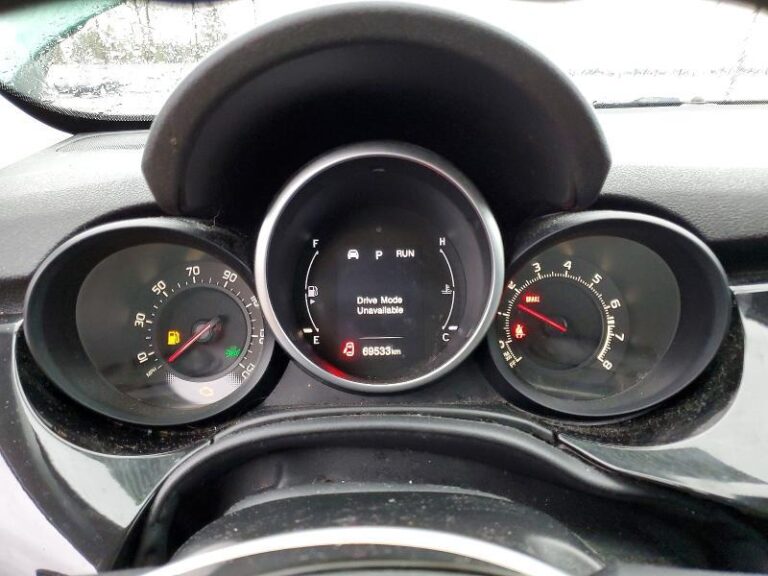
Seeing “Drive Mode Unavailable” flash across your Fiat 500X’s dashboard can catch you completely off guard, especially when you are in the middle of driving. One moment the car is working normally, the next it is telling you that something has gone wrong and it is restricting your access to the drive modes that help you get the most out of the vehicle.
This guide will explain exactly what this warning means, why it happens, what is happening inside the vehicle when it appears, and what steps need to be taken to resolve it properly.
What Does “Drive Mode Unavailable” Actually Mean on a Fiat 500X?
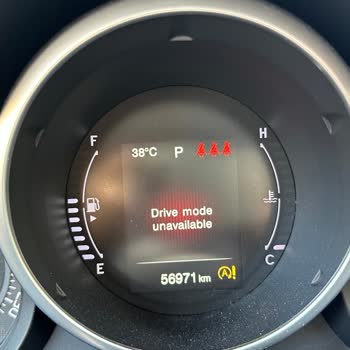
When the “Check Engine, Drive Mode Unavailable” message appears on your instrument cluster, it means the vehicle’s computer has detected a fault that prevents the drive mode system from operating normally. The car has essentially entered a protective safe mode to prevent potential damage from whatever fault the system has identified.
The Fiat 500X (Type 334) offers three distinct drive modes: Auto, Sport, and Traction. Each mode adjusts how the vehicle performs based on the conditions you are driving in. They influence throttle response, suspension behavior, fuel delivery to the engine, and the traction management system. When you select Sport mode, the throttle becomes more responsive and the engine prioritizes performance. In Traction mode, the system adjusts torque distribution to improve grip on slippery surfaces. Auto mode keeps everything balanced for everyday driving.
When the “Drive Mode Unavailable” warning appears, the system cannot switch between these modes or may lock the vehicle into a default neutral or limited operation state. This is not just an inconvenience. Owners have reported that leaving the vehicle running in this condition without addressing the fault can lead to excessive oil and fuel consumption and, over time, accelerated engine wear. In more immediate terms, a vehicle that refuses to transition between drive modes unexpectedly can create a genuinely dangerous situation on the road.
Why the Drive Mode System Matters More Than It Might Seem
Before getting into causes and fixes, it is worth understanding why the drive mode system is so interconnected with other vehicle systems. The drive mode selector on the Fiat 500X is not just adjusting a display setting. It is sending commands to multiple control modules simultaneously: the engine control module, the transmission control module, the all-wheel-drive system (on AWD variants), and the suspension management system.
This interconnection means that a fault in any one of those systems can cause the drive mode function to be disabled as a safety response. The vehicle’s computer essentially determines that if it cannot guarantee all those systems will respond correctly to a mode change, it is safer to keep everything in a neutral, limited state than to risk a mode change causing unpredictable behavior.
That is why diagnosing this warning requires looking at several different systems rather than assuming one specific component is always to blame.
What Causes the Fiat 500X Drive Mode Unavailable Warning?
There are multiple possible causes behind this warning. Here is each one explained in practical terms.
1. Dirty or Faulty Sensors
The Fiat 500X relies on a network of sensors to feed real-time data to the vehicle’s control modules. These include the oxygen sensors monitoring exhaust gas composition, throttle position sensors, wheel speed sensors, and transmission sensors among others. When any of these sensors become contaminated with oil residue, carbon deposits, or road grime, they can send inaccurate readings to the ECU.
Inaccurate sensor data creates a conflict in the ECU’s decision-making process. If the transmission control module receives incorrect wheel speed data, for example, it may determine that it cannot safely execute a mode change. The drive mode system disables itself as a precaution. Sensor faults are one of the most common triggers of this warning on the 500X.
2. FAP (Particulate Filter) Failing to Regenerate
On diesel variants of the Fiat 500X sold in European markets, the Fiat Anti-pollution Particulate (FAP) filter is a key emissions component. This filter traps soot particles from the exhaust and periodically burns them off in a process called regeneration, which typically happens automatically during higher-speed driving. If the filter becomes too clogged and cannot complete a regeneration cycle, the vehicle registers an emissions fault.
That emissions fault can trigger the drive mode unavailable warning because the vehicle’s safe mode response to confirmed emissions system failures includes restricting performance-related features. A FAP that is not regenerating will also typically trigger a Check Engine light simultaneously, which is one of the reasons the 500X specifically displays “Check Engine, Drive Mode Unavailable” together.
3. Low or Failing Battery
A weak battery is a surprisingly frequent cause of electronic warning messages in modern vehicles, and the Fiat 500X is no exception. The drive mode system, like all the electronic control systems on the vehicle, depends on stable voltage from the battery. When battery voltage drops below the threshold needed to power the control modules reliably, the modules can generate false fault codes or lose communication with each other.
The result is a cascade of electronic warnings, sometimes including the drive mode unavailable message, even when none of the underlying hardware is actually faulty. If the drive mode warning appears alongside other seemingly unrelated electronic warnings that come and go inconsistently, a failing battery is a strong suspect and should be tested before any other diagnosis is pursued.
4. ECU Software Faults or Corruption
The Electronic Control Unit is the central processing system for all the vehicle’s major functions. On the Fiat 500X, particularly earlier production models, there are known instances where ECU software bugs can cause the drive mode system to report a fault even when the hardware components themselves are functioning correctly. This can happen after a battery disconnect that was not handled correctly, following an incomplete software update, or simply from a random software glitch.
Water intrusion into the ECU housing, whether from a leaking windshield seal, a clogged drainage channel, or flood exposure, can also damage the ECU’s internal components and wiring, causing it to malfunction and produce warning messages including the drive mode unavailable alert.
5. Faulty Thermostat Gasket
A failing thermostat gasket can allow coolant to leak, which in turn affects the engine’s ability to reach and maintain its optimal operating temperature. The ECU monitors engine temperature continuously and uses that data as part of its drive mode management logic. If the engine is running too cold because of a leaking thermostat, or if coolant contamination has affected sensors in the cooling circuit, the ECU may restrict drive mode functionality as part of its protective response.
A thermostat or coolant issue is typically accompanied by the temperature gauge behaving abnormally, either staying low longer than usual or fluctuating unexpectedly, which is a useful additional clue during diagnosis.
6. Damaged Oxygen Sensor or Faulty Catalytic Converter
The oxygen sensors on the Fiat 500X monitor the composition of exhaust gases before and after the catalytic converter, giving the ECU the data it needs to manage the fuel-air mixture for optimal combustion and emissions compliance. If an oxygen sensor is physically damaged, contaminated with oil from a burning engine, or has simply failed from age, it sends bad data to the ECU.
A catalytic converter that has failed internally, whether from overheating, contamination, or physical damage from road debris striking the underside of the vehicle, also creates exhaust backpressure and emissions reading anomalies that the ECU detects. Either issue can trigger the drive mode unavailable warning alongside the Check Engine light because the emissions system is a monitored input for the vehicle’s drive mode logic.
7. Transmission Faults
The transmission is one of the primary systems the drive mode selector controls. If the transmission itself has an internal fault, whether from worn clutch packs, a failing solenoid, degraded transmission fluid, or a communication fault between the transmission control module and the ECU, the drive mode system will disable itself. It cannot safely switch driving modes if the transmission cannot guarantee it will respond correctly to those mode changes.
On the Fiat 500X, transmission-related drive mode warnings are sometimes accompanied by rough or delayed shifting, the transmission slipping between gears, or the vehicle defaulting to a specific gear and refusing to shift. These additional symptoms help narrow the cause toward the transmission rather than a sensor or software issue.
8. Incorrect or Low-Quality Parts from Previous Service Work
This cause is more common than many owners expect. If the Fiat 500X has previously been serviced by a shop that used non-specification lubricants, incorrect sensor replacements, or aftermarket parts that do not meet Fiat’s tolerance requirements, those parts can cause ongoing sensor misreadings or component interactions that trigger fault codes and warning messages. This is particularly relevant for vehicles serviced at quick-lube shops that may not be familiar with the specific fluid and component requirements of European vehicles.
How to Fix the Fiat 500X Drive Mode Unavailable Warning
Here is the structured approach to resolving this warning correctly, starting with the diagnostic foundation and working through the specific repairs.
Fix 1: Start With a Comprehensive Diagnostic Scan
This step is non-negotiable. The drive mode unavailable warning can stem from faults in multiple different systems, and the only reliable way to identify which system is involved is to pull the stored fault codes from the vehicle’s diagnostic system. A standard OBD-II scanner will catch basic powertrain codes, but the Fiat 500X’s drive mode system involves multiple control modules including the transmission control module, the all-wheel-drive module on AWD variants, and the body control module. You need a scanner that can access all of these, not just the engine module.
A Fiat dealership using their proprietary diagnostic system will get the most complete picture. Professional-grade aftermarket scanners with Fiat-specific module coverage are also capable. Write down every code present across every module before clearing anything. The combination of codes from different modules often tells a clearer diagnostic story than any single code alone.
Fix 2: Check and Service the Battery and Charging System
Before chasing specific fault codes with expensive parts replacement, test the battery. This takes about 10 minutes at any auto parts store and can save you considerable time and money if a failing battery turns out to be the root cause of multiple electronic warnings.
- Have the battery load-tested, not just voltage-checked. A battery can show 12.4 volts at rest but fail to maintain adequate voltage under the electrical load of the vehicle’s systems.
- Test the alternator output to confirm it is charging the battery correctly while the engine is running. A failing alternator will cause the battery to gradually deplete during driving, which can trigger electronic warning messages that seem to come and go.
- Check the battery terminals for corrosion. Even light corrosion at the terminals creates resistance that can cause voltage irregularities reaching the vehicle’s electronic systems.
If the battery is confirmed weak or failing, replace it and clear all fault codes before doing any further diagnosis. A fresh battery sometimes resolves multiple electronic warnings at once when low voltage was the underlying cause.
Fix 3: Update or Reset the ECU
If the diagnostic scan points to an ECU software issue, or if no hardware faults can be identified but the warning persists, an ECU reset or software update is the next step. Fiat periodically releases software updates through their dealer network to address known bugs and improve system stability. If your 500X is running an older software version that has a known drive mode management bug, a software update may resolve the problem without any hardware repair.
A simple ECU reset can be attempted first by disconnecting the negative battery cable for 15 to 20 minutes, then reconnecting and cycling the ignition before starting the vehicle. This clears the ECU’s volatile memory and forces it to reinitialize. Clear the fault codes after the reset and take the vehicle for a test drive to see if the warning returns.
If the warning returns with the same fault code, the ECU reset was not sufficient and a software update or ECU repair is needed. This is a procedure for a Fiat dealer or a shop with Fiat-compatible programming tools.
Fix 4: Inspect, Clean, or Replace Faulty Sensors
If the diagnostic scan identifies a specific sensor fault, that sensor needs to be inspected and either cleaned, recalibrated, or replaced depending on its condition.
For oxygen sensors, the inspection process involves checking the sensor’s live data output through the scan tool. An oxygen sensor that is reading a flat signal (not switching between rich and lean readings as it should) or one that is stuck at an extreme value is likely contaminated or failed. Oxygen sensor replacement on the 500X is a moderately straightforward job on the upstream (before catalytic converter) sensors, but the downstream sensors can be more difficult to access.
For throttle position sensors and wheel speed sensors, a visual inspection of the sensor connector and wiring is the starting point, followed by live data testing to confirm the sensor’s output is within the expected range.
Always replace sensors with components that meet Fiat’s OEM specifications. Generic aftermarket sensors that do not precisely match the signal output characteristics the ECU expects can cause continued fault codes even after replacement.
Fix 5: Address FAP Filter Issues (Diesel Models)
On diesel-equipped 500X models with a clogged FAP filter that cannot regenerate passively, a forced regeneration procedure is necessary. This procedure can be initiated through the diagnostic software by a technician, which artificially raises exhaust temperatures to burn off the accumulated soot in the filter.
If the FAP filter is too heavily loaded to respond to forced regeneration, or if the filter has been physically damaged internally, replacement is necessary. FAP filter replacement is one of the more expensive repair items on diesel-equipped Fiat vehicles, so confirming the filter is genuinely the fault source through diagnostic data before proceeding with replacement is important.
Preventing FAP overloading in the future involves avoiding exclusively short-distance driving, which does not allow the exhaust system to reach the temperatures needed for passive regeneration. Occasional longer highway drives allow the system to complete its regeneration cycle naturally.
Fix 6: Transmission Inspection and Service
If transmission fault codes are present alongside the drive mode unavailable warning, a thorough transmission service inspection is required. Here is what this involves:
- Check transmission fluid condition and level: Pull the transmission dipstick if accessible, or have a shop check the fluid level through the fill plug on sealed transmission models. Dark brown, burnt-smelling fluid with a gritty texture indicates degraded fluid that needs replacement immediately.
- Check for transmission fault codes: The transmission control module stores its own specific fault codes that identify whether the issue is with a solenoid, a clutch pack, a speed sensor, or a communication fault between the transmission and the ECU.
- Road test the transmission: A technician familiar with the 500X’s transmission behavior can often identify abnormal shifting patterns, delayed engagement, or unusual behaviors that point to specific internal transmission issues.
Transmission repairs range from a fluid change and solenoid replacement to more involved internal rebuild work depending on the extent of the issue. The diagnostic data will define the scope of the repair needed.
Fix 7: Inspect the Catalytic Converter and Exhaust System
If oxygen sensor fault codes are present and a new sensor does not resolve them, the catalytic converter should be evaluated. A catalytic converter that has failed internally will cause the downstream oxygen sensor to read differently from the upstream one, which is information the scan tool’s live data can show you directly. The readings from both sensors should diverge in a specific way during normal operation. If they are tracking too closely together or showing unexpected patterns, catalytic converter efficiency is likely compromised.
Catalytic converter replacement is a significant repair cost on the Fiat 500X. If the vehicle is still within its emissions warranty coverage, this repair may be covered. In the United States, the federal emissions warranty typically covers the catalytic converter for 8 years or 80,000 miles. Check your warranty documentation before authorizing a paid replacement.

Is It Safe to Drive the Fiat 500X With This Warning Active?
The answer depends on how the vehicle is behaving alongside the warning. If the car is driving normally but simply cannot switch between drive modes and the warning is stable, a careful drive to a shop is generally acceptable.
However, there are situations that require you to stop driving and get the vehicle towed rather than driving it further:
- If the vehicle shifts unexpectedly into neutral while driving, get off the road safely and do not drive it further. An unexpected neutral shift at road speed is a genuine safety hazard.
- If the engine is overheating alongside the drive mode warning, the combination of a thermal fault and a drive mode fault requires immediate attention.
- If the transmission is slipping, refusing to shift, or making unusual noises in addition to the drive mode warning, continued driving risks significant additional transmission damage.
- If multiple warning lights are active simultaneously, the vehicle may be in a severe fault state where continued driving is not recommended.
Approximate Repair Costs for Common Drive Mode Unavailable Causes
| Repair Type | Approximate Parts Cost | Approximate Total Cost (with labor) |
|---|---|---|
| Diagnostic scan (Fiat-specific) | N/A | $100 to $180 |
| Battery replacement | $100 to $200 | $150 to $320 |
| ECU reset or software update | N/A | $100 to $250 |
| Oxygen sensor replacement | $50 to $200 per sensor | $150 to $400 per sensor |
| Catalytic converter replacement | $400 to $1,200+ | $700 to $1,800+ |
| Transmission fluid service | $30 to $80 (fluid) | $150 to $300 |
| Transmission solenoid replacement | $100 to $300 per solenoid | $300 to $700 |
| FAP filter replacement (diesel) | $400 to $1,000+ | $700 to $1,500+ |
| Thermostat and gasket replacement | $50 to $150 | $200 to $450 |
Why a Fiat-Familiar Shop Makes a Difference for This Repair
The Fiat 500X’s drive mode system is a layered electronic system that requires proper diagnostic tools to access fully. A shop that only has generic OBD-II scanning capability will see a fraction of the fault data that a Fiat-compatible diagnostic system can show. This matters because the drive mode unavailable warning can originate from multiple different modules, and chasing the wrong module with the wrong tools is both time-consuming and expensive.
Fiat dealerships have the advantage of manufacturer-specific diagnostic access and the most current technical service bulletins for known issues on the 500X. Independent European vehicle specialists that have invested in professional Fiat-compatible diagnostic equipment are also a strong choice for this type of diagnosis and repair.
Final Thought
The Fiat 500X Drive Mode Unavailable warning is your vehicle’s way of telling you that it has detected a fault serious enough to prevent normal drive mode operation. Do not try to guess at the cause and replace parts based on assumptions. Get a proper multi-module diagnostic scan done first, let the fault codes guide the repair, and make sure whoever handles the work has the right tools to access the full picture of what is happening in the vehicle. A correct diagnosis makes this a manageable repair. The wrong approach makes it an unnecessarily expensive one.