

The Powertrain Control Module, or PCM, is essentially the brain of your Honda. It monitors and controls everything from fuel injection timing and ignition to transmission shifts and emissions output. When it starts failing, the effects ripple across the entire vehicle. You might notice your Honda running rough, shifting erratically, or suddenly getting terrible fuel economy. The check engine light comes on. The car stalls at a stop light. Performance that used to feel normal starts feeling wrong in ways that are hard to pin down.
The tricky part is that PCM symptoms overlap with a lot of other problems. A misfiring cylinder, a bad oxygen sensor, or a failing transmission solenoid can all produce similar complaints. This is why diagnosing PCM issues correctly matters so much. Replacing a PCM is not cheap, and replacing one unnecessarily because the actual problem was a $25 sensor is the kind of mistake you want to avoid.
This guide covers everything Honda owners need to know about PCM malfunctions, from recognizing the symptoms and understanding the causes, to fixing what you can and knowing when the job requires a professional.
What the Honda PCM Actually Does and Why It Matters So Much
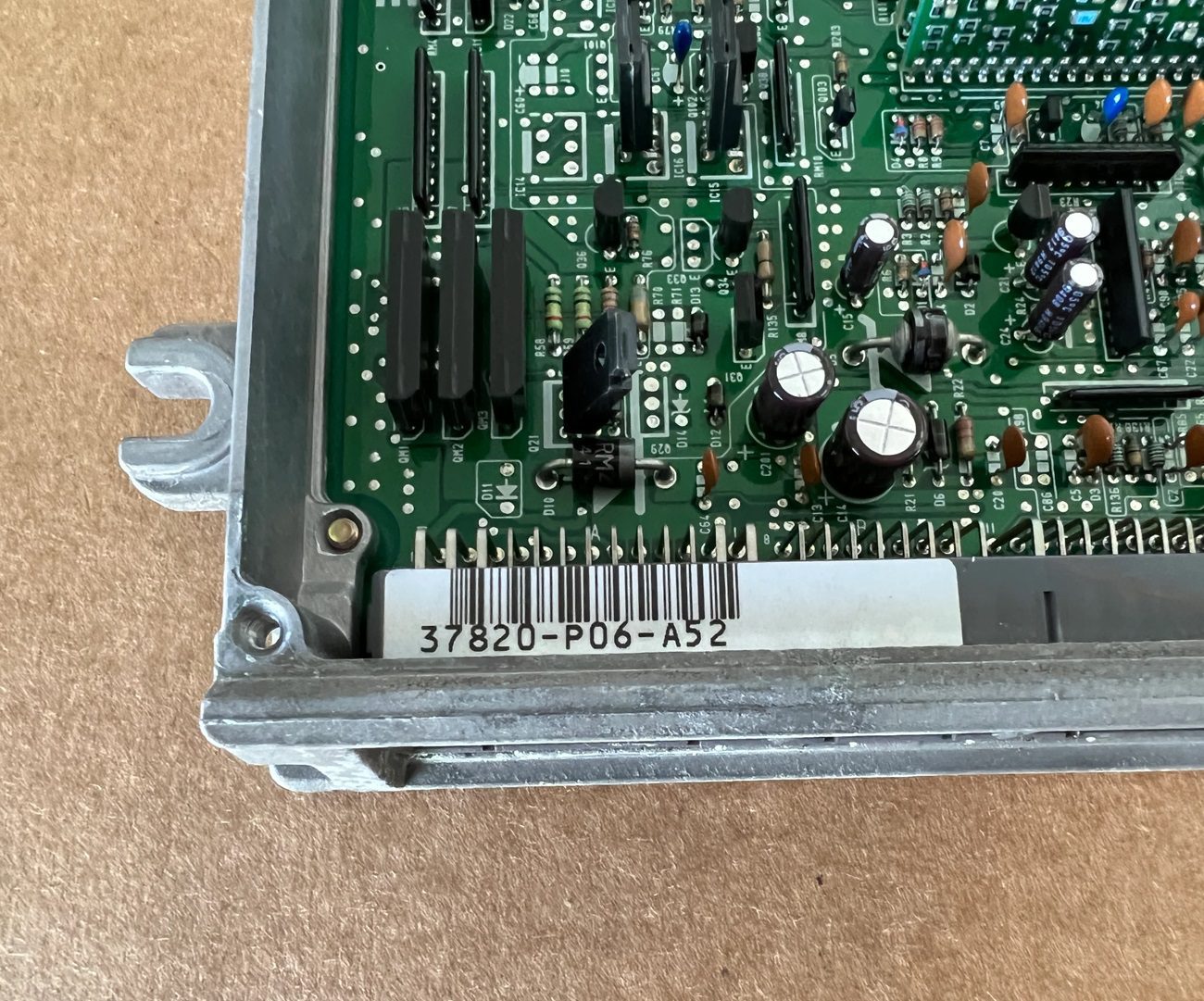
Before getting into symptoms and fixes, it helps to understand what the PCM is responsible for. On most Honda vehicles, the PCM is a combined unit that handles both engine management and transmission control. Some older Honda models separate these functions into an Engine Control Module (ECM) and a Transmission Control Module (TCM), but on modern Hondas, the PCM typically handles both.
The PCM receives input data from dozens of sensors throughout the vehicle, including the oxygen sensors, mass airflow sensor, crankshaft position sensor, throttle position sensor, coolant temperature sensor, and many others. It processes all of that data and sends output commands to components like the fuel injectors, ignition coils, variable valve timing solenoids, and transmission solenoids.
When the PCM is functioning correctly, this all happens thousands of times per second without you ever thinking about it. When the PCM starts failing or receives corrupted input from a damaged sensor or wiring fault, the commands it sends out become wrong, and the engine and transmission behave accordingly. That is when you feel the effects behind the wheel.
Symptoms of a Honda PCM Malfunction You Should Know
Recognizing PCM symptoms is the starting point for any diagnosis. Here is what to watch for, along with the context that helps you understand what each symptom actually means.
Check Engine Light With Multiple Stored Codes
A check engine light by itself does not tell you much. A single code for a faulty oxygen sensor is usually just a faulty oxygen sensor. But when you scan the system and find multiple unrelated codes stored at the same time, that pattern is significant. Codes from different systems, say an engine misfire code alongside a transmission code alongside a sensor circuit code, all appearing together without an obvious common cause, often point to the PCM as the root problem rather than multiple coincidental component failures happening simultaneously.
That said, do not assume multiple codes automatically mean PCM failure. It is possible to have multiple legitimate sensor failures, especially on a high-mileage Honda. The key is systematic diagnosis rather than jumping to conclusions.
Engine Stalling or Dying at Idle
When the PCM cannot properly calculate fuel delivery or ignition timing, the engine can stall at idle or when coming to a stop. This happens because the PCM is sending incorrect commands to the fuel injectors or ignition system, causing the engine to lose its ability to sustain combustion at low RPM. Stalling at idle is alarming, particularly in traffic, and it should never be ignored or dismissed as a minor quirk.
Stalling can also be caused by a failing crankshaft position sensor, a dirty throttle body, or a failing idle air control valve, which are much simpler and cheaper fixes. Rule those out before suspecting the PCM.
Reduced Engine Power and Sluggish Response
A PCM that is not operating correctly may put the engine into a reduced power or limp mode as a protective measure. Some PCMs are designed to limit engine output when they detect a fault to prevent damage while still allowing the vehicle to be driven to a shop. You might feel a noticeable loss of acceleration, difficulty maintaining highway speed, or an engine that feels like it is running through mud.
Reduced power can also result from a clogged catalytic converter, a failing fuel pump, or a dirty mass airflow sensor. Again, those simpler causes need to be eliminated before the PCM becomes the primary suspect.
Erratic or Hard Shifting on Automatic Transmissions
Since the PCM manages transmission shift points on most modern Hondas, a malfunctioning PCM can produce abnormal shifting behavior. This might look like the transmission hunting between gears, refusing to upshift at the right time, downshifting unexpectedly, or shifting harshly instead of smoothly. In some cases, the transmission may seem to slip or hesitate before engaging a gear.
Transmission shifting problems on Hondas also have other potential causes, including low transmission fluid, a failing transmission range switch, or worn solenoids. Do not pull the transmission apart or condemn the PCM before checking fluid level and condition and scanning specifically for transmission-related codes.
Poor Fuel Economy That Appears Suddenly
If your Honda’s fuel economy drops noticeably without any obvious explanation, the PCM could be miscalculating the air-fuel mixture. Running too rich, meaning too much fuel relative to air, wastes gas and also damages the catalytic converter over time. An inaccurate PCM command to the fuel injectors is one cause, but so is a bad oxygen sensor that is sending the PCM incorrect feedback data. When the PCM receives bad input, it makes bad decisions.
Increased Emissions Failure
A PCM that is not properly managing the combustion process or the emissions control systems, such as the exhaust gas recirculation (EGR) system or the evaporative emissions system, can cause a vehicle to fail an emissions test. If your Honda fails emissions with no specific component identified as defective, and the vehicle is running noticeably worse than it used to, PCM function is worth investigating as part of the broader diagnosis.

What Actually Causes Honda PCM Failure
Understanding the causes helps you diagnose the right problem and avoid unnecessary parts replacement. PCM failures on Honda vehicles typically fall into one of these categories.
Damaged or Corroded Wiring and Connectors
This is the most common cause of what looks like a PCM malfunction but is actually a wiring problem. The PCM communicates with every sensor and actuator in the vehicle through a network of wires and connectors. When any of those connections develop a fault, whether from corrosion, a chafed wire, a cracked connector housing, or a loose pin, the PCM either receives bad data or loses communication with a component entirely.
Honda vehicles are not immune to this issue, and it is particularly common in older models or vehicles that have been exposed to harsh climates. Salt used on winter roads accelerates corrosion in the engine bay. High heat can harden and crack wire insulation. Repeated vibration can work connector pins loose over thousands of miles.
A wiring or connector fault can produce the exact same symptoms as a failing PCM, which is why physical wiring inspection always comes before PCM condemnation in a proper diagnostic sequence.
Moisture and Water Intrusion
The PCM is typically housed in a protective enclosure, but it is not completely waterproof. On some Honda models, particularly certain Accord and Civic generations, the PCM is located in areas vulnerable to water intrusion from leaks in the firewall, clogged drain tubes, or leaking windshield seals. Water getting into the PCM housing can short circuit the internal components or cause corrosion on the circuit board that develops gradually into a functional failure.
If you have had any water leaks inside your Honda’s cabin or in the area near the PCM mounting location, and PCM-related symptoms appeared shortly after, water intrusion is a strong suspect. A technician can inspect the PCM housing for signs of moisture or corrosion on the board.
Voltage Spikes and Power Supply Problems
The PCM requires a stable, clean power supply to operate correctly. Voltage spikes, which can be caused by jump starting with incorrect polarity, a failing alternator pushing excessive voltage, or certain types of battery chargers, can damage the sensitive internal electronics of the PCM. A weak or dying battery that causes voltage to fluctuate erratically can also cause the PCM to behave unpredictably.
If your Honda’s PCM problems appeared shortly after a jump start, a battery replacement, or any other event that involved the electrical system, voltage damage to the PCM is worth investigating. Have the charging system tested before anything else to confirm the alternator is producing correct, stable voltage.
Software Corruption or Outdated Calibration
The PCM runs on software, and like any software, that programming can become corrupted or outdated. Honda periodically releases software updates for PCMs to address known issues, improve performance, or correct calibration errors that cause drivability complaints. If your Honda has a known software-related fix available and the update has never been applied, symptoms related to that specific issue may persist even though the hardware is fine.
Software corruption can also occur if the battery dies completely during a drive cycle or during a software update process. This is rare, but it does happen and can leave the PCM in a state where it needs to be reprogrammed by a dealer or a shop with the appropriate Honda programming software.
Physical PCM Failure
Sometimes the PCM itself simply fails. Internal components degrade over time, particularly on high-mileage vehicles. Solder joints on the circuit board can develop microscopic cracks from years of thermal expansion and contraction cycles. Capacitors can fail. Transistors can break down. When physical PCM failure occurs after all other causes have been eliminated, replacement or rebuilding is the path forward.
How to Diagnose a Honda PCM Problem the Right Way
This is where most people go wrong. They scan the codes, see something PCM-related, and immediately assume the PCM needs to be replaced. That approach leads to expensive mistakes. Here is the correct diagnostic sequence.
Step 1: Scan All Stored Codes and Document Everything
Use an OBD-II scanner to pull every stored code, including pending codes that have not yet triggered the check engine light. Write them all down. Note the freeze frame data, which captures engine conditions at the moment each code was stored. Look for patterns. Are the codes all from the same system, or are they from multiple unrelated systems? That pattern tells you a lot about whether you are dealing with a component-specific failure or a broader electrical or control module issue.
Step 2: Check Fuses and Relays Related to the PCM
Before touching any wiring or considering PCM replacement, check the fuses. The PCM has dedicated fuse protection, and a blown fuse can prevent proper PCM operation or cause partial loss of function. Locate your Honda’s fuse box, which is typically found in two locations: one under the hood and one inside the cabin near the driver’s side dashboard. Your owner’s manual will show the fuse diagram and identify which fuses relate to the PCM and ECM power supply.
Pull each relevant fuse and inspect it visually. A blown fuse has a visible break in the metal element inside. Replace any blown fuse with a new one of the exact same amperage rating. If a fuse blows again immediately, there is a short circuit in that circuit that needs to be tracked down before replacing the fuse again. Continuing to replace a fuse that keeps blowing can eventually damage the PCM or wiring.
Step 3: Inspect the Wiring Harness and PCM Connectors
This step takes time but is absolutely non-negotiable before condemning the PCM. Locate the PCM, which on most Honda models is found in the engine bay on the firewall, sometimes enclosed in a protective box. Disconnect the main harness connectors from the PCM, one at a time, and inspect them carefully.
Look for:
- Green or white corrosion on any connector pins
- Bent, pushed back, or broken pins inside the connector housing
- Moisture or water residue inside the connector
- Cracked or melted connector housing
- Any wires that appear chafed, cracked, or have damaged insulation near the connector
Use electrical contact cleaner to clean any corroded pins, allow them to dry fully, and apply a thin coat of dielectric grease before reconnecting. If any pins are damaged or pushed back, they need to be repaired with the appropriate terminal repair kit. Simply cleaning corroded connections resolves a significant number of Honda PCM malfunction complaints without any parts replacement.
Trace the wiring harness away from the PCM for at least a foot in each direction, looking for any signs of damage. Pay particular attention to areas where the harness passes near sharp metal edges, exhaust components, or areas where it could be pinched.
Step 4: Test Voltage Supply to the PCM
With a multimeter set to DC voltage, verify that the PCM is receiving proper battery voltage on its power supply pins and that the ground connections are solid. The PCM needs stable voltage, typically close to 12 volts with the ignition on and around 13.5 to 14.5 volts with the engine running, to operate correctly. Voltage that is too low or too high indicates a charging system or battery problem that needs to be resolved before any PCM diagnosis can be considered reliable.
Ground connections deserve particular attention. A poor ground to the PCM can cause all sorts of erratic behavior that mimics PCM failure. Check that the PCM ground straps and chassis ground connections are clean, tight, and free from corrosion.
Step 5: Rule Out Related Sensor Failures
Many symptoms that appear to be PCM failures are actually caused by sensors giving the PCM bad information. A faulty mass airflow sensor, for example, can cause rough idle, poor fuel economy, stalling, and reduced power, all of which look like PCM symptoms. The PCM may be working perfectly, but if the data it receives is wrong, the commands it sends out will be wrong too.
Test the sensors that correspond to any stored codes. Use a scan tool to observe live sensor data and compare readings to expected values at various operating conditions. A sensor that reads incorrectly or produces implausible data relative to engine conditions is a much more likely cause of drivability complaints than a failed PCM.
Step 6: Check for Available Software Updates
If the hardware and wiring have all been confirmed good but symptoms persist, ask your Honda dealer whether any PCM software updates are available for your specific vehicle. Honda releases these periodically and they are often applied at no charge during routine service visits or as part of a technical service bulletin fix. A software reflash can resolve calibration-related drivability issues that no amount of hardware diagnosis will ever fix, because the hardware is not the problem.
How to Fix Honda PCM Problems
Once you know what you are actually dealing with, here is how to address each type of PCM problem.
Cleaning Corroded Connectors and Repairing Wiring
For corrosion on PCM connectors, use electrical contact cleaner and a fine wire brush or connector cleaning tool to remove oxidation from the pins. After cleaning, apply a small amount of dielectric grease to prevent future moisture intrusion. For damaged wiring, use a proper repair method. Heat-shrink solder connectors are the professional standard for automotive wiring repair. Electrical tape alone is not an acceptable long-term repair for any connection that carries signal data to the PCM.
Replacing Blown Fuses
Fuse replacement is straightforward. Use the correct amperage fuse for the specific circuit. Never substitute a higher-rated fuse thinking it will prevent the fuse from blowing again. The fuse rating is chosen to protect the wiring and components downstream. Using a higher-rated fuse allows more current to flow before it blows, which can burn wiring or damage the PCM itself. If a fuse keeps blowing, find and fix the short circuit before replacing it again.
PCM Software Reprogramming
Software reprogramming, also called reflashing, requires factory-level programming software and a J2534 compatible interface device. Honda dealers use the Honda Diagnostic System (HDS) for this. Some independent shops also have the equipment and software licenses to perform Honda PCM reprogramming. This is not a DIY job unless you have access to the specific tools and software required. Attempting to reprogram a PCM with generic third-party software carries a real risk of corrupting the module.
PCM Replacement: New, Remanufactured, or Used
When the PCM has been confirmed as the failed component and all other causes have been eliminated, replacement is the path forward. You have three options:
- New OEM PCM from Honda: The most reliable option. Comes programmed or requires programming at the dealer. Most expensive choice.
- Remanufactured PCM: A rebuilt unit that has been tested and refurbished. Often comes with a warranty. Usually requires programming to your specific vehicle VIN. Less expensive than new OEM.
- Used PCM from a salvage yard: The cheapest option but comes with risk. A used PCM must be from an identical vehicle with the same engine, transmission, and model year, and it typically still requires reprogramming to your VIN. Buying a used PCM without knowing its history is a gamble.
Regardless of which type of replacement PCM you choose, programming to your specific vehicle is almost always required. A PCM that is not correctly programmed to the vehicle’s VIN, immobilizer system, and transmission calibration will not function correctly and may prevent the car from starting entirely. This programming step must be performed with Honda-specific software.
Honda PCM Repair and Replacement Cost Guide
Costs vary significantly based on what needs to be done. Here is a realistic breakdown.
| Service | DIY Cost | Shop Cost (Parts + Labor) |
|---|---|---|
| OBD-II diagnostic scan | $0 (with own scanner) | $75 to $150 |
| Fuse replacement | Under $5 | $50 to $100 (as part of diagnostic visit) |
| Connector cleaning and wiring repair | $10 to $40 (materials) | $100 to $300 |
| PCM software update or reflash | Not recommended DIY | $100 to $200 |
| New OEM PCM + programming | Not recommended DIY | $800 to $1,500+ |
| Remanufactured PCM + programming | Part only: $200 to $500 | $400 to $900 |
| Used PCM + programming | Part only: $50 to $200 | $250 to $600 |
The diagnostic process itself is the most valuable investment before any repair. Spending $100 to $150 on a proper diagnosis that confirms the PCM is actually the problem is far better than spending $800 on a replacement only to discover the real issue was a $40 sensor or a corroded connector that would have taken 20 minutes to clean.
Honda Models With Known PCM Issues
While PCM problems can occur on any Honda, certain models and model years have documented patterns worth knowing about.
- Honda Accord (2003 to 2007): Transmission control issues related to PCM software calibration were documented on several V6 Accord models. Honda issued TSBs addressing specific shifting complaints that required PCM reprogramming.
- Honda Civic (2001 to 2005): Some owners reported ECM failures related to water intrusion, particularly on vehicles where the windshield or firewall seal had degraded. The ECM location on these models made it somewhat vulnerable to water pooling.
- Honda CR-V: Intermittent stalling and check engine lights on some CR-V models traced back to PCM connector corrosion rather than internal PCM failure. Cleaning and resealing the connectors resolved many of these complaints.
- Honda Pilot and Odyssey: Some owners of these models with the V6 engine reported transmission-related PCM calibration issues that Honda addressed through software updates.
If you own one of these models and are experiencing symptoms consistent with PCM problems, asking your dealer specifically whether any TSBs related to the PCM or ECM apply to your VIN is a smart first step before authorizing any paid repairs.
Common Questions About Honda PCM Malfunctions
Can a bad PCM prevent my Honda from starting?
Yes. A severely failed PCM can prevent the engine from starting entirely. The PCM controls fuel injection and ignition, and without proper commands from the PCM, the engine cannot fire. A Honda that cranks normally but will not start, with no other obvious cause, should have the PCM and its power supply confirmed as part of the no-start diagnosis.
Will resetting the PCM fix my problem?
Clearing stored codes and resetting the PCM by disconnecting the battery temporarily can sometimes address symptoms caused by a software glitch or a temporarily corrupted operating state. But if the underlying cause of the malfunction still exists, the problem and codes will return. A reset is useful as part of a diagnostic process to see if a problem is persistent or intermittent. It is not a repair on its own for most legitimate PCM issues.
Can I drive my Honda with a failing PCM?
It depends on the severity of the failure. If the PCM issue is causing stalling at speed, erratic shifting, or significant power loss, driving is a safety risk. If the only symptom is a check engine light with minor performance changes, short-distance driving may be acceptable while you arrange diagnosis. However, continuing to drive a Honda with a malfunctioning PCM can cause additional damage to the engine or transmission if incorrect commands from the PCM are causing components to operate outside their design parameters.
Does a new PCM need to be programmed to my Honda?
Yes, in almost all cases. Modern Honda PCMs contain vehicle-specific calibration data, immobilizer (anti-theft) programming, and transmission calibration. A replacement PCM that has not been programmed to your specific vehicle may allow the engine to run but will typically trigger immobilizer faults, incorrect shifting behavior, or other issues. Programming must be performed with Honda-specific software by a dealer or a qualified independent shop.
How long do Honda PCMs typically last?
A Honda PCM that is properly maintained and not subjected to voltage damage or water intrusion can last the lifetime of the vehicle, often 200,000 miles or more. PCM failure on well-maintained Hondas is not common and should always prompt a thorough investigation of other possible causes before replacement is considered. The vehicles that see premature PCM failure typically have had electrical system abuse, water intrusion events, or chronic maintenance neglect.
Quick Reference: Honda PCM Malfunction Symptoms and Likely Causes
| Symptom | Possible PCM Cause | Other Causes to Rule Out First |
|---|---|---|
| Multiple unrelated stored codes | PCM processing fault or power supply issue | Multiple independent sensor failures |
| Engine stalling at idle | Incorrect PCM fuel or timing commands | Dirty throttle body, bad CKP sensor, IAC valve |
| Reduced power or limp mode | PCM safety limitation due to internal fault | Clogged catalytic converter, failing fuel pump |
| Erratic automatic transmission shifting | PCM transmission control malfunction | Low fluid, bad solenoids, range switch failure |
| Poor fuel economy | Incorrect PCM fuel calculation | Faulty oxygen sensor, dirty MAF sensor |
| No-start condition with normal cranking | PCM not commanding fuel or spark | Bad crankshaft sensor, failed fuel pump |
| Check engine light with no drivability symptoms | PCM software calibration issue | Individual sensor fault specific to stored code |
The Right Approach to a Honda PCM Problem
A PCM diagnosis done correctly is methodical and patient. It starts with the simplest and cheapest possibilities and works toward the more complex ones only after the simpler causes have been genuinely ruled out. Fuses, connectors, wiring, sensors, and software all get checked before the PCM itself is condemned.
The shops that misdiagnose PCM failures and replace perfectly good modules are typically the ones that start at the expensive solution rather than working toward it systematically. If a shop recommends PCM replacement as an early diagnosis without confirming the connector condition, wiring integrity, sensor functionality, and power supply stability, push back and ask what specifically confirmed the PCM is the failed component.
A Honda PCM that genuinely needs replacement is not a common event. When it does happen, it is worth investing in a quality replacement and proper programming rather than cutting corners with a salvage unit that may have its own hidden history. Your Honda’s PCM is too central to vehicle operation to risk on an unknown part.