

A long-term fuel trim stuck at 25% is your engine’s way of telling you it is drowning in fuel. Too much fuel is getting into the combustion chamber, and the engine cannot burn it all efficiently. The result? A rich-running engine that is wasting gas, losing power, and slowly wearing itself down.
The symptoms are hard to ignore once they show up. You will notice your fuel economy tanking, the engine running rough, the check engine light glowing on your dashboard, and sometimes even a strong fuel smell inside the cabin. None of that is normal, and none of it gets better on its own.
This article breaks down exactly what a long-term fuel trim stuck at 25% means, what causes it, what you will feel when it happens, and how to fix it the right way.
What Does Long Term Fuel Trim Stuck at 25% Actually Mean?
Before we get into causes and fixes, you need to understand what fuel trim actually is, because this is where a lot of car owners get lost.
Your engine needs a very specific ratio of air to fuel to run properly. That ratio is 14.7 parts of air to 1 part of fuel, and it is called the stoichiometric ratio. Your vehicle’s computer, the ECU, is constantly working to maintain that balance by monitoring sensor data and adjusting how much fuel gets injected into the engine.
Fuel trim is how the ECU communicates those adjustments. There are two types:
- Short-Term Fuel Trim (STFT): This is the ECU making instant, real-time corrections to the air-fuel mixture. It reacts fast, adjusting fuel delivery within seconds based on what the oxygen sensor is reporting.
- Long-Term Fuel Trim (LTFT): This is the ECU’s learned correction over time. It is built up from the pattern of short-term adjustments the system has been making. Think of it as the ECU saying, “I keep having to make the same correction every time this engine runs, so I am just going to build that correction into my baseline.”
Fuel trim values are expressed as percentages. Under normal conditions, both STFT and LTFT should sit somewhere between -10% and +10%. A positive value means the ECU is adding fuel because it thinks the mixture is too lean. A negative value means it is pulling fuel back because the mixture is too rich.
When your LTFT reads +25%, that is a significant red flag. It means the ECU has been adding 25% more fuel than it should need to, and it has been doing it consistently for long enough that it became a learned correction. That is not a minor hiccup. That is a system with a real problem somewhere.
Now here is the part that trips people up. A positive LTFT at 25% means the ECU thinks the engine is running lean, so it is adding more fuel to compensate. But the actual result is that the engine ends up running rich because of the over-correction, or because the underlying fault is already dumping excess fuel and the ECU is fighting a losing battle with its own adjustments.
Either way, the engine is getting too much fuel relative to the air, and that needs to be addressed.
6 Common Causes of Long Term Fuel Trim Stuck at 25%
There is no single culprit here. Several different components can push the LTFT into that 25% range, and pinpointing the right one requires proper diagnosis. That said, these are the most common causes a mechanic will investigate first.
1. A Damaged or Failing Oxygen Sensor
The oxygen sensor is one of the most important feedback devices in your entire fuel management system. It sits in the exhaust stream and measures how much unburned oxygen is leaving the engine. That data gets sent to the ECU, which uses it to fine-tune the air-fuel mixture in real time.
When the oxygen sensor goes bad, it stops reporting accurate data. It might report that the exhaust has too much oxygen, which signals a lean condition to the ECU. The ECU responds by adding more fuel. But because the sensor reading is wrong, the ECU keeps adding fuel even when the mixture is already rich. The LTFT climbs, and the engine keeps getting flooded with more fuel than it needs.
Oxygen sensors wear out over time, especially on high-mileage vehicles. A lazy or contaminated sensor is one of the first things to check when the LTFT is elevated.
2. A Faulty Mass Airflow (MAF) Sensor
The MAF sensor measures the volume and density of air entering the engine. The ECU takes that reading and calculates exactly how much fuel needs to be injected to match it. If the MAF sensor is dirty, damaged, or reading low, the ECU thinks less air is coming in than actually is.
The ECU then reduces fuel injection to match what it thinks is a smaller air volume. The actual mixture ends up lean because there is more air in the cylinder than the ECU accounted for. The oxygen sensor picks up on the lean condition, and the ECU starts adding fuel through fuel trim corrections. The LTFT goes positive and keeps climbing.
A contaminated MAF sensor is actually a really common issue. Dust, oil residue from an over-oiled air filter, and general grime can coat the sensor element and throw off its readings. Sometimes cleaning the sensor with MAF-specific cleaner solves it. Other times, replacement is the only fix.
3. A Malfunctioning ECU
The ECU is the brain running the whole operation. It receives data from all the sensors, processes it, and sends commands to the fuel injectors, ignition system, and other components. When the ECU itself is not working correctly, the commands it sends can be way off base.
A faulty ECU might command excessive fuel delivery even when the sensors are reporting normal conditions. This can happen because of internal software glitches, corrupted programming, water damage to the control module, or improper aftermarket modifications that interfere with factory calibrations.
ECU problems are less common than sensor failures, but they do happen, and they are typically more expensive to diagnose and repair. This is usually the last thing a mechanic rules in after everything else has been checked.
4. A Leaking or Stuck-Open Fuel Injector
Fuel injectors are precision components. They open and close thousands of times per minute to deliver exactly the right amount of fuel into the combustion chamber at exactly the right moment. When an injector gets stuck in the open position, or develops an internal leak that allows fuel to dribble in when it should not, the cylinder gets more fuel than the ECU intended.
The ECU has no way to directly detect a leaking injector. It only knows that the oxygen sensor is reporting a rich mixture, and so it tries to compensate by pulling fuel back through fuel trim. But because the injector is physically leaking, the ECU’s corrections cannot fully offset the extra fuel. The LTFT ends up going negative in some cases, or the rich condition persists despite the ECU’s attempts to correct it.
A stuck-open injector often causes a rough idle, a misfire on the affected cylinder, and sometimes a noticeable fuel smell. It is worth having the injectors flow-tested if other causes have been ruled out.
5. A Dirty or Clogged Air Filter
This is the simplest cause on the list, and it is one of the most overlooked. The air filter’s job is to clean the air before it enters the engine. Over time, it collects dirt, dust, and debris. When it gets too clogged, airflow into the engine is restricted.
Less air means the mixture goes rich, because the fuel quantity stays the same but the air volume drops. The oxygen sensor picks up on the extra fuel in the exhaust, and the ECU tries to lean the mixture back out. But if the air restriction is severe enough, the ECU struggles to compensate effectively, and the LTFT starts reflecting the imbalance.
The fix here is the cheapest and easiest of any on this list: replace the air filter. Most manufacturers recommend changing it every 15,000 to 30,000 miles, but if you drive in dusty conditions, it may need to be done sooner.
6. A Faulty Intake Air Temperature (IAT) Sensor
The intake air temperature sensor monitors the temperature of the air coming into the engine. This matters because air density changes with temperature. Cooler air is denser and contains more oxygen molecules per unit volume. Warmer air is less dense. The ECU uses the IAT sensor reading to fine-tune fuel delivery accordingly.
When the IAT sensor fails or gives inaccurate readings, the ECU may misjudge the density of the incoming air and calibrate the fuel delivery incorrectly. If the sensor reports that the air is cooler than it actually is, the ECU injects more fuel to match what it thinks is denser air, pushing the mixture rich and sending the LTFT upward.
IAT sensor failures are less dramatic than MAF failures but can cause similar fuel trim issues. They are usually caught during a thorough scan of sensor data with a capable diagnostic tool.
Cause vs. Effect: A Quick Reference
| Cause | What Goes Wrong | Effect on LTFT |
|---|---|---|
| Damaged oxygen sensor | Reports false lean signal to ECU | ECU adds excess fuel, LTFT rises |
| Faulty MAF sensor | Underreports airflow into engine | ECU miscalculates fuel, LTFT rises |
| Malfunctioning ECU | Sends incorrect fuel commands | Excess fuel delivery, LTFT rises |
| Stuck-open fuel injector | Uncontrolled fuel leak into cylinder | Rich condition ECU cannot correct |
| Clogged air filter | Restricts airflow into engine | Rich mixture develops, LTFT rises |
| Faulty IAT sensor | Incorrect air temperature reading | Wrong fuel calculation, LTFT rises |
Symptoms You Will Notice When LTFT Is Stuck at 25%
A long-term fuel trim at 25% does not just affect the numbers on a scan tool. It produces real, noticeable effects that you will experience every time you drive the vehicle. Here is what to watch for:
1. Noticeably Worse Fuel Economy
This one hits you at the gas pump. When the engine is running rich, it is burning more fuel than necessary to produce the same amount of power. You will find yourself filling up more often, and your miles-per-gallon numbers will be well below what they used to be. If you track your fuel economy and notice a sudden drop with no change in your driving habits, elevated fuel trim is a very likely cause.
2. Reduced Engine Performance and Power
A rich air-fuel mixture actually reduces combustion efficiency. Too much fuel dilutes the mixture, meaning the combustion event does not release as much energy as it should. You may notice sluggish acceleration, a lack of power when climbing hills or overtaking, and a general sense that the engine is not responding the way it used to.
3. The Check Engine Light Comes On
When the fuel trim exceeds the ECU’s acceptable range and stays there, the ECU stores a diagnostic trouble code and illuminates the check engine light. Common codes associated with high positive LTFT include P0172 (system too rich, bank 1) and P0175 (system too rich, bank 2). If you see either of these, combined with a fuel trim reading at or near 25%, you know where to start looking.
4. Failed Emissions Test
A rich-running engine produces elevated levels of hydrocarbons (HC) and carbon monoxide (CO) in the exhaust. Both of these are measured during emissions testing, and a vehicle with an LTFT stuck at 25% will almost certainly fail. The catalytic converter can only clean up so much extra pollution before it gets overwhelmed.
5. Higher Carbon Monoxide Output
When fuel does not fully combust, one of the byproducts is carbon monoxide, a colorless, odorless, and toxic gas. A rich-running engine produces significantly more CO than a properly tuned one. This is not just an environmental issue. If CO levels get high enough and there are any leaks in the exhaust or ventilation system, it can become a safety concern inside the vehicle.
6. Engine Misfires
An overly rich mixture can foul spark plugs with carbon deposits and make combustion inconsistent. The result is engine misfires, which you will feel as a rough idle, shuddering during acceleration, or a stumbling sensation when the engine is under load. Misfires also generate their own fault codes, so you may end up with multiple codes stored in the ECU at the same time.
7. Fuel Smell Inside or Around the Vehicle
Unburned fuel passing through the exhaust system produces a noticeable smell. If you catch a whiff of raw fuel around the tailpipe area or occasionally inside the cabin, a rich-running condition is a strong suspect. This smell is not just unpleasant. It is a sign that combustion efficiency has dropped significantly.
How to Diagnose Long Term Fuel Trim Stuck at 25%
Diagnosis is where you separate the actual problem from the symptoms. You cannot just replace parts at random and hope one of them fixes it. That approach wastes money and time. Here is how to approach the diagnosis properly.
Start With a Scan Tool
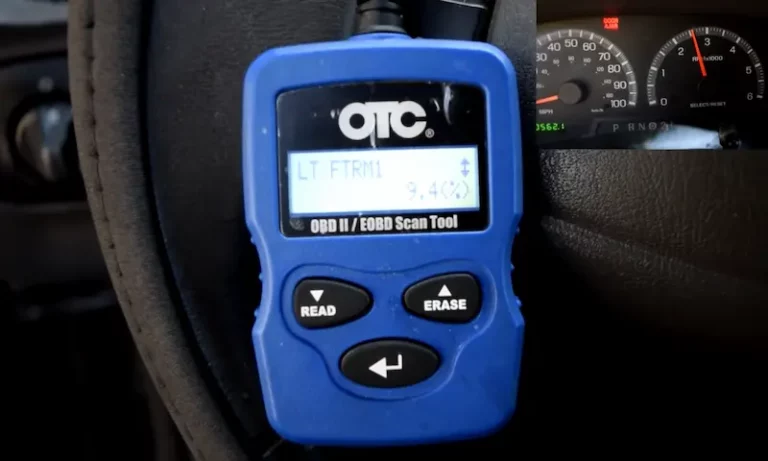
Plug in an OBD-II scanner and pull any stored fault codes. Write them all down. The codes will point you toward which system the ECU has flagged as the problem area. A P0172 or P0175 code confirms a rich condition. Codes like P0101 or P0102 point to the MAF sensor. A P0131 or P0137 suggests an oxygen sensor issue.
Do not clear the codes yet. Read them, record them, and use them as your starting point.
Check Live Sensor Data
A good scan tool lets you look at live data while the engine is running. Check the following readings:
- Oxygen sensor voltage: Should switch between 0.1V and 0.9V on a standard narrowband sensor. A sensor that is stuck high (constantly reporting rich) or stuck low (constantly reporting lean) is not working correctly.
- MAF sensor readings: Compare the MAF reading at idle to the expected value for your engine size. A reading that is significantly low points to a dirty or failing sensor.
- IAT sensor temperature: Should be close to ambient air temperature when the engine is cold, and rise slightly when warm. A reading that is way off suggests a faulty sensor.
- STFT and LTFT values at idle and at cruise: If both are elevated, the cause is likely something affecting the entire fuel system. If the LTFT is high at idle but normal at cruise, the issue may be specific to the idle circuit, like a vacuum leak or dirty IAC valve.
Visually Inspect the Air Intake System
Look at the air filter, the intake hoses, the MAF sensor, and all connections between the air filter and the throttle body. Look for cracks, loose clamps, or disconnected hoses. Any unmetered air getting into the intake downstream of the MAF sensor will cause lean conditions that drive the fuel trim up.
Check for Vacuum Leaks
A vacuum leak allows unmetered air into the intake manifold, which leans out the mixture and drives the fuel trim higher as the ECU compensates. Spray carburetor cleaner or use a smoke machine around intake manifold gaskets, vacuum lines, and the throttle body. If the idle changes when you spray near a specific area, you have found a vacuum leak.
How to Fix a Long Term Fuel Trim Stuck at 25%
Once you have identified the cause, the fix becomes straightforward. Here is how to address each of the common culprits.
1. Replace a Faulty Oxygen Sensor
The oxygen sensor is typically located on the exhaust manifold or just downstream of it, threaded into the exhaust pipe. On vehicles with two banks (V6 or V8 engines), there will be at least two upstream sensors and two downstream sensors.
To replace it, locate the correct sensor based on which code was stored, disconnect the wiring harness, and use an oxygen sensor socket to remove it. Inspect the old sensor for visible damage, carbon fouling, or a contaminated tip. Install the new sensor, torque it to specification, reconnect the harness, and clear the fault codes. Then run a drive cycle and recheck the fuel trim values.
Oxygen sensors on most vehicles should be replaced every 60,000 to 100,000 miles as part of routine maintenance anyway. If yours is well past that mileage, replacement is worth doing even before you confirm a fault.
2. Clean or Replace the MAF Sensor
The MAF sensor sits between the air filter housing and the throttle body, usually secured with two screws and a wiring connector. Remove it carefully. Do not touch the sensing element with your fingers.
Use MAF sensor cleaner spray, available at any auto parts store, to clean the sensing wires or hot film element. Spray it on, let it evaporate completely, and reinstall the sensor. Do not use brake cleaner or carburetor cleaner on a MAF sensor. They will destroy the sensing element.
If cleaning does not bring the readings back to normal, replacement is the next step. MAF sensors for most common vehicles are reasonably priced and are a straightforward swap.
3. Address a Faulty ECU
ECU problems fall into two categories, and both require professional handling.
- Software issues: The ECU may need to be reflashed or reprogrammed with updated software from the manufacturer. This requires a dealer-level scan tool or a qualified shop with the right equipment.
- Hardware damage: If the ECU module itself has been physically damaged by water intrusion, electrical shorts, or component failure, it will need to be replaced and programmed to match the vehicle’s VIN.
Do not attempt to fix the ECU yourself unless you have professional-grade equipment and the specific training to use it. An incorrectly programmed ECU can cause far worse problems than a high fuel trim reading.
4. Clean or Replace a Leaking Fuel Injector
If a stuck or leaking injector is the culprit, the first step is professional injector cleaning. This is typically done with an injector flush machine that runs a cleaning solution through the injectors under pressure while the engine is running. This can clear internal deposits that are causing an injector to stick open or fail to fully close.
If cleaning does not resolve the issue, the injector will need to be flow-tested. A shop with injector testing equipment can measure each injector’s output to confirm which one is out of spec. A leaking injector that does not respond to cleaning needs to be replaced.
Injector work requires careful handling of the fuel rail, fuel lines, and electrical connectors. If you are not experienced with fuel system work, this is a job for a mechanic.
5. Replace the Air Filter
This is the easiest fix on the list, and it takes about five minutes. Open the hood, locate the air filter housing (your owner’s manual will show you exactly where it is), unclip or unscrew the housing cover, and pull out the old filter. Hold it up to light. If you cannot see light through it, it is overdue for replacement.
Drop in a new filter, close up the housing, and you are done. Air filters are cheap, typically $10 to $30 depending on the vehicle, and they should be part of your regular maintenance schedule regardless.
6. Replace the Intake Air Temperature Sensor
The IAT sensor is usually integrated into the intake air duct or the MAF sensor housing, depending on the vehicle. On some older vehicles, it is a separate sensor threaded into the intake manifold.
Replacement is typically simple: disconnect the wiring harness, unscrew or unclip the sensor, and install the new one. Reconnect the harness, clear any stored codes, and verify the sensor reading with a scan tool to confirm it is reporting correctly.
What Happens If You Ignore a Fuel Trim Stuck at 25%?
Leaving a rich-running condition unaddressed is not just an inconvenience. It causes progressive damage to multiple components over time. Here is what you are risking if you keep driving without fixing it:
- Catalytic converter damage: Excess unburned fuel entering the catalytic converter can overheat and eventually destroy it. Catalytic converter replacement is one of the most expensive repairs on a vehicle, often running $1,000 to $2,500 or more depending on the model.
- Spark plug fouling: Rich mixtures deposit carbon on spark plugs, shortening their lifespan and causing misfires. Fouled plugs that are left in too long can also damage ignition coils.
- Oil dilution: Excess fuel can wash past the piston rings and mix with the engine oil, reducing its lubricating ability and accelerating engine wear. This is a serious long-term consequence of a persistently rich condition.
- Higher repair costs later: What starts as a sensor replacement can turn into a catalytic converter, spark plugs, ignition coils, and potentially engine work if oil dilution causes bearing wear. Fix it early, and the cost is manageable. Ignore it, and the bill grows fast.
Should You Fix This Yourself or Take It to a Shop?
That depends on your comfort level and the tools you have available. Some of these fixes are well within the reach of a moderately experienced DIYer:
- Replacing an air filter: straightforward, no special tools needed.
- Cleaning the MAF sensor: easy, just needs the right cleaner and a careful hand.
- Replacing an oxygen sensor: manageable with a sensor socket and some patience.
- Replacing an IAT sensor: usually simple depending on location.
But for injector cleaning and testing, ECU diagnosis and reprogramming, or any situation where you have pulled codes and are not sure what they mean, a professional shop is the right call. Guessing on fuel system components is expensive, and getting the diagnosis wrong means you spend money replacing parts that were not the problem.
A shop with a quality bidirectional scan tool can read live data, test actuators, and perform specific diagnostic routines that a basic OBD-II reader simply cannot do. That level of diagnosis is worth paying for when the root cause is not immediately obvious.
An LTFT of 25% is your engine waving a red flag. The longer you drive it without finding out what is wrong, the more damage accumulates. Get a scan tool, read the codes, check the sensors, and start with the simplest fixes first. If those do not bring the fuel trim back into the normal range, do not keep guessing. Take it to a qualified technician and get a proper diagnosis done before the repair bill gets significantly bigger than it needs to be.