
BMW took over Mini Cooper production more than twenty years ago and turned it into something special. These little cars pack serious punch, but like every vehicle on the road, they have their quirks. One common issue? Brake pad problems. The good news is that your Mini Cooper will actually tell you when something is wrong with the brake pads. A warning light pops up on your dash, giving you a heads-up before things get worse.
But what causes those brake pads to wear out in the first place? And how do you know when it is time to pay attention to those warnings?
High mileage, normal wear and tear, and sometimes poor installation can all contribute to brake pad failure. Here is the thing though: Mini Cooper brake pad issues are not rocket science to fix. They are actually pretty straightforward. That said, you should let a certified mechanic handle the work. This is not the kind of repair you want to experiment with on an expensive car like the Mini Cooper.
In this article, I am going to walk you through everything you need to know about Mini Cooper brake pad warning lights. We will cover what triggers them, what they mean, and how to fix the problem. By the time you finish reading, you will know exactly what to do when that light pops up on your dashboard.
What Does the Mini Cooper Brake Pad Warning Light Actually Mean?
Before we get into the warning light itself, let me explain how your braking system works. When you press the brake pedal, you are not directly stopping the wheels. Instead, your foot pushes down on the master cylinder, which converts that physical pressure into hydraulic pressure. That hydraulic pressure travels through brake lines filled with brake fluid, eventually reaching the brake calipers at each wheel.
Each wheel has a brake caliper, brake pads, and either a brake disc or drum. When everything works together properly, your car stops smoothly and safely. But when one of these components fails or wears out, the whole system suffers. That is when the warning light comes on.
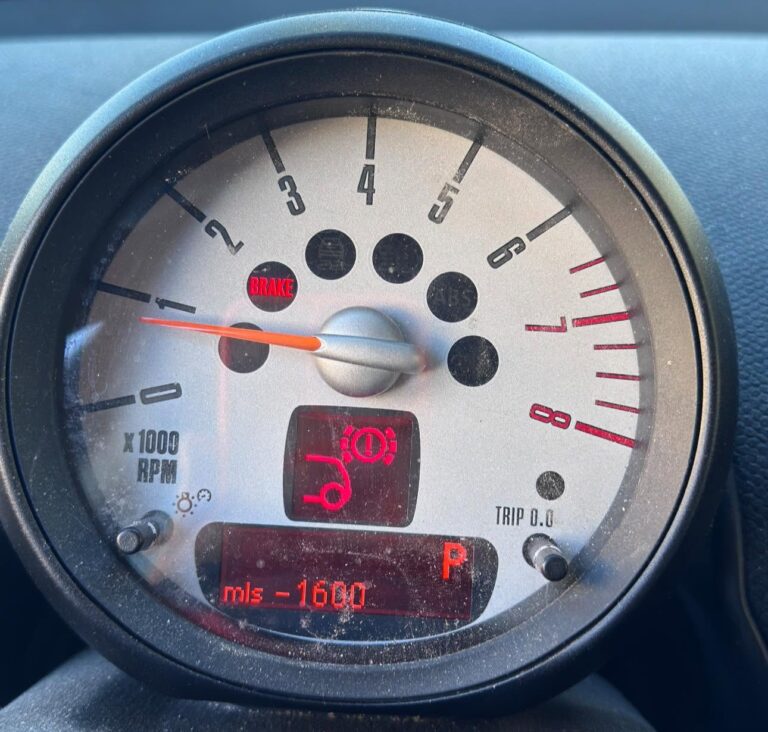
So what does the Mini Cooper brake pad warning light look like? It shows up as an exclamation mark inside a circle on your instrument cluster. It is not the most dramatic warning light, but it is one you should never ignore. This light is your car’s way of saying, “Hey, something is wrong with the brakes. Deal with it now.”
When your brake pads get close to the end of their useful life, that light will come on. It might also appear if there is a fault somewhere else in the braking system. Either way, it is a signal to take action.
Why Is Your Brake Pad Warning Light On?
There are several reasons why that little exclamation mark might show up on your dash. Let me break down the most common causes.
Worn Out Brake Pads
This is the most obvious reason. Brake pads are designed to wear down over time. Every time you hit the brakes, the pads press against the rotors, creating friction that slows your car down. Over thousands of miles, that friction eats away at the pad material. Eventually, the pads get too thin to work effectively.
When the pad thickness drops below a certain point, a sensor detects it and triggers the warning light. Think of it like a smoke detector for your brakes. It gives you advance notice before the problem becomes dangerous.
Parking Brake Problems
Sometimes the parking brake gets stuck in the engaged position, or it only partially releases. When this happens, it creates extra stress on your brake pads. The pads wear down faster than normal, and the warning light comes on to let you know something is wrong.
A stuck parking brake can also make your car feel sluggish or cause a burning smell. If you notice either of these symptoms along with the warning light, check the parking brake first.
General Brake System Issues
The brake pad warning light does not just monitor the pads. It also keeps an eye on the entire braking system. Low brake fluid, faulty brake light bulbs, malfunctioning sensors, or failing brake components can all trigger the same warning light.
This is why you cannot just assume the light means worn pads. You need a full brake system inspection to figure out what is really going on. Sometimes the issue is simple. Other times, it is something more serious hiding beneath the surface.
Low Brake Fluid
Brake fluid is the lifeblood of your braking system. Without enough of it, your brakes will not work properly. Low brake fluid can cause weak braking performance, and in extreme cases, complete brake failure.
Some Mini Cooper models have a separate warning light for low brake fluid. Others use the same brake pad warning light to indicate both problems. Either way, low fluid is a serious issue that you need to address immediately.
ABS Malfunctions
If your Mini Cooper has an Anti-lock Brake System, also known as ABS, you might see both the brake warning light and the ABS warning light at the same time. This usually means there is a problem with the ABS itself, not necessarily the brake pads.
ABS problems can be caused by electrical issues, faulty sensors, or even something as simple as a dirty wheel speed sensor. When both lights come on together, you need a professional to run a diagnostic scan and read the ABS trouble codes.
Faulty Sensors
Your braking system has sensors scattered throughout. There are sensors in the handbrake, the master cylinder, and the ABS. These sensors monitor different aspects of the system and alert you when something goes wrong.
But sensors can fail too. A malfunctioning sensor might trigger the brake warning light even when nothing is actually wrong with the pads or the system. This is another reason why a proper diagnostic check is so important. You need to know whether the warning is real or just a faulty sensor crying wolf.
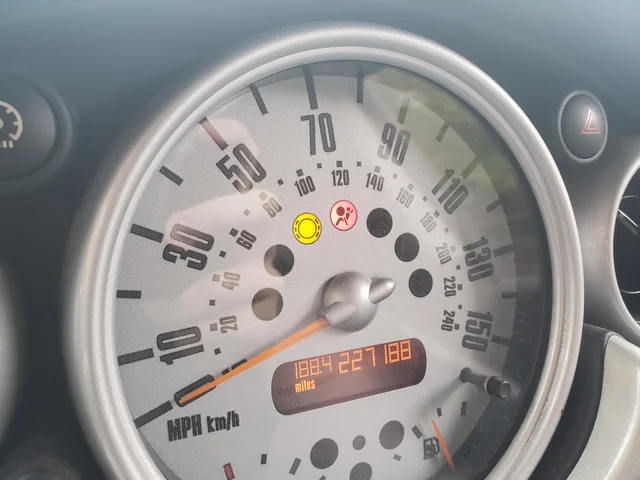
How to Fix the Brake Pad Warning Light on Your Mini Cooper
Now that you know what might be causing the warning light, let me walk you through the fixes. Some of these you can check yourself. Others require a professional mechanic.
Check and Top Off Brake Fluid
Start with the easiest fix. Pop the hood and locate the brake fluid reservoir. It is usually on the driver’s side of the engine bay, near the back of the engine compartment. The reservoir is typically made of translucent plastic, either yellow or white, so you can see the fluid level inside.
On the side of the reservoir, you will see two marks: one for the minimum level and one for the maximum. The fluid should be between these two lines. If it is below the minimum mark, you need to add more brake fluid.
But here is the thing. Before you just pour in new fluid, ask yourself why the level dropped in the first place. Brake fluid does not evaporate like engine oil. If the level is low, it usually means the brake pads are worn down or there is a leak somewhere in the system.
If your brake fluid is old and dirty, consider flushing the system before adding fresh fluid. Old brake fluid absorbs moisture over time, which reduces its effectiveness and can cause corrosion inside the brake lines.
Replace Worn Brake Pads and Sensors
If your brake pads have worn down to 4.5mm or less, it is time to replace them. At this thickness, the pads are no longer safe. They will not stop your car as effectively, and they can start damaging the rotors.
When you replace the pads, you should also replace the brake pad wear sensors. These sensors are what trigger the warning light in the first place. If you replace the pads but leave the old sensors in place, the light might stay on even after the repair.
Replacing brake pads is not a difficult job for an experienced mechanic, but it is not something I recommend doing yourself unless you have the right tools and knowledge. Brakes are a safety-critical system. One mistake could put you and others at risk.
Fix a Stuck Parking Brake
If the parking brake is stuck, you can try engaging and disengaging it several times to see if that frees it up. Sometimes the mechanism just needs to be worked back and forth a few times to loosen up.
You can also spray some penetrating lubricant like WD-40 on the parking brake mechanism. Let it sit for a few minutes, then try engaging and releasing the brake again.
If that does not work, take the car to a professional. A stuck parking brake can cause serious damage to your brake pads and rotors if left unaddressed.
Diagnose and Repair ABS Problems
ABS issues are not something you can fix with a bottle of spray or a trip to the parts store. You need a professional mechanic with a diagnostic scanner to read the ABS trouble codes and figure out what is wrong.
Sometimes the fix is simple, like cleaning a dirty wheel speed sensor. Other times, you might need to replace a sensor or repair a wiring issue. Either way, this is a job for a trained technician.
How to Reset the Brake Pad Warning Light
After you have fixed the underlying problem, you might need to manually reset the brake pad warning light. On most Mini Coopers, the warning message will say something like “Brake system Drive moderately” on the central dashboard display.
Here is how to reset it.
First, turn the ignition on without starting the engine. Then, press and hold the trip button on the speedometer. This is the small button you normally use to reset the trip odometer.
Keep holding the trip button and cycle through the different screens on the instrument cluster. Eventually, you will see a screen that says “Reset Possible.” When you see that, release the trip button briefly, then press it again to start the reset process.
The display will show “Resetting in Progress.” Keep holding the trip button until the screen changes to “Reset Successful.” Once you see that message, turn the ignition off and then back on again. The warning light should be gone.
If the light comes back on after you reset it, that means the problem is still there. You will need to go back and double-check your work or take the car to a professional for further diagnosis.
What Happens If You Ignore the Brake Pad Warning Light?
Some people see a warning light and think, “I will deal with that later.” But ignoring a brake pad warning light is a terrible idea. Let me explain why.
When your brake pads wear down too far, the metal backing plate starts rubbing directly against the rotor. This causes a horrible grinding noise, but more importantly, it damages the rotor. Once the rotor is scored or warped, you cannot just replace the pads. You have to replace the rotors too, which costs a lot more money.
In extreme cases, worn brake pads can cause complete brake failure. Imagine driving down the highway and pressing the brake pedal, only to find that it does not do anything. That is a nightmare scenario, and it is exactly what can happen if you ignore the warning light for too long.
Even if you do not care about the safety aspect, think about the cost. Replacing brake pads is relatively cheap. Replacing pads and rotors is more expensive. Replacing pads, rotors, and calipers because you ignored the problem for months? That is going to hurt your wallet.
How Often Should You Replace Brake Pads on a Mini Cooper?
There is no universal answer to this question because it depends on how you drive. If you do a lot of city driving with frequent stops, your brake pads will wear out faster than someone who does mostly highway driving.
On average, brake pads last anywhere from 25,000 to 70,000 miles. That is a wide range, I know. But driving habits make a huge difference. Aggressive drivers who slam on the brakes at the last second will go through pads much faster than cautious drivers who brake smoothly and gradually.
Your environment also plays a role. If you live in a hilly area, you will use your brakes more often. If you drive in stop-and-go traffic every day, your pads will wear out faster. Even the quality of the brake pads themselves can affect how long they last.
The best way to know when your pads need replacing is to have them inspected regularly. Most mechanics will check your brake pads during routine maintenance visits. If they tell you the pads are getting thin, do not wait. Replace them before the warning light comes on.
Signs Your Brake Pads Are Wearing Out (Besides the Warning Light)
The warning light is great, but it is not the only way to tell if your brake pads are worn. Here are some other signs to watch out for.
Squealing or Screeching Noise: Most brake pads have a built-in wear indicator that makes a high-pitched squealing sound when the pads get too thin. If you hear this noise when you brake, it means the pads are near the end of their life.
Grinding Noise: If the squealing turns into a grinding sound, you have waited too long. The pads are completely worn out, and the metal backing plate is now rubbing against the rotor. Get to a mechanic immediately.
Vibration in the Brake Pedal: If you feel a pulsing or vibration in the brake pedal when you stop, it could mean the rotors are warped. Warped rotors are often caused by driving too long on worn brake pads.
Pulling to One Side: If your car pulls to the left or right when you brake, it could mean the brake pads are wearing unevenly. This can also be caused by a stuck caliper or a brake fluid leak.
Longer Stopping Distance: If it takes longer than usual to bring your car to a complete stop, your brake pads might be worn out. This is a serious safety issue and needs to be addressed right away.
Can You Drive with the Brake Pad Warning Light On?
Technically, yes. Your car will still move, and the brakes will still work to some extent. But should you? Absolutely not.
Driving with the brake pad warning light on is like playing Russian roulette with your safety. The brakes might work fine one moment and fail completely the next. Even if they do not fail outright, worn brake pads significantly reduce your stopping power, which increases the risk of an accident.
If the warning light comes on while you are driving, pull over as soon as it is safe to do so. Check the brake fluid level first. If it is low, top it off and drive carefully to the nearest repair shop. If the fluid level is fine, you might have worn brake pads or another issue that requires immediate attention.
Do not take chances. Brakes are too important.
Should You Replace Brake Pads Yourself or Hire a Mechanic?
If you are handy with tools and have some mechanical experience, you might be tempted to replace the brake pads yourself. And honestly, it is not an overly complicated job if you know what you are doing.
But here is my take as a mechanic. Brakes are not something you want to mess up. If you install the pads incorrectly or forget to bleed the brake lines, you could end up with serious problems. In the worst case, you could cause brake failure, which puts your life and the lives of others at risk.
If you have never replaced brake pads before, I strongly recommend letting a professional handle it. Yes, it will cost more than doing it yourself, but the peace of mind is worth it. A certified mechanic has the experience, tools, and knowledge to do the job right the first time.
If you do decide to replace the pads yourself, make sure you also replace the brake pad wear sensors. And after the job is done, test the brakes in a safe environment before driving on public roads.
What About Brake Rotors?
We have talked a lot about brake pads, but the rotors are just as important. The rotors are the metal discs that the brake pads clamp down on to stop your car. Over time, rotors can become worn, warped, or scored.
When you replace your brake pads, the mechanic should also inspect the rotors. If the rotors are still in good shape, you can reuse them. But if they are worn beyond a certain thickness or have deep grooves, they need to be replaced.
Some rotors can be resurfaced, also called turning the rotors. This involves shaving off a thin layer of metal to create a smooth surface again. But this only works if the rotor is still thick enough. If it is too thin, resurfacing is not an option.
Replacing rotors is more expensive than just replacing pads, but it is sometimes necessary. If you skip this step and install new pads on worn rotors, the new pads will not work as well and will wear out faster.
How Much Does It Cost to Fix Brake Pad Issues on a Mini Cooper?
The cost of fixing brake pad issues varies depending on what needs to be done. If you are just replacing the brake pads and sensors, you are looking at around 200 to 400 dollars per axle. That includes parts and labor.
If you also need to replace the rotors, add another 150 to 300 dollars per axle. So for a full brake job on all four wheels, including pads, rotors, and sensors, you could be looking at 700 to 1,400 dollars or more.
These are just rough estimates. The actual cost will depend on your location, the mechanic you choose, and the quality of the parts you buy. Genuine BMW parts are more expensive than aftermarket parts, but they usually offer better performance and longevity.
If you have a good relationship with a trusted mechanic, ask for a detailed quote before you commit to the work. That way, you know exactly what you are paying for.
Tips for Extending the Life of Your Brake Pads
While you cannot avoid replacing brake pads forever, there are things you can do to make them last longer.
Drive Smoothly: Avoid slamming on the brakes. Anticipate stops and slow down gradually. This reduces wear on the pads and also improves your fuel economy.
Avoid Overloading Your Car: Carrying extra weight puts more strain on the brakes. If you frequently haul heavy loads, your brake pads will wear out faster.
Use Engine Braking: If you drive a manual transmission, downshift to slow the car down instead of relying solely on the brakes. This is especially useful when driving downhill.
Get Regular Brake Inspections: Have your brakes checked at least once a year. Catching problems early can save you money and prevent more serious issues down the road.
Flush the Brake Fluid: Brake fluid should be flushed every two to three years. Old fluid can absorb moisture, which reduces braking performance and causes corrosion inside the system.
What Brake Pads Should You Use for Your Mini Cooper?
When it comes time to replace your brake pads, you will have a few options. The main types are organic, semi-metallic, and ceramic.
Organic Brake Pads: These are made from materials like rubber, carbon, and Kevlar. They are quiet, produce less dust, and are gentle on the rotors. But they wear out faster than other types and do not perform as well in extreme conditions.
Semi-Metallic Brake Pads: These pads contain metal fibers, which make them more durable and heat-resistant. They offer better performance, especially in heavy braking situations. But they are noisier and produce more brake dust.
Ceramic Brake Pads: These are the premium option. They are quiet, produce very little dust, and last a long time. They also perform well in a wide range of temperatures. The downside is that they cost more than the other types.
For most Mini Cooper owners, ceramic pads are the best choice. They offer a good balance of performance, longevity, and low dust. But if you are on a tight budget, semi-metallic pads are a solid alternative.
Common Mistakes to Avoid When Dealing with Brake Pad Issues
Over the years, I have seen people make all kinds of mistakes when dealing with brake problems. Here are a few to avoid.
Ignoring the Warning Light: This is the biggest mistake. The warning light is there for a reason. Do not ignore it.
Replacing Only the Front or Rear Pads: If one axle is worn out, the other is probably not far behind. It is usually a good idea to replace both the front and rear pads at the same time.
Using Cheap, Low-Quality Parts: I get it. You want to save money. But cheap brake pads wear out faster and perform worse. Spend a little extra on quality parts.
Not Replacing the Sensors: If you replace the pads but leave the old sensors in place, the warning light might stay on. Always replace the sensors when you replace the pads.
Skipping the Brake Fluid Check: Low brake fluid is often a sign of worn pads or a leak. Always check the fluid level when you are working on the brakes.
Why You Should Always Take Brake Problems Seriously
I cannot stress this enough. Your brakes are the most important safety system on your car. Nothing else comes close. You can drive with a bad alternator, a rough idle, or a broken air conditioner. But you cannot drive safely with bad brakes.
When that brake pad warning light comes on, it is not just a suggestion. It is a clear signal that something needs your attention. Whether it is worn pads, low fluid, or a faulty sensor, you need to find out what the problem is and fix it.
Do not wait until the problem gets worse. Do not assume it will go away on its own. And do not gamble with your safety or the safety of others on the road.
If you are not comfortable checking the brakes yourself, take the car to a professional. A good mechanic can diagnose the problem in minutes and give you a clear plan for fixing it. The cost of a brake inspection is a small price to pay for peace of mind.
Your Mini Cooper is a great car, and with proper maintenance, it will give you years of reliable service. But that only happens if you take care of it. Pay attention to the warning lights, stay on top of maintenance, and never ignore a brake problem. Your life might depend on it.