
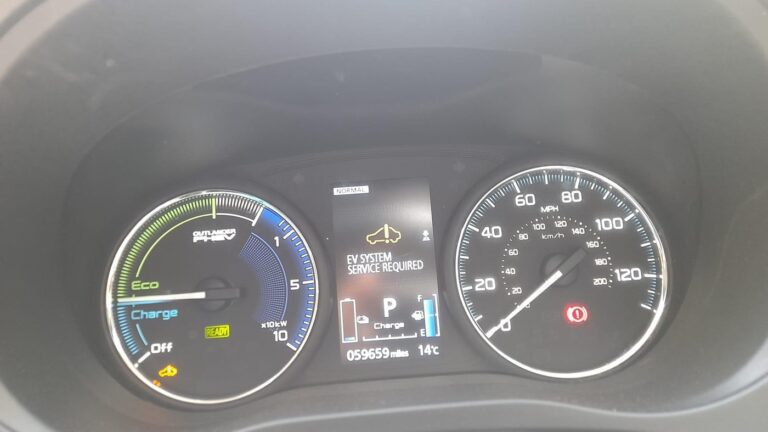
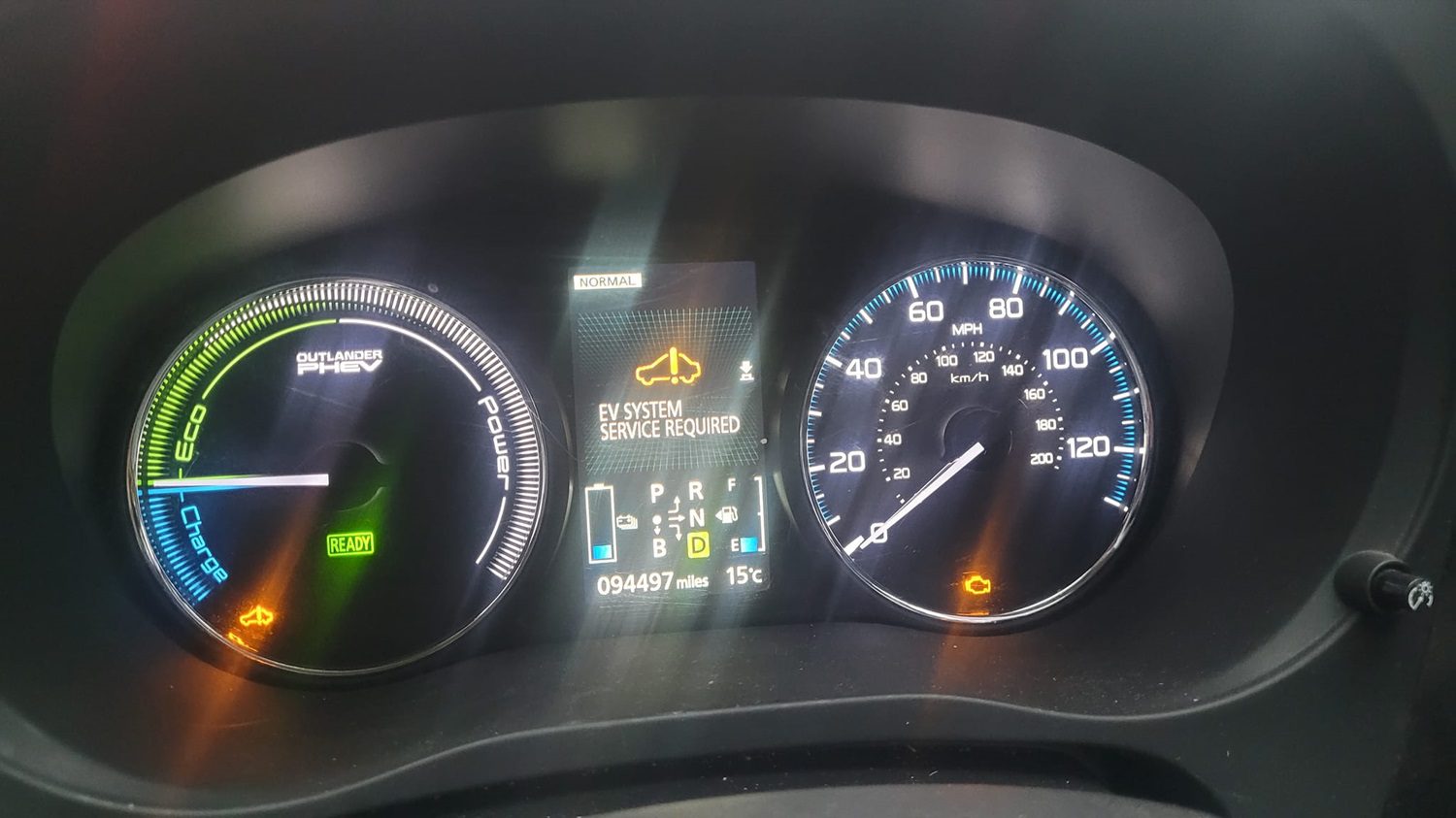
If your Mitsubishi electric vehicle is displaying the “EV System Service Required” warning, you are probably looking at your dashboard wondering what exactly has gone wrong and how serious it is. This warning can feel alarming precisely because it is not always specific about what triggered it. The message tells you that one or more diagnostic trouble codes have been stored in the vehicle’s computer system, which means the EV system has detected something outside its expected parameters.
The good news is that not every instance of this warning signals a catastrophic problem. Some causes are relatively minor. Others are genuinely serious, particularly those involving the high-voltage battery system. This guide will help you understand what is behind the warning and what needs to happen to address it correctly.
What Does “EV System Service Required” Actually Mean on a Mitsubishi?
Electric vehicles have a significantly more complex onboard diagnostic system than conventional combustion engine vehicles. The EV system spans the high-voltage battery pack, the motor and inverter, the charging system, the thermal management system, and multiple supporting systems including the 12V auxiliary battery, the PTC heater, and the AC compressor. All of these are continuously monitored by the vehicle’s computer.
When the computer detects a reading outside its acceptable range in any of these systems, it stores a diagnostic trouble code and triggers the EV System Service Required warning. The warning itself does not tell you which system is at fault. That information is in the stored fault codes, which can only be retrieved using a diagnostic scan tool capable of accessing Mitsubishi’s EV-specific modules.
One important thing to note: this warning often appears alongside other warning messages. Pay close attention to any additional messages displayed at the same time because those companion warnings provide valuable clues about which system is involved. A warning about the battery alongside the EV service message points in a very different direction than a warning about the tire pressure system appearing simultaneously.
High-voltage EV system diagnostics and repairs must only be handled by technicians trained in high-voltage systems. The Mitsubishi i-MiEV, Outlander PHEV, and other Mitsubishi electric and plug-in hybrid models use high-voltage systems that can be lethally dangerous if handled incorrectly. This is not a warning about complexity. It is a genuine safety issue.
What Causes the Mitsubishi EV System Service Required Warning?
Here is a detailed look at the most common causes behind this warning and what is happening in each case.
1. Incorrect Tire Size or Type After a Tire Change
This is one of the more surprising causes of the EV service warning, and it catches many owners off guard. The vehicle’s computer continuously monitors the rotational speed of each wheel through the wheel speed sensors. In an electric vehicle, this data is used not just for ABS and traction control, but also for calculating energy consumption, regenerative braking efficiency, and wheel speed balance between the driven axle wheels.
When tires of a different size or with a significantly different rolling circumference are installed, the computer detects that wheel speed readings no longer match its calibrated expectations. The discrepancy crosses the vehicle’s programmed threshold, which triggers a stored fault code and the EV service warning.
If your EV service warning appeared shortly after having new tires installed, incorrect tire size or type is high on the list of suspects. This is particularly common when owners install all-season replacements that differ slightly in overall diameter from the original equipment tires, or when a single tire is replaced with a slightly different specification than the other three.
2. AC Compressor Filled With the Wrong Oil Type
The AC compressor on Mitsubishi electric and plug-in hybrid vehicles is an electrically driven compressor that requires a specific type of synthetic lubricating oil, typically PAG (Polyalkylene Glycol) oil with a specific viscosity rating approved for EV AC compressors. This is different from the oil used in conventional belt-driven compressors on combustion engine vehicles.
If a shop services the AC system and uses conventional mineral oil or an incorrect PAG viscosity grade, the oil can degrade the internal components of the electrically driven compressor, damage the motor windings inside the compressor housing, or cause compressor inefficiency that the EV management system detects as a fault.
This is a common mistake at shops that are not familiar with EV air conditioning systems, particularly those that service mostly conventional combustion engine vehicles. Always confirm with any shop that they are using the correct EV-approved compressor oil before authorizing AC system service on your Mitsubishi EV.
3. Overheated PTC Heater
The Positive Temperature Coefficient (PTC) heater is the electric cabin heating element used in Mitsubishi EVs in place of the waste heat from a combustion engine. It is a resistive heating element that draws power from the high-voltage battery to warm the cabin in cold weather.
Under certain conditions, such as extended high-demand heating operation in extreme cold or a cooling fault within the heater’s thermal management circuit, the PTC heater can overheat. The vehicle’s computer detects the thermal overrun through temperature sensors monitoring the heater and stores a fault code. This protects the heater from damage and prevents any potential fire hazard from sustained overheating, but it also puts the EV service required warning on your dashboard.
An overheated PTC heater fault can sometimes clear itself after the heater cools down, but the underlying cause of why it overheated in the first place needs to be investigated. A one-time thermal event in extreme conditions may be less concerning than a heater that overheats regularly under normal operation, which suggests a cooling system fault or a failing heater element.
4. Issues With the 12V Auxiliary Battery
Every Mitsubishi EV also has a conventional 12V auxiliary battery alongside the main high-voltage traction battery. The 12V battery powers the vehicle’s control electronics, communication systems, lighting, and keeps the EV management systems active even when the high-voltage system is at rest. Think of it as the battery that keeps the brain of the vehicle alive.
When the 12V battery voltage drops significantly, typically to around 10 volts or below, it begins to affect the reliability of the vehicle’s electronic control systems. Voltage below the minimum threshold causes the EV control modules to register erroneous fault codes because the electronic systems are not receiving the stable power they need to operate within spec.
A weak 12V battery can produce a cascade of seemingly unrelated warning messages and EV system fault codes, including the EV service required warning, even when there is nothing actually wrong with the high-voltage traction system. If your Mitsubishi EV is showing multiple electronic warnings simultaneously or is having trouble entering ready mode, the 12V battery should be tested early in the diagnostic process.
The 12V battery in EVs actually tends to have a shorter lifespan than in conventional vehicles because it does not get charged through alternator operation in the same way. It is charged by the vehicle’s DC-DC converter from the main traction battery, but the charging cycles can be less consistent than in a conventional vehicle. Many EV owners are surprised by how frequently the 12V battery needs attention.
5. Incompatible or Malfunctioning Fast Charger
Charging equipment compatibility is an area that generates more EV problems than most owners expect. Not every DC fast charger communicates correctly with every EV, even when the connector physically fits. Differences in charging protocol implementation, firmware versions, or maximum current compatibility can cause the charging session to terminate abnormally or to charge in a way that the vehicle’s battery management system flags as a fault.
Specific issues that can trigger EV fault codes from charging events include:
- A charger that does not properly signal the vehicle to stop charging when the battery reaches 100 percent, causing the battery management system to detect an overcharge event
- A charger that delivers current at a rate incompatible with the vehicle’s onboard charger specifications, causing a fault in the charging management circuit
- A charger with a ground fault or wiring issue that introduces electrical noise into the vehicle’s charging system
- Repeated interrupted charging sessions at a specific public charger that has its own internal fault
If the EV service warning appeared after a charging session, particularly at a public fast charger you had not used before, the charging event is a strong suspect. Try charging at a different location or charger type to see if the fault recurs, and have the stored codes read to identify the specific charging system fault that was logged.
6. High-Voltage Battery System Faults
When the EV service warning is accompanied by specific messages about the main traction battery, such as warnings about battery overheating, charge capacity reduction, or battery system malfunction, the high-voltage battery pack itself may be involved. This is the most serious category of EV fault and the one that requires the most urgent professional attention.
High-voltage battery faults can stem from cell degradation in an aging pack, thermal management system failures that allow the battery to operate outside its temperature range, a fault in the battery management system (BMS) software or hardware, or damage from a deep discharge event. In some cases, individual cell modules within the pack can fail in a way that reduces pack capacity and triggers protective fault codes.
How to Fix the Mitsubishi EV System Service Required Warning
Here is the structured approach to addressing this warning correctly.
Step 1: Get a Full Diagnostic Scan From an EV-Competent Shop
This is not a situation where a basic OBD-II scanner will give you the information you need. Mitsubishi’s EV system fault codes are stored in EV-specific modules that require either Mitsubishi’s own diagnostic software or a professional-grade scanner with confirmed Mitsubishi EV module coverage. A generic scanner will either read nothing or only surface generic codes that do not tell the complete story.
The diagnostic scan will show you which specific system triggered the fault, what the fault code means, and in many cases will provide live data that helps the technician verify whether the fault was a one-time event or an ongoing condition. All of this information is necessary to determine the correct repair.
Fix 1: Correct the Tire Size or Type
If the fault codes point to a wheel speed discrepancy and you recently changed tires, the first step is verifying that the installed tires match the manufacturer’s specification exactly. Check the tire size printed on the driver’s door jamb sticker and compare it to what is currently on the vehicle. If the tires do not match, replacing them with the correct specification is the repair.
After installing the correct tires, the fault codes should be cleared with the scan tool and the vehicle driven to allow the system to confirm that the wheel speed readings are now within expected parameters. If the codes return after the correct tires are installed, a different underlying cause needs to be investigated.
Fix 2: Drain and Replace the AC Compressor Oil
If incorrect oil was used in the AC compressor, the repair process is:
- Have a qualified technician inspect the compressor for any damage caused by the incorrect oil. If the compressor motor windings or internal components are damaged, the compressor needs replacement before the oil issue is addressed.
- Drain the incorrect oil from the compressor through the drain plug.
- Flush the compressor to remove any residual incorrect oil.
- Refill with the correct EV-approved compressor oil at the volume specified by Mitsubishi for your specific model.
- Have the AC system pressure-tested to confirm there are no refrigerant leaks and that the system operates correctly after the oil correction.
This repair should only be done at a shop equipped to handle EV air conditioning systems and familiar with the correct oil specification for your Mitsubishi EV model.
Fix 3: Address the PTC Heater
If the PTC heater is confirmed as the fault source, the repair approach depends on whether it is a single thermal event or a recurring problem. For a single overheating event, clearing the fault code after the heater has cooled and monitoring for recurrence may be sufficient. If the fault recurs, the heater element or its thermal management system has a genuine failure that requires component replacement.
Replacing the PTC heater on a Mitsubishi EV involves disconnecting the 12V battery, deactivating the high-voltage service interlock, disconnecting the high-voltage connector to the heater unit, and replacing the heater assembly. This process must follow Mitsubishi’s high-voltage safety procedures precisely. It is not a repair for a general-purpose mechanic unfamiliar with EV high-voltage work.
Fix 4: Replace the 12V Auxiliary Battery
If the 12V battery is confirmed as weak or failing through a load test, replace it rather than trying to manage it. A continuously underperforming 12V battery will keep generating ghost fault codes and erratic electronic behavior that masks the vehicle’s true condition and makes diagnosis harder. On Mitsubishi EV models, the 12V battery is typically a standard group size AGM (Absorbent Glass Mat) battery that is accessible without high-voltage system interaction.
Use an AGM battery of the correct size and cold cranking amp rating specified for your model. Conventional flooded lead-acid batteries are not recommended replacements for EVs that use AGM batteries, as the charging profiles from the DC-DC converter are optimized for AGM chemistry.
After replacing the 12V battery, clear all stored fault codes and allow the vehicle to complete a full drive cycle to confirm the EV system is operating normally before concluding the repair is complete.
Fix 5: Resolve Charger-Related Faults
Charger-related fault codes require a two-part approach. First, identify whether the fault is in the charging equipment or in the vehicle’s onboard charger.
- Try charging at a different location using a different charger, ideally a Level 2 home charger if the fault occurred with a public DC fast charger. If the vehicle charges normally with a different charger and no new fault codes appear, the issue is with the specific charger unit rather than the vehicle.
- Have a technician pull the specific fault codes from the charging system module. The code will identify whether the fault is in the vehicle’s onboard charger, the communication between the charger and vehicle, or in the battery management system’s response to the charging event.
- If the onboard charger has failed internally, replacement is necessary. This is a high-voltage component repair that requires a certified EV technician.

A Note on High-Voltage Safety
This deserves its own section because it is genuinely important. The main traction battery and high-voltage system on Mitsubishi EVs operate at voltages ranging from around 300 to 400 volts or higher depending on the model. Contact with high-voltage components without proper training, personal protective equipment, and the correct insulated tools can be fatal. This is not an exaggeration.
Any repair that involves the high-voltage battery pack, the onboard charger, the motor inverter, the PTC heater’s high-voltage connections, or the EV system’s high-voltage wiring must be performed by a technician who has received specific training in EV high-voltage safety procedures. This includes knowing how to properly deactivate the high-voltage service interlock, verify that the system is de-energized before working on it, and use properly rated insulating gloves and tools.
For most owners, this means that anything beyond 12V battery replacement and tire corrections should be handled by a Mitsubishi dealership or a qualified independent EV repair shop with certified high-voltage technicians.
Approximate Costs for Common Mitsubishi EV Repairs
| Repair Type | Approximate Parts Cost | Approximate Total Cost (with labor) |
|---|---|---|
| Diagnostic scan (EV-specific) | N/A | $100 to $200 |
| Tire replacement (correct size) | $100 to $250 per tire | $150 to $350 per tire installed |
| 12V auxiliary battery replacement | $80 to $200 | $120 to $300 |
| AC compressor oil drain and refill | $30 to $80 (oil) | $200 to $500 |
| AC compressor replacement | $500 to $1,500+ | $1,000 to $2,500+ |
| PTC heater replacement | $300 to $800 | $600 to $1,500 |
| Onboard charger replacement | $800 to $2,500+ | $1,500 to $4,000+ |
| High-voltage battery diagnosis | N/A | $200 to $400 for diagnosis alone |
What to Tell the Shop When You Bring Your Mitsubishi EV In
To help the technician diagnose this efficiently, be ready to share the following information:
- Any other warning messages that appeared alongside the EV service required message
- Whether the warning appeared after a specific event such as a tire change, a charging session, extreme weather, or AC service
- Whether the vehicle’s driving behavior has changed, including any reduction in range, changes in regenerative braking feel, or difficulty entering ready mode
- The charging location and charger type used most recently
- Any recent service work done at any shop, including tire work or AC service
This context can cut the diagnostic time significantly and helps the technician focus on the most likely causes based on your vehicle’s recent history.
Final Thought
The Mitsubishi EV System Service Required warning is your vehicle’s signal that something needs investigation, not necessarily something that needs panic. The severity depends entirely on what the stored fault codes reveal. Start with the simplest checks based on recent vehicle history, get the full diagnostic scan done at a shop with proper EV competency, and let the fault codes guide the repair rather than guessing at components. For anything touching the high-voltage system, certified high-voltage technicians are not optional. They are the only safe way to do the job correctly.