
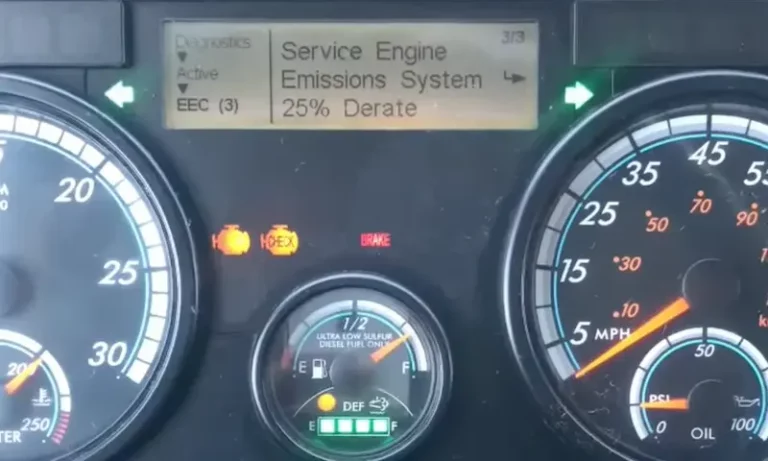
You are cruising down the highway, everything feels fine, and then out of nowhere your truck loses power. You press the accelerator and the engine responds, but it is like hitting an invisible wall. The speed will not climb past a certain point. Then the dashboard lights up with a message you have never seen before: “Service Engine Emission System 25 Derate.” The engine light comes on, the DPF light starts flashing, and suddenly you are that person on the side of the road wondering what just happened.
This is one of those warnings that catches diesel truck owners completely off guard because it does not just flag a problem, it actively limits what your vehicle can do. That 25% derate is not a suggestion. The engine computer is intentionally cutting your power output, and it is going to keep doing it until the underlying issue is addressed.
The good news is that this warning is well understood, and the causes are specific. If you know what to look for, you can diagnose it methodically and often fix it without spending a fortune. Let’s get into it.
What Does “Service Engine Emission System 25 Derate” Actually Mean?
Before we get into the causes and fixes, you need to understand what this warning is telling you, because it is more than just a check engine light.

The term “derate” refers to the engine control system deliberately reducing power output or limiting vehicle speed. Think of it as the truck’s built-in protection mechanism. When the computer detects that something in the emission system is not functioning correctly, it does not just log a code and move on. It actively punishes performance to force you to deal with the problem.
A 25% derate is significant. Depending on your truck and how it is loaded, that could mean the difference between being able to merge onto a highway and being stuck going 45 miles per hour with your hazard lights on. And if you ignore it? The derate can escalate. Some systems go from 25% to 40%, then to what is called a “limp mode,” where the vehicle barely moves at all.
So why does the emission system trigger this? Because modern diesel engines are required by law to meet strict emissions standards. The system responsible for keeping those emissions in check is complex, and when it breaks down, the truck is releasing harmful gases into the environment at levels it is not supposed to. The engine computer knows this, and the derate is its way of making sure you fix it quickly.
The Emission System Components You Need to Know About
The emission system on a modern diesel truck is made up of several interconnected parts. When this warning appears, the fault almost always traces back to one of these components:

- DEF Doser Valve (also called the DEF injector)
- DEF Pump Assembly
- DEF Control Module
- NOx Sensors
- Engine Control Module (ECM)
Each of these plays a specific role. If any one of them fails or sends incorrect data, the entire system can be thrown off balance, and the warning appears along with the power restriction. Understanding what each component does helps you figure out which one is the likely culprit in your situation.
Every Cause of the “Service Engine Emission System 25 Derate” Warning
1. A Damaged or Clogged DEF Doser Valve
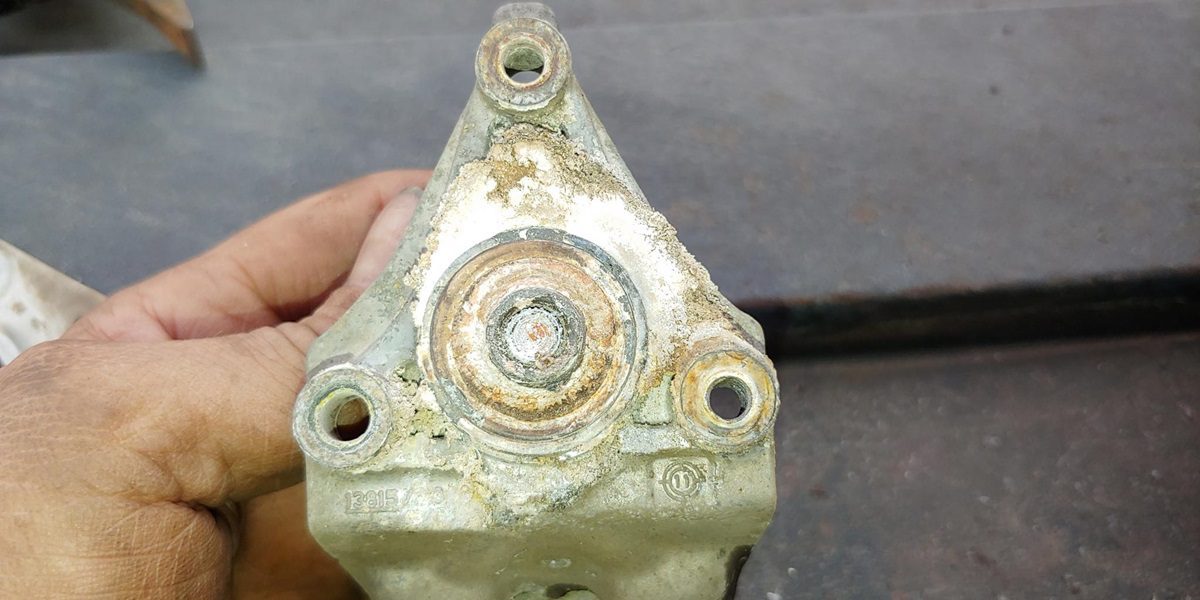
The DEF doser valve, also known as the DEF injector, is the component responsible for injecting Diesel Exhaust Fluid into the exhaust stream. DEF is a mixture of deionized water and synthetic urea, and its job is to chemically react with the harmful nitrogen oxide gases in the exhaust before they exit the tailpipe. When it is working properly, this process can reduce the harmfulness of those exhaust gases by up to 90%.
Now imagine that valve gets clogged with carbon buildup or crystallized DEF deposits. The fluid cannot get into the exhaust stream. The chemical reaction does not happen. Nitrogen oxide levels spike. The computer detects the elevated emissions, recognizes that the system is not doing its job, and triggers the derate warning.
This is actually one of the more common causes of this specific warning, especially on trucks with higher mileage or those that do a lot of short-trip driving where the exhaust system never fully heats up and deposits accumulate faster.
2. A Failing DEF Pump Assembly
The DEF pump is what moves the fluid from the DEF tank to the doser valve. It has to deliver the right amount of fluid at the right pressure and at the right time. The engine computer is constantly telling the pump how much to deliver based on what the NOx sensors are reading.

When the pump assembly fails, that supply chain breaks. In most cases, a failed pump means no DEF is being delivered at all. The exhaust goes through the system without being treated, emissions spike, and the computer responds with the derate. In other cases, a pump that is not delivering at the correct pressure can cause intermittent issues where the system works sometimes and not others, which makes diagnosis trickier.
DEF pump failures can happen for a few reasons: general wear over time, contaminated DEF fluid that damages the pump internals, or running the DEF tank completely empty and allowing the pump to run dry repeatedly.
3. A Malfunctioning DEF Control Module
Think of the DEF control module as the brain of the DEF system. It is in constant communication with the ECM, receiving instructions and sending back status updates. It coordinates the pump, the doser valve, and the sensors to make sure the entire DEF injection process runs correctly.
When this module fails, the entire DEF system goes dark. The pump does not get its instructions, the doser valve does not open at the right time, and the ECM gets no confirmation that the emission reduction process is happening. The result is the same as having a failed pump or valve, the emissions are not being treated, and the derate warning appears.

Module failures can be caused by corrosion, heat damage, low battery voltage over time, or simple electronic failure. The module itself is not the first thing most mechanics suspect, but it should be on the diagnostic list if simpler causes have been ruled out.
4. Damaged or Failed NOx Sensors
The NOx sensors are the eyes of the emission system. There are typically two of them on a diesel truck equipped with a Selective Catalytic Reduction (SCR) system. One sits upstream of the SCR catalyst and one sits downstream. Together, they give the ECM a before-and-after picture of what the exhaust contains.
Here is how it works in plain terms. The upstream sensor tells the computer how much nitrogen oxide is entering the SCR system. The downstream sensor tells it how much is leaving. If the difference between those two readings is not significant enough, the ECM knows the DEF system is not working properly and triggers the derate.
But here is where it gets tricky. A failed NOx sensor might send incorrect readings even when the physical DEF system is working fine. The computer is relying on that sensor data to evaluate the system. If the sensor lies, the computer believes there is a real emission problem and derates the engine, even though nothing is actually wrong with the DEF hardware.
NOx sensors are a relatively common wear item on high-mileage diesel trucks. They do not last forever, and when they go, they often take the form of completely dead sensors or sensors that give wildly inaccurate readings.
5. A Malfunctioning ECM
The ECM is the vehicle’s central computer. It manages everything from fuel delivery to emission controls, and it is the component that ultimately decides whether or not to trigger the derate. In most cases, when the ECM issues a “Service Engine Emission System 25 Derate” warning, it is because it is responding accurately to a real fault in one of the emission components described above.
But sometimes the ECM itself is the problem. Software corruption, internal hardware failure, or even issues caused by a voltage spike can cause the ECM to misread sensor data or falsely trigger warning messages and derates. This is rare, but it happens, and it is usually the last thing diagnosed after everything else has been ruled out.
ECM issues are not something you want to diagnose yourself unless you have specific automotive electronics experience. This is firmly in professional territory.
How to Diagnose the “Service Engine Emission System 25 Derate” the Right Way
Here is the mistake a lot of truck owners make. They see the warning, assume it is a NOx sensor, order one online, swap it out, and then find out the real problem was the pump all along. Now they have spent money on a part they did not need and the warning is still there.
Proper diagnosis saves you time and money. And for this particular warning, the best starting point is always an OBD-II scan tool. Not the basic code readers you find at the parts store for $30, but a professional-grade scanner that can read manufacturer-specific fault codes. Generic scanners often miss the emission system codes that point you in the right direction.
When you pull the codes, you might see something like:
- P20EE or P207F: DEF quality or quantity fault
- P229F: NOx sensor circuit fault
- P204F: DEF system performance
- P0191: DEF pressure sensor fault
- U codes: Communication faults between modules
Each code points you toward a specific system or component. Do not just fix the one code that seems most obvious. Read all of them. Sometimes there are multiple faults present, and addressing only one of them will not clear the derate.
After pulling the codes, do a visual inspection of the components before you start replacing anything. Check the DEF level in the tank. Check the quality of the DEF fluid (it should be clear, not cloudy or discolored). Look at the wiring and connectors on the NOx sensors and the DEF components for any obvious damage, corrosion, or disconnected plugs.
How to Fix the “Service Engine Emission System 25 Derate” Warning
Fix 1: Clean or Replace the DEF Doser Valve
If the fault codes point to the DEF doser valve or DEF injector, start by removing it and inspecting it before deciding whether to clean or replace it. In many cases, especially on trucks that have not had regular DEF system maintenance, the valve is simply clogged with crystallized urea deposits or carbon buildup.
Here is how to approach it:
- Use your vehicle’s service manual to locate the DEF doser valve on the exhaust system. It is typically mounted on or near the decomposition tube that feeds into the SCR catalyst.
- Disconnect the electrical connector and the DEF supply line before removing the valve. Have a rag ready, as some residual fluid may drip out.
- Remove the valve using the appropriate socket or wrench. Do not force it if it is seized in place. Apply some penetrating oil and give it time to work before trying again.
- Inspect the valve tip for crystallized deposits or carbon buildup. Use a brass wire brush and a small amount of warm water to gently clean the tip. Do not use steel brushes as they can damage the valve seat.
- If the valve body is cracked, the nozzle is physically damaged, or cleaning does not restore proper function, replace it with a new unit.
- Reinstall, reconnect, and clear the fault codes before testing.
One thing worth noting: some DEF doser valves require a specific torque spec when reinstalling. Check your service manual for the correct value. Over-tightening can crack the mounting flange on the exhaust, which creates a whole new problem.
Fix 2: Address the DEF Pump Assembly
This is where a lot of DIYers get into trouble, because diagnosing the DEF pump properly requires more than just swapping it out and hoping for the best. The pump assembly on most trucks includes the pump motor, the DEF filter, a pressure sensor, and sometimes a heater element for cold-weather operation. Any one of these sub-components can fail independently.
Before replacing the entire pump assembly, check these things:
- Is the DEF filter clogged? On many trucks, the DEF filter is serviceable and should be replaced at regular intervals. A clogged filter will starve the pump of fluid and cause pressure-related fault codes.
- Is the DEF fluid contaminated? DEF that has been contaminated with diesel, coolant, or other fluids will destroy the pump and the doser valve. If the fluid in the tank looks cloudy, has a strange color, or smells off, drain it completely and refill with fresh, quality DEF fluid.
- Are the electrical connections to the pump clean and secure? A bad ground or a corroded connector can make a perfectly good pump appear to have failed.
If the pump itself has failed after proper diagnosis, replacement is the fix. This is a job most experienced DIYers can handle, but if you are not confident with diesel emission systems, have a professional do it. The pump has to be primed correctly after installation, and if that step is skipped, you will be dealing with more fault codes immediately.
Fix 3: Reset or Replace the DEF Control Module
When the DEF control module is flagged as the issue, the first step is to figure out why it failed. The module does not fail in a vacuum. Something usually causes it to malfunction, and replacing it without addressing the root cause means the new module can fail in the same way.
Common reasons the DEF module malfunctions include:
- Corroded wiring connectors or module terminals
- Accumulated dust and debris blocking ventilation around the module
- Extreme underhood heat over time
- Low or fluctuating battery voltage putting stress on the electronics
Work through this list before deciding the module needs replacement:
- Have the vehicle battery tested and replaced if it is weak. Low voltage is a silent killer of control modules.
- Drain any DEF fluid from the system if contamination is suspected, then refill with fresh fluid.
- Inspect and clean the wiring harness connectors going to the module. Use electrical contact cleaner and look for any broken or melted wires.
- Replace the NOx sensors if they have not been replaced recently, since bad sensor data can confuse the module.
- Clean the DEF doser injectors if they are clogged, since blockages in the system can create back pressure that stresses the module.
If all of those steps have been taken and the module is still flagging faults, replacement is the next move. In some cases, the new module will also need to be programmed to the vehicle, so check with your parts supplier or dealer about whether that step is required.
Fix 4: Replace the NOx Sensors
NOx sensor replacement is one of the more common fixes for this warning, and it is a job that a mechanically inclined DIYer can handle with the right tools.
Here is what you need to know going in:
- Locate both NOx sensors on the exhaust system. One is upstream of the SCR catalyst and one is downstream. Your service manual or a quick search with your specific truck model will show you exactly where they sit.
- Before removal, inspect the sensor bodies and their wiring harnesses. Look for cracked insulation, melted wiring from exhaust heat, corrosion at the connector, or physical damage to the sensor housing.
- Use a NOx sensor socket (these have a slot for the wiring to pass through) to remove the sensors. They are threaded into the exhaust pipe. If they have been in there for years, they may be seized. Apply penetrating oil, let it soak, and use steady pressure rather than forcing it.
- Install the new sensors with a small amount of anti-seize compound on the threads. This will make future removal much easier. Tighten to the manufacturer’s torque specification.
- Reconnect the wiring harnesses, making sure the connectors click fully into place.
- Clear the fault codes with your scan tool and run the vehicle to allow the new sensors to initialize and generate new data.
One important thing: replace both sensors at the same time if they are both original and the truck has high mileage. If one has failed, the other is not far behind. Replacing just one now and having to do the job all over again in a few months is not a good use of your time or money.
Fix 5: Address ECM Issues
If the fault codes are pointing toward the ECM, or if you have replaced every emission component and the derate warning persists, the ECM needs professional attention. This is not a component to guess about.
A qualified diesel technician with the right diagnostic software can connect to the ECM directly, read live data from all the emission sensors, and determine whether the module is processing information correctly. Sometimes the issue is a software update that needs to be applied. Other times, the module itself has failed and needs to be replaced and reprogrammed.
Attempting to replace or reprogram an ECM without the proper tools and knowledge can cause serious problems. The vehicle might not start at all after an improper ECM replacement, or worse, you could damage connected modules.
What Happens If You Ignore the 25% Derate Warning?
Some people try to push through it and keep driving. That is a bad idea for a few reasons.
First, many diesel engine management systems have a progressive derate system. Ignore the 25% derate, and the system escalates. You might hit 40%, then full limp mode where the truck crawls at barely highway-legal speeds. Some systems will eventually put the truck into a no-start condition to force the repair.
Second, the emission system components can damage each other when left unaddressed. A clogged doser valve, for example, can cause back pressure issues in the DEF lines that strain the pump. A contaminated DEF system can destroy multiple components at once. The repair bill grows the longer you wait.
Third, depending on your region, operating a vehicle with a known emission system fault can carry legal and regulatory consequences, particularly for commercial operators.
The bottom line: do not drive with this warning any longer than necessary. Get it diagnosed and fixed.
A Quick Reference: Causes and Fixes at a Glance
| Cause | Common Fault Codes | Fix |
|---|---|---|
| Clogged DEF doser valve | P204F, P20B9 | Clean or replace the valve |
| Failed DEF pump assembly | P0191, P204F | Replace pump, check DEF filter and fluid quality |
| Malfunctioning DEF control module | U codes, P20EE | Inspect wiring, replace module if necessary |
| Damaged NOx sensor | P229F, P2201, P2202 | Replace upstream and downstream NOx sensors |
| ECM malfunction | Multiple or false codes | Professional diagnosis, software update or replacement |
How to Prevent This Warning From Coming Back
Once you have fixed the issue, a few maintenance habits can dramatically reduce the chances of dealing with this warning again:
- Use quality DEF fluid. Cheap or off-brand DEF can be contaminated or have incorrect urea concentrations. Stick to API-certified DEF from reputable suppliers.
- Never let the DEF tank run completely dry. Running the pump dry causes accelerated wear on the pump internals. Keep the tank at least a quarter full.
- Store DEF properly. DEF degrades in extreme heat. Do not store it in containers that have been sitting in the sun for extended periods. Fresh DEF should be clear and odorless.
- Replace the DEF filter at the recommended interval. Check your service manual for the specific interval, but as a general rule, it should be inspected with every major service.
- Do not ignore early warning signs. If you see a DEF level warning or a minor emission system alert before it escalates to a derate, address it immediately.
- Keep the vehicle battery in good condition. A weak battery causes voltage fluctuations that stress electronic modules throughout the emission system.
Watch This Walkthrough for More Detail
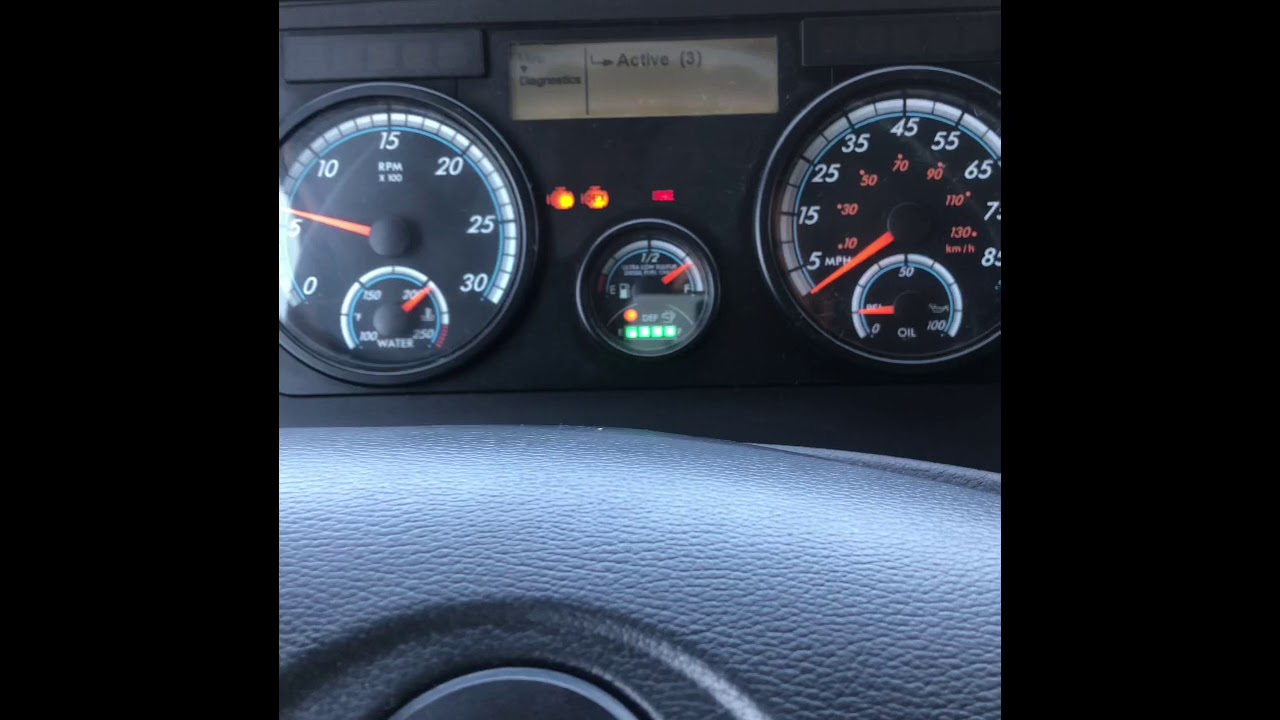
If you want to see this process handled visually, this video gives you a solid look at what diagnosing and addressing an emission system derate looks like in a real-world shop setting.
Should You Fix This Yourself or Take It to a Shop?
It depends on the cause and your comfort level with diesel emission systems. Here is a realistic breakdown:
- Replacing NOx sensors: A confident DIYer with basic mechanical skills and the right tools can handle this. It is straightforward once the sensors are located.
- Cleaning the DEF doser valve: Also doable at home with basic hand tools and a brass brush.
- Replacing the DEF pump: Possible for experienced DIYers, but the priming process and fluid handling require attention to detail. If you are not sure, get professional help.
- DEF control module replacement: Best left to a professional, especially if programming is required after installation.
- ECM issues: Always a professional job, no exceptions.
If you are unsure where to start, take the truck to a shop that specializes in diesel engines. Not every general repair shop has the software and experience to properly diagnose diesel emission system faults. Find a diesel specialist or a dealer with experience on your specific truck.
The “Service Engine Emission System 25 Derate” warning is your truck telling you it needs attention right now, not next week. Pull the codes, do the diagnosis properly, and fix the right component. A two-dollar battery swap is not going to solve this one, but with the right information and a methodical approach, you can get that truck running at full power again without unnecessary guesswork or wasted money.