
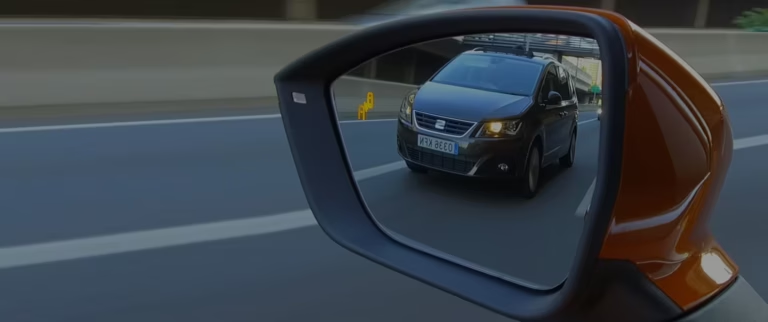
You are on the highway, glance at your side mirror out of habit, and notice the little amber light that usually warns you about a car in your blind spot is not lighting up at all. Or maybe it is stuck on permanently, blinking away even when the lane next to you is completely empty. Either way, something is off with your Subaru’s Blind Spot Detection system, and you want it fixed before you actually need it.
Blind Spot Detection, often shortened to BSD, has become one of those features drivers do not think about until the moment it either saves them from a sideswipe or fails to warn them at all. Subaru builds this system into most of its modern lineup, and honestly, once you get used to having it, driving without it feels a little unnerving.
In this guide, we are going to walk through exactly what the system does, why it sometimes stops working correctly, and how to actually reset it yourself before assuming you need an expensive trip to the dealership. We will also cover when a reset simply will not cut it and a real inspection is the only way forward.
What Your Subaru’s Blind Spot Detection Is Actually Doing While You Drive
Before troubleshooting anything, it helps to understand what this system is actually built to do. Once you know how it works under normal conditions, spotting when something has gone wrong becomes a lot easier.
Think about every time you have merged lanes and had that nagging feeling there might be a car hiding just behind your shoulder, out of view in both your mirror and your peripheral vision. That gap in visibility is exactly what blind spot detection was designed to close.
The Hardware Behind the Warning Light
Subaru’s BSD system relies on a set of radar sensors, typically mounted in or near the rear bumper on both sides of the vehicle. These sensors constantly scan the areas alongside and slightly behind your car, areas that your mirrors simply cannot show you no matter how well you adjust them.
On models equipped with Subaru’s EyeSight suite of driver assistance features, cameras mounted near the windshield work alongside the radar sensors, adding another layer of detection and helping the system make more informed decisions about what is actually around your vehicle.
How the System Actually Alerts You
Here is the sequence of events happening behind the scenes every time you drive. The radar sensors continuously sweep the zones beside and slightly behind your car. The moment a vehicle enters one of those zones, an indicator light illuminates in the corresponding side mirror housing, letting you know something is there before you even think to check.
If you flip your turn signal while a vehicle is sitting in that blind spot, the system escalates its warning. The visual indicator starts flashing more aggressively, and an audible chime sounds inside the cabin, essentially telling you in no uncertain terms that changing lanes right now is a bad idea.
Picture this scenario. You are driving on a three lane highway during rush hour, boxed in by traffic on both sides. A car in the lane to your right speeds up and slides into your blind spot right as you start signaling to merge that direction. Without BSD, you might not notice until it is nearly too late. With it working properly, that warning chime gives you the extra second you need to hold your position instead.
Why This System Genuinely Matters
It is easy to take safety tech for granted once it becomes standard equipment, but blind spot detection genuinely earns its place on the options list. Sideswipe collisions caused by lane changes remain one of the more common types of highway accidents, and a huge portion of them come down to a driver simply not seeing a vehicle that was right there the whole time.
Paired with Subaru’s EyeSight system, which handles things like adaptive cruise control and forward collision warnings, blind spot detection becomes part of a broader safety net surrounding your vehicle. None of these systems replace actually checking your mirrors and turning your head to look, but they genuinely reduce the odds of a costly mistake slipping through.
Why Your BSD System Suddenly Stopped Behaving Normally
Like any piece of electronics on your car, blind spot detection is not immune to occasional hiccups. Understanding the usual culprits helps you figure out whether a quick reset will solve your problem or whether you are looking at something that needs a technician’s attention.
| Common Cause | What Is Actually Going On | Fixable With a Reset? |
|---|---|---|
| Recent battery replacement | The system lost its stored calibration settings when power was disconnected | Often yes |
| Dirty or obstructed sensors | Mud, road salt, or ice covering the rear bumper sensors blocks their view | Sometimes, after cleaning |
| Minor collision or bumper damage | A sensor got physically knocked out of alignment or damaged | Rarely, usually needs professional calibration |
| Aftermarket bumper or trailer hitch | New hardware is interfering with the sensor’s field of view or radar signal | Rarely, often needs repositioning or removal |
| Software glitch | A temporary electronic hiccup with no physical cause | Usually yes |
Let us break these down a bit further, since knowing which situation you are actually dealing with saves you time and, in some cases, a needless trip to the shop.
Sensor Malfunctions From Physical Damage
Your car’s blind spot sensors live in a somewhat vulnerable spot, tucked into or near the rear bumper. That means they are exposed to exactly the kind of minor impacts that happen in parking lots, tight garages, and stop and go traffic where someone taps your rear bumper without leaving a mark you would even notice.
Even a seemingly harmless fender bender can knock a sensor out of its proper position or damage it internally without any visible sign on the bumper itself. If your BSD system stopped working shortly after any kind of rear end contact, no matter how minor it seemed at the time, that timing is not a coincidence.
Misalignment and Calibration Drift
Sensors need to sit at a very precise angle to accurately read the space around your car. Body work, bumper repairs, or even aftermarket modifications near the rear of the vehicle can shift that angle just enough to throw off detection accuracy.
When this happens, you might notice the system either missing vehicles that are genuinely in your blind spot or throwing false alerts for cars that are not actually close enough to matter. Neither situation is something you want to just live with, since both undermine your trust in the system exactly when you need to rely on it.
Recalibrating sensors after any repair work near the rear bumper is not optional if you want the system to keep working as designed. This typically requires a technician using specialized equipment to reset the sensors back to factory alignment specifications.
Battery Replacement and Power Interruptions
This is probably the single most common reason drivers end up searching for how to reset their Subaru’s BSD system in the first place. Disconnecting the battery, whether for a replacement, an alternator repair, or any other electrical work, wipes certain stored settings across the car’s various electronic modules.
After a battery swap, you might find the BSD button simply does not respond the way it used to, or the system fails to activate at all when you start the car. In the real world, this is often the easiest scenario to fix, since nothing is actually broken, the system just needs to be told to start fresh.
Whatever the cause turns out to be, get any persistent issue properly diagnosed by someone qualified to work on Subaru safety systems specifically. A general mechanic unfamiliar with these sensors might miss something a Subaru specialist would catch immediately.
How to Reset Your Subaru’s Blind Spot Detection System Yourself
Good news here. In a lot of cases, resetting the BSD system is something you can genuinely do yourself in the driveway without any special tools. Let us walk through when a reset makes sense and exactly how to do it.
Signs It Is Time for a Reset
Not every hiccup requires an immediate reset, but a few specific symptoms are your cue that it is worth trying:
- The system is not alerting you to vehicles that are clearly in your blind spot.
- The indicator light on your side mirror will not turn off, even when no vehicle is nearby.
- The indicator light will not turn on at all, even when you know a vehicle is present.
- You just replaced your battery and the BSD button no longer responds normally.
- The system was working fine yesterday and inexplicably stopped today with no obvious cause.
If any of these sound familiar, a reset is a reasonable first step before assuming the worst.
The Step-by-Step Reset Process
Here is the general process for resetting the system. Keep in mind that button location and exact procedure can vary slightly depending on your Subaru model and year, so double check your owner’s manual if any step feels off for your specific vehicle.
- Start your Subaru without pressing the brake pedal. Press the start button once, or turn your key to the “ON” position, without fully starting the engine.
- Find the BSD button. On most models, this sits on the lower left side of the dashboard near the steering column. Some newer models bury this control inside the infotainment settings menu instead of a physical button.
- Press and hold the button. Keep holding until you hear a beep confirming the system has registered the reset.
- Check your manual if this does not work. Since procedures vary slightly by model year, your owner’s manual will have the exact steps specific to your Subaru if the general process above does not apply cleanly.
Once you have completed the reset, take your Subaru for a short drive on a road with some traffic, ideally somewhere you can safely observe how the system responds to cars passing in adjacent lanes. This confirms whether the reset actually solved the problem before you get back on the highway relying on it.
What to Do If the Reset Does Not Fix It
Sometimes one reset is not enough, or the underlying problem is not something a reset can touch at all. If your BSD system is still acting up after following the steps above, work through this checklist before assuming you need a dealership visit.
- Physically inspect the sensors. They are usually located within the rear bumper. Check for mud, road salt buildup, ice, or even a stuck on parking sticker blocking the sensor’s view.
- Try the reset a second time. Occasionally the first attempt does not fully register, particularly if you released the button too early or the ignition was not in the correct position.
- Check your owner’s manual for model specific troubleshooting. Subaru’s manuals often include a dedicated troubleshooting section for driver assistance features.
- Get a professional diagnosis. If the system still refuses to cooperate, a dealership or a shop experienced with Subaru’s safety systems can pull diagnostic codes and pinpoint the actual cause.
Even with a properly functioning BSD system, remember that it is a supplemental tool, not a replacement for actually checking your mirrors and glancing over your shoulder before changing lanes. Technology helps, but it does not remove the need for basic driving fundamentals.

When a Reset Simply Will Not Cut It
Here is where things get a little more involved. Some situations genuinely require hands on repair or professional calibration, and no amount of button holding in your driveway will solve them.
Installing New Sensors After Damage
If a sensor was physically damaged, whether from a collision, road debris, or corrosion over time, replacement becomes necessary. This job typically requires removing the rear bumper cover to access the sensor housing, since that is where Subaru mounts these components on most models.
The new sensor needs to be carefully aligned according to the manufacturer’s specifications before the bumper cover goes back on. Even a slight misalignment at this stage can throw off detection accuracy down the road, so precision genuinely matters here. Once the sensor is installed, reattach the bumper cover carefully, checking for gaps or uneven fitment that could interfere with the sensor’s field of view.
This is not typically a beginner level driveway repair. Between the precision alignment required and the risk of damaging bumper clips or wiring during removal, most owners are better off having this done by someone experienced with Subaru specific bodywork.
Ongoing Maintenance That Keeps the System Reliable
A little regular upkeep goes a long way toward keeping your BSD system working the way it should for years. Here are habits worth building into your routine.
- Clean the sensors periodically, especially after driving through heavy rain, snow, or muddy conditions where debris can cake onto the rear bumper.
- Reset the system after any battery replacement rather than assuming it will sort itself out on its own.
- Have the system recalibrated after any collision or bumper repair, even if the damage seems minor and unrelated to the sensors themselves.
- Address warning signs immediately rather than letting a malfunctioning system linger for weeks while you get used to ignoring it.
Think of these habits the same way you think about checking tire pressure or getting an oil change. None of them are exciting, but skipping them consistently leads to bigger problems down the line, and in this case, those problems directly affect a safety feature you are counting on every time you merge lanes.
A Quick Comparison: Reset vs Professional Repair
| Situation | Recommended Action | Estimated Cost |
|---|---|---|
| System acting up after battery replacement | DIY reset following the steps above | Free |
| Dirty sensors after driving in bad weather | Clean sensors, then reset if needed | Free |
| Sensor stopped working after minor collision | Professional inspection and possible sensor replacement | $150 to $500 per sensor, including labor |
| False alerts after bumper repair | Professional recalibration | $100 to $300 |
| System completely unresponsive with no clear cause | Dealership diagnostic scan | $80 to $150 for diagnosis, repair cost varies |
These figures are general estimates meant to give you a starting point for budgeting, not an exact quote for your specific Subaru. Actual pricing depends on your model, your location, and whether you go through a dealership or an independent shop familiar with Subaru’s driver assistance systems.
Common Questions About Subaru’s BSD System
Why did my blind spot detection stop working after a car wash?
This happens more often than you would think. High pressure water, particularly from automated car washes, can sometimes force moisture into sensor housings or temporarily disrupt the radar signal. In most cases, the system corrects itself once everything dries out, but a reset can speed that process along if it does not resolve on its own within a day or two.
Can I drive normally while the BSD system is malfunctioning?
Yes, your car remains perfectly drivable with a malfunctioning BSD system. That said, you lose the extra layer of protection it provides, so lean more heavily on checking your mirrors and physically turning to look before changing lanes until the issue gets resolved.
Does a trailer hitch interfere with the sensors?
It can, depending on the hitch design and how it is mounted relative to your sensors. Some aftermarket hitches sit close enough to the sensor housing to interfere with the radar’s field of view, causing false alerts or missed detections. If you added a hitch and noticed BSD issues shortly after, that timing is worth investigating.
How often should I clean the sensors?
There is no strict schedule, but a good rule of thumb is to check them whenever you wash your car, and give them extra attention after driving through mud, snow, or heavy road salt exposure during winter months. A quick wipe down takes less than a minute and can prevent unnecessary false alerts.
Keep This System Sharp and It Will Keep Watching Your Back
Blind spot detection is one of those features that quietly does its job every single day without asking for much attention, right up until the moment it stops working and you actually notice how much you had come to rely on it. A quick reset solves the problem more often than not, especially after something as routine as a battery swap.
When the issue runs deeper, whether from a knocked out of alignment sensor or actual physical damage, do not put off getting it looked at properly. That warning light in your mirror is only useful if you can trust it, and trusting a system that only works half the time is arguably worse than not having it at all. Give your sensors a wipe down this weekend, run through the reset if anything feels off, and get back to driving with that extra set of eyes actually watching your blind spot.