
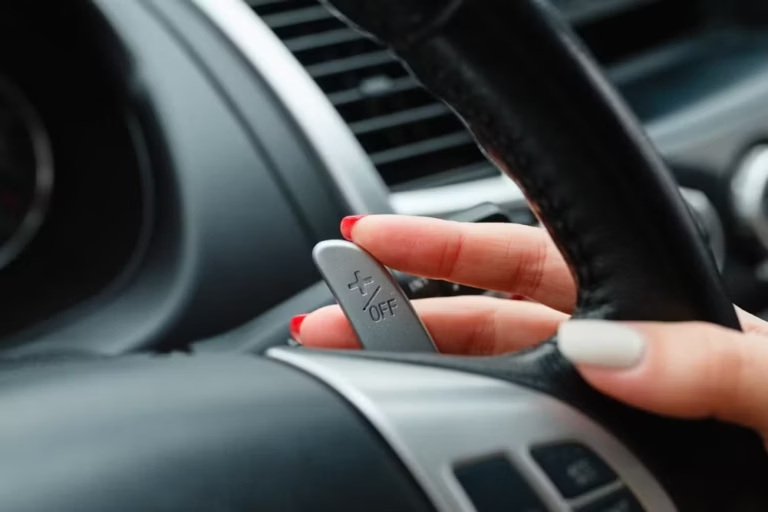
You are sitting in a car with paddle shifters mounted behind the steering wheel, and a thought crosses your mind: if I can shift gears myself, does this thing have a clutch somewhere? It is a completely reasonable question, especially if you learned to drive in a traditional manual car where the clutch pedal was part of every gear change you ever made.
The short answer is no. Cars with paddle shifters do not have a clutch pedal. But that short answer opens up a much more interesting conversation about how paddle shifters actually work, why they exist, when you should use them, and whether they are genuinely better than driving a manual. Let’s go through all of it properly.
What Are Paddle Shifters and How Do They Work?
Paddle shifters are a pair of lever-style controls mounted behind the steering wheel, one on each side. The right paddle shifts up to a higher gear. The left paddle shifts down to a lower gear. They are designed to give the driver manual control over gear selection in a car that otherwise has an automatic transmission.
Think about what that actually means in practice. In a standard automatic car, the transmission decides when to shift gears based on sensor data. Engine speed, vehicle speed, throttle position, and a set of pre-programmed shift points all feed into the decision. The car does the thinking for you. Paddle shifters bypass that decision and hand control back to the driver.
That is a meaningful difference. A set of sensors cannot anticipate what is coming up around the next corner. You can. If you know you are about to exit a highway on-ramp and need to accelerate hard, you can hold a lower gear longer with the paddle shifter instead of waiting for the transmission to figure out what you need. That responsiveness is the whole point.
Paddle shifters were originally developed for Formula One racing, where gear changes need to happen in fractions of a second and the driver cannot afford to take a hand off the wheel to operate a traditional gear lever. Engineers eventually realized the technology had value beyond the racetrack, and it gradually found its way into performance road cars and then into mainstream vehicles.
Do Cars With Paddle Shifters Have a Clutch? The Full Explanation
No. In the vast majority of cars equipped with paddle shifters, there is no clutch pedal. The transmission handles the clutch function internally, completely automatically, with no input from the driver. You just pull the paddle and the gear changes. That is it.
In a traditional manual transmission, the clutch pedal temporarily disconnects the engine from the drivetrain. This disconnection is what allows the driver to change gears without grinding the transmission. Without that momentary separation, the gears cannot mesh smoothly. The driver has to press the clutch, change the gear, and then release the clutch in a controlled way to re-engage the engine. It takes coordination, and it takes time.
Paddle shifters eliminate that entire sequence. The transmission manages the engagement and disengagement of the clutch automatically, and it does it faster than any human foot can react. You pull the paddle, the system handles the mechanical separation, swaps the gear, and re-engages the drivetrain. The whole thing happens in milliseconds. You feel the gear change happen cleanly without any foot movement required on your part.
That speed advantage is exactly why professional racing teams embraced this technology. A manual gear change done by an experienced driver takes somewhere around 300 to 500 milliseconds. A paddle shift on a modern automatic or dual-clutch transmission can happen in under 100 milliseconds. In a race environment, that difference is enormous. On a public road, it translates into a driving experience that feels more immediate and connected than a conventional automatic.
The One Exception: Semi-Automatic Transmissions
There is a narrow exception worth knowing about. Some semi-automatic transmissions, most commonly found in race cars and certain older performance vehicles, do retain a clutch pedal even though they also have paddle shifters. In these setups, the paddle handles gear selection during normal driving, but the clutch pedal is still used when the car needs to stop completely or pull away from a standstill.
The reasoning is that managing a full stop and a clean standing start still benefits from direct clutch control in certain performance applications. But this is the exception, not the rule. If you are driving a regular road car with paddle shifters, whether it is a Toyota Camry with sport mode, a BMW, or a Porsche, there is no clutch pedal. The foot well has only the accelerator and the brake.
Are Paddle Shifters Only Found on Automatic Transmission Cars?
Mostly yes, but not exclusively. Paddle shifters are most commonly associated with automatic transmissions that use planetary gear sets, which is the traditional automatic gearbox design. But the technology can technically be paired with different transmission types.
Two transmission types in particular are worth knowing about:
Dual-Clutch Transmissions (DCT)
A dual-clutch transmission is often paired with paddle shifters, and it is one of the most common setups in modern performance cars. The DCT uses two separate clutch packs, one handling odd-numbered gears and one handling even-numbered gears. While you are in third gear, the transmission is already pre-selecting fourth gear on the other clutch. When you pull the upshift paddle, the swap happens almost instantaneously because the next gear is already ready and waiting.
This is the technology behind some of the quickest-shifting road cars ever made. The Porsche PDK, the Volkswagen DSG, and Ford’s PowerShift are all examples of dual-clutch transmissions that pair beautifully with paddle shifters. From the driver’s perspective, there is no clutch pedal involved at any point. The internal clutch management is completely automatic.
Continuously Variable Transmissions (CVT)
Some cars with continuously variable transmissions also include paddle shifters, and this is where things get a bit less pure. A CVT does not have traditional fixed gears at all. It uses a belt and pulley system that provides infinite gear ratios across a continuous range. There are no physical gear steps to shift between.
When a CVT-equipped car has paddle shifters, the system simulates virtual gear steps. It programs in a set of predetermined ratio points and allows the paddle shifters to step between them as if they were gears. The experience gives the driver a sense of manual control, but the underlying mechanics are different from a true gear change. Whether that simulation feels satisfying depends entirely on the specific car and how well the manufacturer has implemented it. Some do it better than others.
One Limitation Worth Understanding: You Cannot Skip Gears
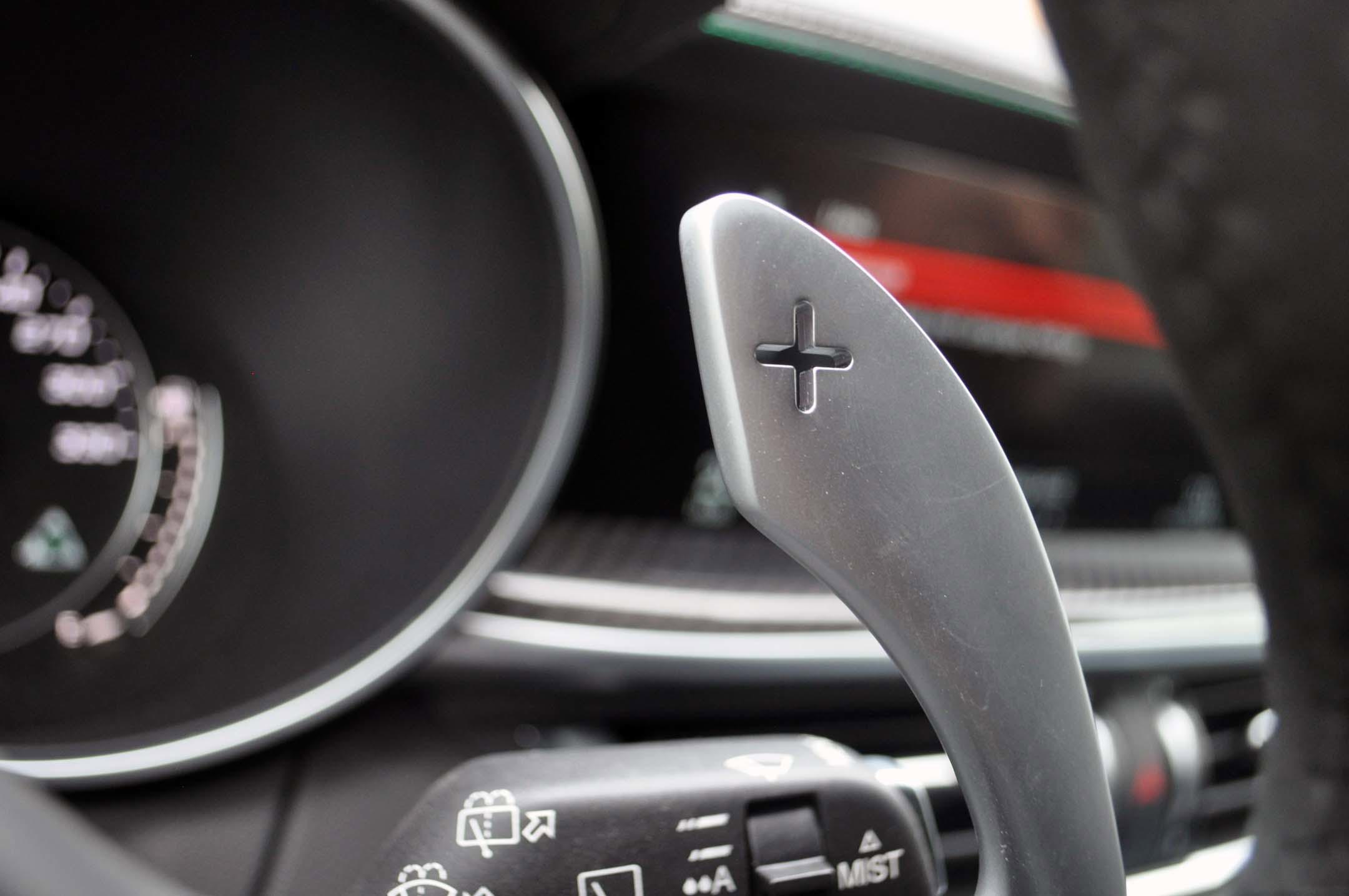
Here is something that surprises a lot of drivers who come from a manual background. With paddle shifters, you cannot skip gears. You move from first to second, second to third, third to fourth, and so on in sequence. You cannot jump from fifth gear down to second in one pull the way you can in a traditional manual with the clutch.
In a manual transmission car, an experienced driver can select any gear at any time as long as the engine speed is appropriate and the clutch is being used to manage the transition. It requires skill and an understanding of what the engine can handle, but the mechanical capability is there.
Paddle shifters do not work that way. The system steps through gears one at a time. If you need to drop from fifth gear to second, you will need to pull the left paddle four times in quick succession. In most situations, this is not a practical limitation because the car is moving through the gears fast enough that the difference is negligible. But it is worth knowing if you are used to the flexibility that a manual transmission provides.
Are Paddle Shifters Actually Reliable? Here Is What Real Driving Tells Us
The reliability question is interesting because it depends on what you mean by reliable. If you mean mechanically dependable, the answer is yes. If you mean consistently useful in all driving conditions, the answer is also yes, but for reasons that go deeper than most people think about.
Automatic transmissions rely on sensors and pre-programmed logic to decide when to shift. Those systems are remarkably sophisticated by modern standards, but they are still reacting to conditions rather than anticipating them. A transmission control module does not know that you are approaching a tight hairpin bend at the bottom of a mountain road and that you are going to need significantly more engine braking than the current gear is providing. You know that. And that is where paddle shifters give you a real-world advantage.
Specific Situations Where Paddle Shifters Make a Difference
- Cornering: Pulling the left paddle to drop a gear before a corner gives you immediate torque when you accelerate out of it, rather than waiting for the transmission to downshift after the fact.
- Steep downhill descents: Instead of riding the brakes down a long hill, you can use engine braking by holding a lower gear. The engine absorbs the speed rather than the brake pads, which protects your brakes from overheating on long descents.
- Steep uphill climbs: Keeping a lower gear on a steep climb prevents the transmission from hunting for gears and ensures consistent, smooth power delivery all the way up.
- Wet and slippery roads: Downshifting to reduce speed gradually without sharp brake inputs keeps the wheels from locking up on slippery surfaces. It is a more controlled way to manage speed when traction is compromised.
- Snow and ice: Upshifting early to higher gears reduces the amount of torque reaching the driven wheels, which reduces the chance of wheelspin when pulling away from a standstill.
- Highway on-ramps: Holding a lower gear through an on-ramp gives you better acceleration when you need to merge at speed, without having to wait for the transmission to figure out what you want.
None of these scenarios are exotic or rare. They are situations that happen on ordinary drives. The driver who understands how to use paddle shifters can handle each one with more precision and confidence than someone relying entirely on the automatic system.
Will Using Paddle Shifters Damage Your Transmission?
This concern comes up constantly, and the short answer is no, not if you are using them the way they were intended to be used.
Car manufacturers anticipate that drivers will use paddle shifters aggressively. That is the whole point of including them. The engineering teams that design these systems build in protective logic that prevents the driver from doing anything genuinely harmful to the transmission through paddle use.
For example, if you try to upshift when the engine speed is too low for that gear to make sense, the system will simply ignore the command or hold the current gear until conditions allow the shift. If you try to downshift at a speed that would cause the engine to over-rev dangerously, the system will refuse the request or automatically blip the throttle to match revs appropriately before allowing the shift.
The transmission control unit is always watching in the background. You have manual control within a safety envelope that the manufacturer has defined. You cannot accidentally over-rev the engine to destruction by pulling a paddle shifter at the wrong moment because the system simply will not allow it.
What could potentially cause issues is not using the paddle shifters but rather ignoring them entirely and driving aggressively on a fully automatic transmission that is not designed for the demands being placed on it. Holding an automatic in a gear that is too low for too long, for example by lugging the engine on a highway, is harder on the transmission than any reasonable paddle shifting would be.
Paddle Shifters vs. Manual Transmission: Which Is Actually Better?
This is one of the most debated topics among driving enthusiasts, and the honest answer depends heavily on what you value in a driving experience. But from a pure performance standpoint, the numbers are pretty clear.
Gear Change Speed
On a straight performance basis, paddle shifters win. A skilled manual driver can execute a clean gear change in roughly 300 to 500 milliseconds. A modern dual-clutch transmission with paddle shifters can make the same gear change in under 100 milliseconds, sometimes as fast as 50 to 70 milliseconds on high-performance systems. That is why every single Formula One car, every LMP1 prototype, and essentially every serious racing vehicle at the professional level uses paddle shifters rather than a traditional manual gearbox. Speed matters in competition, and the paddle shift is objectively faster.
Driver Engagement and Feel
But here is where the manual transmission fights back. A lot of drivers, including professional drivers, will tell you that a traditional manual with a well-weighted clutch and a precise gear lever gives a level of mechanical connection and feedback that paddle shifters do not replicate. The act of physically working the clutch, heel-and-toeing on downshifts, and feeling the gear engage through the shift lever is part of what makes driving genuinely enjoyable for some people. It is a tactile, physical activity that engages you more completely.
Paddle shifters are more efficient but some drivers feel they are less involving. That is a legitimate opinion, and it is not wrong. The experience of driving a well-tuned sports car with a traditional six-speed manual is something that paddle shifters replicate functionally but not necessarily emotionally.
Ease of Use in Traffic
Paddle shifters win this category easily and without argument. Stop-and-go traffic in a manual transmission car is physically demanding and mentally tiring. Clutch in, first gear, move, clutch, neutral or second, move a little more, clutch, repeat for forty-five minutes. It is exhausting. A car with paddle shifters in automatic mode handles all of that completely on its own, and you can pull a paddle when you want a specific response in a merging or acceleration scenario. The best of both approaches in one package.
Side-by-Side Comparison
| Category | Paddle Shifters | Manual Transmission |
|---|---|---|
| Gear Change Speed | Faster, often under 100 milliseconds | Slower, 300 to 500 milliseconds for skilled driver |
| Driver Skill Required | Low to moderate | Moderate to high |
| Physical Engagement | Moderate | High |
| Traffic Driving | Easy, auto mode handles it | Tiring in stop-and-go |
| Performance Potential | Higher ceiling | Limited by human reaction speed |
| Emotional Connection | Varies by driver | Generally high for enthusiasts |
| Learning Curve | Minimal | Significant |
| Racing Applications | Preferred at professional level | Rare in professional motorsport |
When Should You Actually Use the Paddle Shifters?
A lot of drivers buy cars with paddle shifters and barely use them. They switch the car to automatic mode and leave it there indefinitely. That is fine. The car will drive perfectly well that way. But you are leaving some of the vehicle’s capability unused, and in certain situations, you are making your driving harder than it needs to be.
Here is a practical guide to when pulling those paddles actually makes a real difference:
Use the Left Paddle (Downshift) When:
- You are approaching a corner and want to set the car up in the right gear before you turn in
- You are heading downhill and want engine braking to control your speed
- You are in a situation where smooth speed reduction is better than brake application, such as on ice or wet roads
- You want immediate power available when you press the accelerator, such as before an overtake
- The automatic transmission is hunting between gears on an undulating road
Use the Right Paddle (Upshift) When:
- You want to reduce wheel spin on a slippery surface by moving to a higher gear with less torque
- You are on a long highway straight and want the economy and refinement of the highest gear available
- You are in sport mode and the engine has reached its rev limit and the shift has not happened automatically yet
- You want to reduce engine noise on a relaxed cruise where the auto mode is holding a gear too long
How Do You Know When to Shift?
Experienced drivers develop an intuition for this fairly quickly. You listen to the engine. When it sounds strained and is working hard, you might want a lower gear for more torque, or a higher gear if you are trying to reduce load. When the revs are sitting comfortably in the mid-range, the car is usually happy where it is.
Modern cars take a lot of the guesswork out of it. Many vehicles equipped with paddle shifters include dashboard indicators, either a rev counter with shift lights that illuminate at the optimal shift point, or a gear position display with arrows suggesting whether an upshift or downshift would be beneficial. These tools are genuinely helpful if you are new to paddle shifting and want some guidance on timing.
The underlying philosophy, though, is that the driver should be making these calls based on what they know about the road ahead, not just reacting to what the dashboard tells them after the fact. If you are using the paddle shifters correctly, you are thinking a few seconds ahead of the car at all times.
What Happens When You Stop Using the Paddles?
Most paddle shifter systems include an automatic return feature. If you take control with the paddles and then stop using them for a period of time, the transmission reverts to automatic mode on its own. The length of that timeout varies by manufacturer, typically anywhere from five to thirty seconds of paddle inactivity before the car takes over again.
Some systems require you to manually push the gear selector back into Drive or press a specific button to return to automatic mode. Your owner’s manual will tell you exactly how your specific vehicle handles this, and it is worth knowing so you do not end up confused when the car unexpectedly takes over or holds a gear longer than you expected.
Which Cars Come With Paddle Shifters?
Paddle shifters have spread far beyond their exotic car origins. You will find them in a very wide range of vehicles today, and the price point required to get them has dropped significantly over the past decade.
Performance and Sports Cars
This is where paddle shifters are most at home. The Porsche 911 with PDK, the Ferrari Roma, BMW M3, Mercedes-AMG C63, and virtually every modern supercar use paddle shifters as the primary gear change mechanism. In these applications, the transmission is typically a dual-clutch unit optimized for outright speed and driver response. The paddles are positioned and sized specifically for performance driving, and the shift times are measured in milliseconds.
Mainstream Sport and Family Cars
Many mainstream vehicles now include paddle shifters as a standard or optional feature. The Honda Civic Si, Toyota Camry TRD, Mazda 3, Hyundai Sonata N-Line, and Volkswagen GTI all offer paddle shifters at price points well below premium territory. The performance characteristics are not at the supercar level, but the functional advantage in real driving conditions is the same. You have direct control over gear selection when you want it and seamless automatic operation when you do not.
SUVs and Crossovers
Paddle shifters are also increasingly common in SUVs, including models you might not immediately associate with sporty driving. The Toyota 4Runner, Ford Bronco Sport, Kia Sportage, and Jeep Grand Cherokee all offer paddle shifters in certain trim levels. In an SUV context, the ability to manually select gears is particularly useful for off-road driving where managing descent speed, traction, and torque delivery in rough terrain benefits enormously from driver control.
Luxury Sedans and Grand Tourers
Luxury vehicles use paddle shifters not necessarily for outright performance but for the sense of engagement and control they provide. A Lexus LS or Mercedes S-Class is not a track car, but the ability to hold a gear for a smooth, controlled pass on a two-lane highway, or to select the optimal gear for a spirited mountain road, enhances the driving experience without requiring any compromises in comfort or refinement.
Can Paddle Shifters Be Added to a Car That Does Not Have Them?
Technically, aftermarket paddle shifter kits exist and can be fitted to steering wheels that do not have them from the factory. However, these aftermarket additions are almost always cosmetic. They look like paddle shifters but do not actually connect to the transmission control system in any functional way. They are essentially decorative items.
True functional paddle shifters require integration with the transmission’s control module. That integration is engineered and calibrated by the manufacturer during the development of the vehicle. Retrofitting genuine, functional paddle shifting capability into a car not designed for it from the factory would require significant and expensive modification to the transmission control software and hardware. For most drivers, that is not a practical or cost-effective path.
If paddle shifters are important to you, the straightforward advice is to buy a car that comes with them from the factory. The list of vehicles offering them has expanded so significantly that finding one in almost any segment and at almost any price point is genuinely achievable.
Paddle Shifters in Electric Cars: A Different Kind of Conversation
An interesting development worth mentioning is the appearance of paddle shifters in electric vehicles, where they are used for a completely different purpose than in combustion engine cars.
Electric motors do not need a multi-speed transmission. They produce maximum torque from zero RPM and can deliver power smoothly across an extremely wide range of speeds with a single gear ratio. There are no gears to shift in the traditional sense.
In electric cars like certain Kia EV models, the BMW i4, and the Hyundai IONIQ 5 N, paddle shifters are used to control the level of regenerative braking. Regenerative braking is the process by which the electric motor acts as a generator when you lift off the throttle, converting kinetic energy back into electrical energy to recharge the battery. This process also slows the car down, similar to engine braking in a combustion vehicle.
The paddles allow the driver to select how aggressive the regenerative braking effect is. Pulling the left paddle increases regeneration, which means more energy recovery but also a stronger braking effect when you lift off the accelerator. Pulling the right paddle reduces regeneration for a more coasting, free-rolling feel. In some EVs, maximum regeneration at a single paddle pull is strong enough to bring the car to a complete stop without touching the brake pedal, a feature called one-pedal driving.
This is a genuinely different use of the paddle shifter concept, but it serves a similar philosophy: giving the driver direct, intuitive control over a key aspect of how the car behaves, without requiring them to use a separate control interface.
Common Questions About Paddle Shifters Answered Directly
Can You Drive a Paddle Shift Car Without Using the Paddles?
Yes, completely. The automatic transmission functions normally in Drive mode with or without paddle shifter input. Many drivers never touch the paddles and still get a perfectly good driving experience. The paddles are there when you want them, not required when you do not.
Are Paddle Shifters Hard to Learn?
Not at all. The learning curve is minimal. You pull the right paddle to go up a gear and the left paddle to go down a gear. That is genuinely all there is to the basic operation. The more advanced skill is developing an intuition for when to shift and by how much, but even beginners can pick this up quickly with a bit of experimentation. You cannot break anything by pulling the wrong paddle at the wrong time because the system simply ignores commands it determines to be unsafe.
Do Paddle Shifters Improve Fuel Economy?
They can, in specific situations. If you use the paddles to upshift earlier than the automatic transmission would, you can keep engine revs lower and reduce fuel consumption on a steady highway cruise. On the flip side, if you use them to hold lower gears and enjoy the performance they provide, fuel consumption will be higher than in fully automatic mode. Paddle shifters are a tool. Fuel efficiency depends on how you choose to use them.
What Is the Difference Between Sport Mode and Paddle Shifters?
Sport mode is an automatic setting that reprograms the transmission’s shift logic to hold gears longer, shift later in the rev range, and prioritize performance over economy. The car is still deciding when to shift automatically, just using more aggressive criteria. Paddle shifters give you direct manual control regardless of what mode the transmission is in. You can use the paddles in normal automatic mode, sport mode, or a dedicated manual mode depending on how your car is configured. Sport mode and paddles can be used together, and in most performance cars, they complement each other well.
Can You Over-Rev the Engine With Paddle Shifters?
No. The transmission control unit monitors engine speed continuously and will not execute a downshift that would cause the engine to exceed its safe rev limit. If you try to pull the left paddle at high speed in a situation where downshifting would push the engine beyond the redline, the system either ignores the command or automatically blips the throttle and controls the shift to prevent damage. The safety systems are robust and consistently effective.
The Real Value of Paddle Shifters for Everyday Drivers
It is easy to dismiss paddle shifters as a feature only relevant to track day enthusiasts or sports car owners. That dismissal misses the genuine, practical value they offer in ordinary driving situations.
Consider a rainy evening on a winding road where the automatic transmission keeps upshifting at the wrong moment, leaving you with less engine braking than you want. One pull of the left paddle fixes that immediately. Consider a long mountain descent where engine braking would save your brakes from overheating. Paddle shifters let you manage that precisely. Consider an overtake on a two-lane highway where you want immediate, confident acceleration without waiting for the transmission to figure out your intention. The paddle gives you that response in an instant.
These are not exotic scenarios. They happen on ordinary drives. And having a tool that lets you handle them with more precision and confidence is genuinely valuable, regardless of whether you care about lap times or racing history.
If your current car has paddle shifters and you have been ignoring them, the next time you head out on a winding road or a long downhill, give them a try. You might be surprised how much more connected to the driving experience they make you feel, and how quickly using them starts to feel completely natural.