
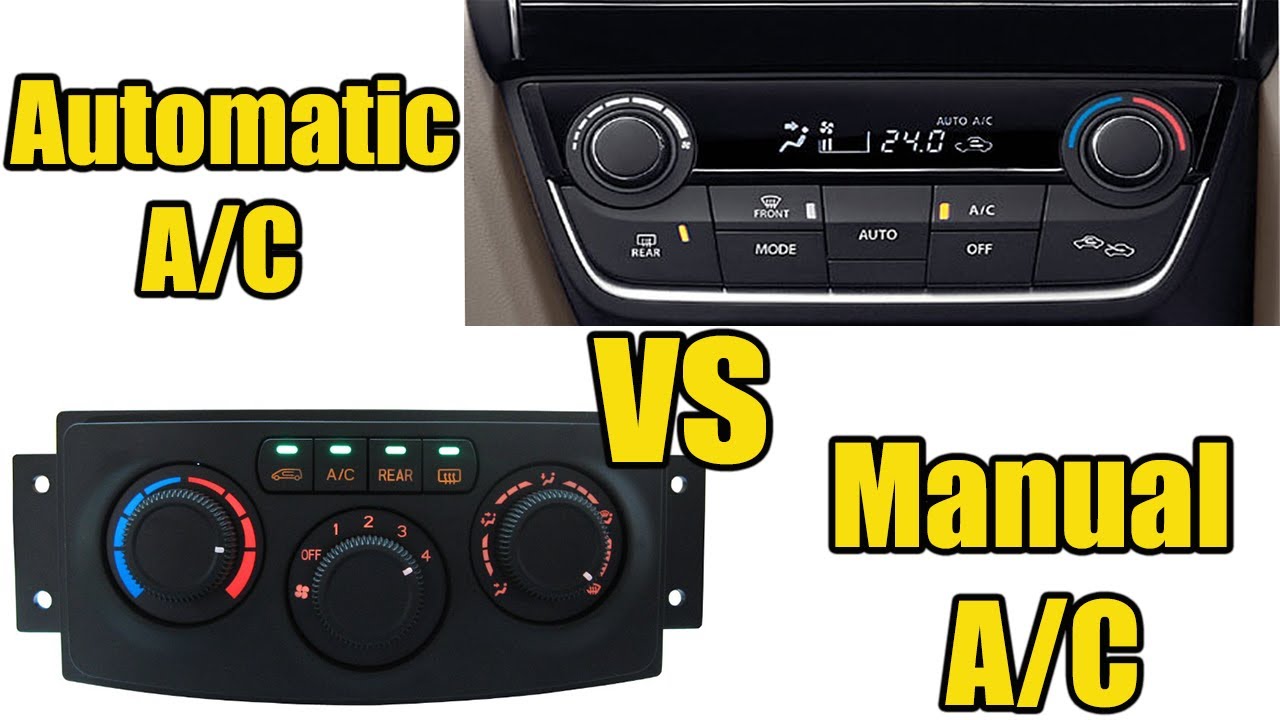
On a hot day, the first thing most of us do after getting into a car is reach for the air conditioning. The argument usually starts when someone asks whether manual air conditioning is less effective than automatic air conditioning. After years of repairing both systems, my short answer is this: the cooling hardware is often very similar, while the automatic system gives you more control over how that hardware is managed.
A manual air conditioner lets you choose the blower speed, temperature direction, and usually whether the compressor is on. Automatic climate control adds sensors, electric doors, a control module, and software that try to maintain the temperature you select. It can be more convenient and more consistent, but it is also more complicated when something fails.
The most efficient system depends on what you mean by efficient. A properly maintained manual system can cool a cabin just as well as an automatic system. Automatic climate control may reduce the need for constant adjustments, manage airflow more smoothly, and respond to changes in sun, cabin temperature, and passenger heat. Neither system can overcome a low refrigerant charge, blocked cabin filter, weak compressor, or damaged condenser.
How a car air-conditioning system creates cold air
Whether the controls are manual or automatic, the basic refrigeration cycle is similar. The compressor circulates refrigerant through the system, the condenser rejects heat, the expansion device lowers pressure, and the evaporator absorbs heat from the cabin air. The blower then pushes air across the cold evaporator and through the vents.
The refrigerant is not simply “cold air in a can.” It changes pressure and state as it travels through the system. The compressor raises the refrigerant pressure, the condenser releases heat to outside air, and the expansion valve or orifice tube reduces pressure before the refrigerant enters the evaporator.
Inside the evaporator, refrigerant absorbs heat from air passing through the HVAC case. Moisture in that air condenses on the evaporator fins and drains under the vehicle. That small puddle of clear water after using the air conditioner is usually normal, not a coolant or refrigerant leak.
The Environmental Protection Agency’s mobile air-conditioning information explains why refrigerant handling and recovery matter. Refrigerant should not be deliberately released, and a system that needs a recharge should be checked for leaks rather than topped up forever.
The main components you will find under the hood
- Compressor: Circulates and compresses refrigerant. It is driven by the engine belt or by an electric motor on some vehicles.
- Condenser: Sits near the radiator and releases heat from the high-pressure refrigerant.
- Receiver-drier or accumulator: Stores refrigerant, removes moisture, and protects the compressor depending on the system design.
- Expansion valve or orifice tube: Controls refrigerant flow into the evaporator.
- Evaporator: Absorbs heat from the cabin air inside the HVAC case.
- Blower motor: Pushes air through the evaporator, heater core, and ducts.
- Cabin air filter: Removes dust and leaves from incoming air before it reaches the HVAC case.
A failure in any of these parts can make the air conditioner perform poorly. The dashboard control panel is only one part of the system. Replacing the control panel will not fix a low refrigerant charge, a seized compressor, or a condenser packed with dirt.
How manual air conditioning works
A manual air-conditioning system usually has three control wheels or knobs. One controls temperature, another controls blower speed, and the third selects where air leaves the system, such as the face vents, floor, or windshield. A separate button, often marked with a snowflake, switches the compressor and air-conditioning function on.
The controls are connected to the HVAC components by cables, electrical switches, or a combination of both. On older cars, moving the temperature knob can physically move a blend door through a cable and lever. On newer cars, even a manual-looking panel may send an electronic command to a control module.
When the compressor is switched on, the system removes heat and moisture from air entering the cabin. You can choose the blower speed and air direction yourself. If the cabin is hot, you may start with the blower high, select recirculation, and then reduce the speed after the interior cools.
Manual controls still manage a real refrigeration system
Manual does not mean weak or old-fashioned. A manual system can have the same compressor, condenser, evaporator, refrigerant, and blower motor used by a vehicle with automatic climate control. The biggest difference is who decides when and how those parts operate.
The driver makes more of the decisions. You may need to switch the compressor on, choose recirculated air, adjust the blower, and change the vent direction as the weather changes. That can be perfectly comfortable once you know the controls.
One advantage is simplicity. A manual system generally has fewer sensors, fewer small electric actuators, and less software. When it fails, the fault can sometimes be easier and less expensive to trace, although a manual system can still have difficult problems such as leaks, compressor failure, or a blocked evaporator.
Why recirculation cools the cabin faster
Recirculation sends cabin air back through the evaporator instead of constantly bringing hot outside air into the vehicle. Once the interior has cooled, the air conditioner is repeatedly removing heat from air that is already cooler. This usually makes the cabin cool faster and reduces the heat load on the system.
Do not leave recirculation on forever if the windows begin to fog or the air becomes stale. Fresh air may be needed for comfort and visibility. Many vehicles also limit recirculation automatically when the defrost setting is selected.
If the car has been sitting in the sun, open the windows briefly while the first hot air escapes. Then close them, select recirculation, and use the air conditioner. The system will not have to remove as much trapped heat from the seats, dashboard, and roof lining. It also keeps the compressor from working against the hottest possible cabin air.
What automatic climate control adds
Automatic climate control uses the same basic refrigeration process but adds a control module and sensors. You select a target temperature, press AUTO, and the system decides blower speed, air direction, compressor operation, recirculation, and blend-door position according to its programming.
The system may monitor cabin temperature, outside temperature, sunlight, evaporator temperature, engine coolant temperature, and sometimes humidity or air quality. It uses those readings to decide how much heating or cooling the cabin needs.
Automatic does not mean the temperature inside the vehicle will match the number immediately. If the cabin is 35 degrees Celsius and you select 18, the system has to remove a large amount of heat. It may run the blower hard at first, then reduce airflow as the cabin approaches the target.
The cabin temperature sensor
Many automatic systems have a small cabin temperature sensor in the dashboard or overhead console. Some have a small aspirator fan that draws cabin air across the sensor. If that opening is blocked by dust, a sticker, or a phone mount, the sensor may read incorrectly.
A sensor that reads cooler than the cabin can make the system reduce cooling too early. A sensor that reads hotter may keep the compressor and blower working harder than necessary. Before replacing a sensor, make sure the grille or aspirator opening is clean and that the wiring has not been disturbed.
Sunload and outside-temperature sensors
Some climate systems use a sunlight sensor on top of the dashboard. Direct sun adds heat to one side of the cabin, so the control module may adjust the blend doors or airflow to compensate. An outside-temperature sensor helps the system understand the conditions around the vehicle.
A cracked dashboard, aftermarket cover, poorly mounted accessory, or dirty sensor can change the reading. If the climate system acts strangely after windshield or dashboard work, mention that repair to the technician. The fault may be a sensor connector rather than a refrigerant problem.
Automatic air-direction adjustments
In a manual system, the air-direction knob may move a cable, lever, or electrical switch connected to blend doors inside the HVAC case. You choose face vents, floor vents, windshield vents, or a combined setting. The system follows the position you select.
Automatic climate control uses electric stepper motors or servo actuators to move the doors. Some vehicles use vacuum actuators, particularly in older designs. The control module can mix hot and cold air, direct air to more than one area, and change the setting without you moving a knob.
That convenience adds failure points. A stripped actuator gear can make a clicking sound behind the dashboard. A failed position sensor can make the door stop in the wrong place. A broken foam seal can allow air to bypass the intended path. If the vents change direction by themselves or one side stays hot, the door actuator deserves attention.
Why a clicking noise may come from the dash
A repeated tick or click behind the glovebox or center dash often comes from a small HVAC actuator trying to reach a position. The actuator motor turns, but a worn gear or stuck blend door prevents the feedback position from matching the command.
Some technicians can identify the actuator with a scan tool and command each door individually. Others use a wiring diagram and listen while changing the controls. Do not keep forcing the knob if the door is cable-operated and feels stuck. A broken cable or panel can turn a small HVAC fault into a larger repair.
Blower speeds, resistors, and electronic control
A manual air conditioner commonly has four blower speeds plus OFF. Older systems use a blower resistor to create different speeds by reducing voltage to the motor. The highest speed may bypass part of the resistor, which is why a failed resistor often leaves only high speed working.
Automatic climate control can offer more speed steps, sometimes a smooth range rather than a few fixed positions. It may use a power transistor or blower control module instead of a traditional resistor. The control module adjusts fan speed gradually as the cabin approaches the target temperature.
More speed settings are useful for comfort, but they do not make the evaporator colder by themselves. If the air is warm at every speed, check refrigerant charge, compressor operation, blend-door position, and airflow. If only some speeds work, suspect the resistor, control module, blower motor, wiring, or switch.
Blower motor symptoms
- No air from the vents at any speed
- Air works only on the highest setting
- Blower speed changes when hitting a bump
- A squeal, grinding sound, or burning smell from the dash
- Weak airflow despite a clean filter and open vents
A blower motor that slows down may draw excessive current and damage the resistor or control module. If a fuse keeps blowing, do not fit a larger fuse. Test the motor current draw, the connector, and the wiring before replacing the control part.
Setting and maintaining a target temperature
Automatic climate control often displays a target temperature in degrees Celsius or Fahrenheit. You may set a value such as 18, 20, or 22 degrees, depending on the vehicle and the driver’s preference. The system then adjusts output to move the cabin toward that target.
The number is a target, not a promise that every vent will blow air at that temperature. Air from the vents can be much colder or hotter than the selected cabin temperature because the system needs a difference between the air and the cabin to change the interior.
Some systems allow half-degree settings, while others use whole degrees or comfort labels such as LO and HI. The exact range differs by vehicle. A low setting tells the system to cool as much as needed, while a high setting tells it to heat as much as needed.
Why AUTO mode is usually the easiest setting
In AUTO mode, the control module chooses blower speed and vent direction. You can still adjust the target temperature without constantly touching the fan and mode controls. The system may reduce blower noise after the interior reaches the selected range.
Many manufacturers recommend leaving climate control in AUTO and allowing the system to manage itself. That does not mean you must use AUTO all the time. Manual adjustments are useful when you want air only at your face, want less blower noise, or need to clear a windshield quickly.
Drivers sometimes press AUTO and then immediately override the fan, direction, and recirculation controls. The system may leave full automatic operation when you do this. If you want the benefit of automatic control, let it make the adjustments for a few minutes before deciding that it is not working.
Single-zone, dual-zone, and multi-zone climate control
A single-zone system controls the cabin from one temperature setting. Dual-zone climate control allows the driver and front passenger to choose different targets. Some larger vehicles add rear controls or additional zones.
Separate zones require more sensors, blend doors, actuators, and control logic. The system mixes hot and cold air to reach the different targets on each side. If the driver’s side is cold while the passenger side is hot, the problem may be a blend-door actuator, a low refrigerant charge, a sensor, or a control calibration.
Do not assume that a temperature difference always means the refrigerant is low. Low charge can reduce cooling, but a stuck blend door can create the same complaint on one side. Measure vent temperature, inspect the controls, and check system pressure with proper equipment.
Why dual-zone settings sometimes confuse drivers
Some vehicles have a SYNC or DUAL button. SYNC links the passenger setting to the driver’s setting, while DUAL allows separate adjustment. If the passenger side suddenly feels different, check whether DUAL was enabled or whether one side has been adjusted independently.
Rear-seat controls may also override front settings. Before diagnosing a failure, set all zones to the same temperature, select AUTO, and check the vents. This simple step has solved more than one “broken climate control” complaint in my bay.
Automatic demisting and windshield defrost
Windshield moisture is a visibility problem, not only a comfort problem. Manual systems usually require you to select the windshield mode, choose a suitable temperature, raise the blower speed, and switch the air conditioner on if the system allows it. The air conditioner removes moisture while the heater supplies warm air.
Automatic climate systems often have a MAX defrost or front defrost button. Pressing it can select the windshield vents, increase the blower, adjust temperature, switch on the compressor, and change recirculation. The exact sequence varies by model.
Air conditioning can run during defrost even in cold weather because drying the air helps clear condensation. This does not mean the system is cooling the cabin like summer operation. The heater and air conditioner can work together, with dry warm air directed at the glass.
Why defrost may be slow
A blocked cabin filter restricts the airflow needed to clear the glass. A weak blower, failed blend door, low engine coolant temperature, or a malfunctioning air-conditioning system can also reduce performance. On a cold morning, allow the engine and heating system time to produce warm air, but never drive with a windshield you cannot see through.
Do not scrape the outside while the interior glass remains fogged and assume the problem is solved. Use the defrost setting and keep the windshield clean inside. Greasy film from dashboard plastics or smoking can make condensation spread into a white haze.
Which system is more efficient?
Manual and automatic systems can use the same cooling components, so automatic climate control is not automatically colder or more powerful. A healthy manual system can cool a cabin quickly when the driver selects recirculation, an appropriate blower speed, and a sensible temperature. A healthy automatic system can provide similar cooling while managing the changes for you, especially during the first few minutes.
Automatic control may improve comfort because it reduces overcooling and repeated manual adjustments. It can lower blower speed once the cabin reaches the target and alter airflow when sunlight or outside conditions change. It may also run the compressor only when the system calculates that cooling or dehumidification is needed, depending on the vehicle strategy.
Manual control can be efficient when the driver uses it well. Recirculate after the initial hot air leaves, avoid maximum blower once the cabin is comfortable, keep the cabin filter clear, and do not set the system colder than necessary. The difference in fuel consumption depends on the car, compressor type, outside temperature, driving speed, and how heavily the system is used.
What uses the most fuel or electrical energy
The compressor takes mechanical power from the engine or electrical power from a hybrid or electric system. The blower motor also uses power, especially at high speed. Cooling a very hot cabin and keeping it cool in direct sun places more demand on the system than maintaining a comfortable cabin on a mild day.
Opening windows briefly at low speed can remove heat, but open windows at higher speed create aerodynamic drag. There is no single rule that makes one choice efficient in every situation. Use the method that gets the cabin comfortable without running the compressor and blower harder than necessary.
Why neither system works well when refrigerant is low
A manual control panel can request cold air, and an automatic system can show 18 degrees, but neither can create cooling if the refrigerant charge is too low. Refrigerant carries heat through the system. A leak reduces the mass flow, and the evaporator may not cool the air properly.
Common signs of a refrigerant or cooling-system problem include warm air at the vents, a compressor that cycles rapidly, hissing, oily residue around a fitting, frost on one pipe, or cooling that improves at speed but fades in traffic. These symptoms overlap with fan, pressure-switch, compressor, and blend-door faults.
Do not use a refill can blindly. Too much refrigerant can raise pressure and damage the compressor or hoses. A professional recharge involves recovering the existing refrigerant, checking the quantity, finding leaks, pulling a vacuum, and charging the specified amount with the correct refrigerant.
Condenser airflow matters
The condenser needs airflow to release heat. A failed electric cooling fan, blocked condenser fins, leaves, dirt, or a bent grille can make the air conditioner weak at idle while it works better at highway speed. If the temperature rises in traffic when the air conditioner runs, check the cooling fans promptly.
A condenser should be cleaned carefully. High-pressure water can bend the fins and push dirt deeper. A technician can inspect fan operation, pressure readings, and airflow when the system is hot.
Common manual and automatic climate-control faults
| Symptom | Possible causes | Useful first check |
|---|---|---|
| Airflow is strong but warm | Low refrigerant, compressor fault, blend door problem, or control issue. | Check compressor command, vent temperature, fuses, and system history. |
| Little or no airflow | Blower motor, fuse, resistor, control module, blocked filter, or wiring. | Test each blower speed and inspect the cabin filter. |
| Only the highest fan speed works | Blower resistor or electronic blower controller may have failed. | Check the resistor, connector, and motor current draw. |
| One side is hot and the other is cold | Dual-zone actuator, low refrigerant, sensor, or control fault. | Set both zones alike and scan or inspect the blend doors. |
| Air comes from the wrong vents | Mode-door actuator, vacuum leak, cable, or control problem. | Listen for clicking and test each mode setting. |
| Bad smell from vents | Dirty evaporator, wet cabin filter, mold growth, or debris in the HVAC case. | Inspect the filter and evaporator drain. |
Maintenance that keeps either system working
Replace the cabin air filter at the interval listed for the vehicle, or sooner if you drive in dust, construction traffic, pollen, or heavy pollution. A restricted filter reduces airflow and can make a good air conditioner feel weak. It can also put extra load on the blower motor.
Run the air conditioner periodically, including in cooler months, if the owner’s manual allows it. This keeps refrigerant oil circulating through the compressor and helps you notice a developing problem before summer. Do not run the system if the belt is damaged or the compressor is making a severe grinding noise.
Keep the condenser area clear of leaves and heavy dirt. Watch for oil residue at hose connections and around the compressor. Refrigerant leaks often carry oil, so an oily stain around an air-conditioning fitting deserves inspection. A small stain does not identify the leak by itself, but it is worth showing to a technician.
Reduce moisture and bad smells
After a trip, some drivers switch off the compressor but leave the blower running briefly. That can help dry moisture from the HVAC case, depending on the vehicle and conditions. Follow the manual, especially if the car has an automatic drying function.
If the first blast of air smells sour or musty, inspect the cabin filter and evaporator drain. A blocked drain can leave water in the HVAC case or on the floor. Do not pour household disinfectant into the vents without knowing whether it is safe for the HVAC materials and electronics.
How to use manual air conditioning effectively
- Start the engine and open the windows briefly if the cabin is extremely hot.
- Turn on the air conditioner and select recirculated air after the initial hot air leaves.
- Use the face vents for rapid cooling and a moderate blower speed.
- Reduce blower speed once the cabin is comfortable.
- Select fresh air or defrost if the windows begin to fog.
- Turn the compressor off only when cooling or dehumidification is no longer needed.
Do not point cold air at the windshield when the glass is fogging on the inside unless the system is also removing moisture. Use the defrost setting. A comfortable cabin is not useful if the driver cannot see clearly.
How to use automatic climate control effectively
Set a reasonable temperature and press AUTO. Give the system time to bring the cabin toward the selected target instead of changing the blower and vents every few seconds. If the fan is loud at first, that is usually the system trying to remove heat quickly.
Use the SYNC function if you want one temperature throughout the front cabin. Use DUAL mode when the driver and passenger need different settings. If the air is uncomfortable, adjust the target by a degree or two rather than setting the system to its coldest value and leaving it there.
Use MAX defrost when the windshield needs rapid clearing. Once visibility returns, switch back to AUTO or a normal vent setting. Leaving MAX defrost active can keep the blower loud and the compressor running longer than necessary.
Costs and repair decisions
Air-conditioning repair costs vary too much to give one honest number. A cabin filter or fuse is a small maintenance repair. A blower motor, resistor, actuator, leak repair, compressor, condenser, evaporator, or climate-control module can require different parts and different labor access.
Ask for a diagnosis before approving a refrigerant recharge or compressor. The estimate should identify whether the system is empty, leaking, restricted, electrically disabled, or mechanically damaged. A recharge that makes the air cold for two weeks is not a finished repair if the refrigerant escaped through a leak. A leak test is money well spent when the charge keeps disappearing.
Automatic systems may cost more to diagnose because they have more sensors, actuators, and control modules. Manual systems can be simpler, but a difficult evaporator or compressor job can still be expensive. Choose the repair path based on the failed component, not on the assumption that manual controls are always cheap. The diagnosis should come before the parts order, especially on a complicated system in older cars too sometimes.
What I would do if this were my car
I would start with the cabin filter, blower operation, fuse, belt, cooling-fan operation, and vent temperature. I would compare the system in fresh-air and recirculation modes and listen for actuator clicks behind the dash. If the air were warm, I would not add refrigerant until the system charge and leaks were checked.
For automatic climate control, I would set both zones to the same temperature, press AUTO, and make sure the cabin sensor opening was clear. If one side remained warm, I would investigate the blend door and refrigerant charge rather than blaming the display.
I prefer leaving a healthy automatic system in AUTO for normal driving, but I have no problem using manual controls when the road or weather calls for it. The system should serve the driver. If AUTO is uncomfortable, use the manual override and fix the fault if the behavior is abnormal.
How to describe an air-conditioning fault
Tell the technician what the air feels like, not only that the AC is broken. Mention whether the air is warm at idle but cool at speed, whether the blower works on every setting, whether one side is different, and whether the problem started after a battery change, windshield repair, or engine service.
Listen for belt squeal, compressor cycling, clicking behind the dash, fan noise, or a hiss after shutdown. Note smells too. A musty smell points toward moisture or the evaporator area, while a hot electrical smell may point toward a motor, resistor, connector, or fuse problem.
Bring the vehicle manual and any previous service invoice. A shop can check pressures, vent temperatures, electrical commands, and scan data, but those symptoms help it start in the right place. Good information is often the difference between a focused repair and a long parts-swapping exercise.
If the air conditioner works briefly and then fades, mention how long it takes and whether the compressor stops. If cooling changes when the car stops in traffic, mention the radiator and condenser fans. If the problem is worse on one side, say so clearly. Small details like these often point toward airflow, pressure, or blend-door trouble. They also help avoid an unnecessary recharge.
The mechanic’s verdict on manual versus automatic AC
Manual and automatic air conditioning use the same basic refrigeration principles in many vehicles. Manual AC gives the driver direct control over temperature, blower speed, and air direction. Automatic climate control adds sensors, actuators, and a control module that can maintain a selected cabin temperature and manage airflow for you.
Automatic climate control is more convenient and can regulate the cabin more smoothly, but it has more parts to diagnose. Manual AC is simpler to operate and can cool just as well when the compressor, condenser, evaporator, filter, fan, and refrigerant charge are healthy. Neither system is efficient when airflow is restricted or refrigerant is leaking.
You can handle cabin-filter replacement, basic control checks, and some fuse or blower inspections if the manual gives you access. Refrigerant recovery, leak testing, compressor diagnosis, electrical module faults, and difficult dashboard repairs belong with a qualified technician. The clear takeaway is simple: choose AUTO for convenience or manual control for direct input, but keep the whole HVAC system maintained because the controls cannot compensate for a mechanical fault.