
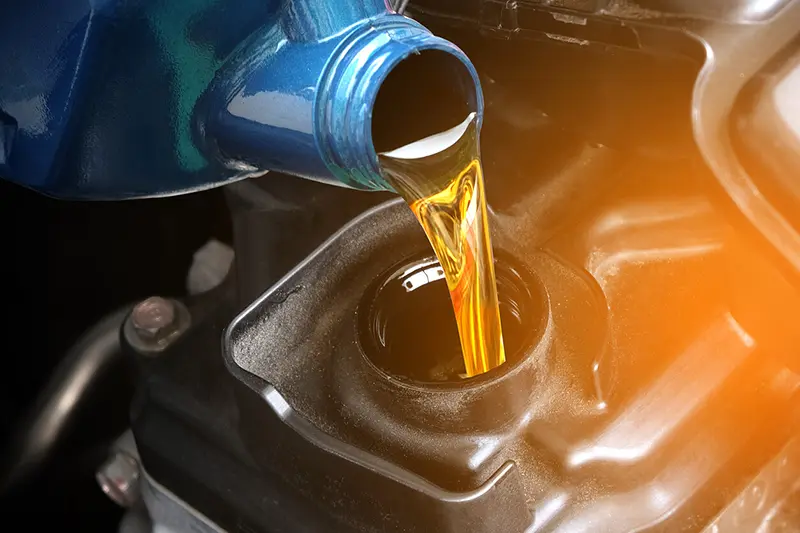
Engine oil is easy to ignore when the car starts every morning and the oil-pressure light stays off. I have seen that attitude change quickly when a driver arrives with a ticking engine, a low oil level, or a seized turbocharger and says the oil was changed recently. A fresh oil change helps, but the oil has to be the correct type, at the correct level, and changed before contamination and heat destroy its useful properties.
Engine oil does far more than make metal parts slippery. It forms a protective film between moving surfaces, carries heat away from areas the coolant cannot reach, holds combustion residue in suspension, helps seal the piston rings, protects against corrosion, and allows hydraulic parts such as variable valve timing systems to operate. The filter removes much of the dirt, but the oil still has to survive the environment inside the engine.
This guide explains the main functions of engine oil, what it is made from, how viscosity works, what additives do, how oil becomes contaminated, and how SAE, ACEA, API, and ILSAC classifications help you choose the correct product. The number on the bottle matters, but the approval required by your owner’s manual matters more.
What engine oil does inside a running engine
A combustion engine contains bearings, crankshaft journals, cam lobes, lifters, timing components, piston rings, turbocharger bearings, and many other parts moving at different speeds. Some surfaces slide, some rotate, and some carry heavy loads while only a thin layer of oil separates them. Without that oil film, direct metal contact creates heat and wear very quickly.
The oil pump draws oil from the sump or oil pan and sends it through the filter and internal passages. From there, oil reaches the main bearings, connecting-rod bearings, cylinder-head components, timing system, and other points specified by the engine design. Some engines also use oil jets to spray the underside of the pistons or oil coolers to control temperature.
The oil then drains back to the pan and circulates again. This is why oil level, pressure, cleanliness, and viscosity all matter. A pump cannot maintain the intended flow if the oil is badly degraded, the pickup is restricted, the level is too low, or the wrong viscosity is being used.
Lubrication reduces friction and wear
The best-known job of oil is lubrication. A film of oil keeps moving surfaces apart so they do not scrape directly against each other. That reduces friction, heat, surface damage, and the power the engine loses to mechanical drag.
At startup, the engine is at its most vulnerable because much of the oil has drained away from some upper components. The oil pump needs to move oil through the passages quickly, while the remaining film needs enough strength to protect the surfaces. This is one reason cold-weather viscosity and the manufacturer’s oil specification matter.
Oil does not eliminate all wear. Bearings and other components still age, and the oil film can become too thin under high load or excessive temperature. A worn engine may also have larger clearances, allowing oil pressure to fall at hot idle. Correct oil can slow wear, but it cannot rebuild worn bearing surfaces.
Oil helps cool parts the coolant cannot reach
Coolant surrounds the engine block and cylinder head, but it does not reach every moving part. Oil carries heat away from piston undersides, crankshaft bearings, camshaft areas, timing components, and turbocharger bearings when the design sends oil through those areas.
Some engines use piston oil squirters to spray oil under the pistons. The spray takes heat from the piston crown and returns it to the sump or oil cooler. Turbochargers also depend on a reliable oil supply because their shaft spins at high speed and is exposed to exhaust-side heat.
If the oil level is low, the pump can draw air during cornering, braking, or acceleration. Air in the oil reduces its ability to carry heat and maintain a stable film. A driver may not hear a problem until a bearing or turbocharger has already suffered damage.
Oil helps seal the piston rings
A thin oil film helps the piston rings seal against the cylinder wall. That seal keeps combustion pressure above the piston and helps prevent excessive blow-by, while the rings also control how much oil remains on the cylinder surface.
If the oil is too thin for the engine’s required operating conditions, worn rings and cylinder walls may allow more oil into the combustion chamber. If it is too thick, the engine may struggle to pump it during startup and may not deliver the expected flow to the upper engine. The correct choice depends on the manufacturer’s specification and the engine’s condition, not simply on using the thickest oil available.
Oil protects against corrosion and chemical attack
Combustion produces acids, water vapor, soot, and other by-products. Blow-by gases can carry some of those compounds past the piston rings and into the crankcase. Oil additives help neutralize acids, protect metal surfaces, and reduce corrosion while the oil is in service.
Condensation is another concern, especially on vehicles used for short trips. The engine may not stay hot long enough to evaporate moisture from the crankcase. Water mixed with oil can produce a pale deposit under the filler cap, although a small amount there does not prove a head-gasket failure. Check the oil level, coolant level, dipstick appearance, and driving pattern before drawing a conclusion.
Oil cleans by carrying residue to the filter
Detergents and dispersants help keep deposits from sticking to engine surfaces and hold small contaminants in suspension until the oil filter can trap them. This cleaning action is one reason used oil becomes dark. Dark oil is not automatically proof that the engine is dirty or that the oil has failed.
Oil cannot carry an unlimited amount of contamination. Soot, metal wear particles, fuel, water, coolant, and sludge eventually use up the oil’s ability to protect the engine. If the filter is restricted or the oil-change interval is too long, the bypass valve may open and allow unfiltered oil to circulate.
What engine oil is made from
Engine oil is a blend of base oils and chemical additives. The base oil provides the main lubricating fluid, while additives adjust its behavior, protect surfaces, control deposits, and help the oil survive heat and oxidation.
The original material gives a general composition of about 75 to 85 percent base oil and 15 to 25 percent additives. The exact balance depends on the product, viscosity grade, performance claims, and required approvals. Do not compare oils only by the percentage of additives, because more additive does not automatically mean a better match for your engine.
Mineral base oils
Mineral base oils are refined from crude petroleum through processing that removes or changes unwanted compounds. They can lubricate an internal-combustion engine when combined with a suitable additive package and used within the required service conditions.
Mineral oils are generally less expensive than fully synthetic products, but their low-temperature flow, high-temperature stability, and resistance to oxidation depend heavily on the refining process and formulation. The performance category on the container is more useful than the word mineral by itself.
Synthetic base oils
Synthetic base oils are produced or modified through controlled chemical processes. Manufacturers can control the molecular structure more closely than with a basic mineral base oil. When combined with the correct additive package, a synthetic formulation can offer good low-temperature flow, high-temperature stability, oxidation resistance, and deposit control.
Synthetic oil is often more expensive, but price alone does not make it suitable for every engine. The vehicle manual may specify a viscosity and performance approval that is available in synthetic, mineral, or synthetic-blend products. Use the required specification first, then consider the base-oil type.
Synthetic blends
Semi-synthetic oil, also called a synthetic blend, combines mineral and synthetic base oils. The proportion varies by product, so do not assume every blend contains the same percentage. A blend can offer a practical balance between cost and performance, provided it meets the engine’s required specification.
Switching between mineral, synthetic blend, and full synthetic oil does not normally harm a healthy engine when the products meet the same required approvals and viscosity. The problem is using an oil that lacks the needed performance standard, has the wrong viscosity, or is changed at an interval the engine cannot tolerate.
How oil properties affect engine protection
Oil behavior is influenced by the base oil, refining or synthesis method, viscosity modifiers, detergents, dispersants, anti-wear chemistry, antioxidants, and other additives. The final product is designed to behave within a range of temperatures and loads, not to have one fixed thickness in every condition.
Oiliness, or the ability to cling to metal
Oiliness describes how well the lubricant adheres to metal surfaces and maintains a protective film. That film reduces direct contact between moving parts. Some base oils have useful natural oiliness, and additive chemistry can improve the way the oil protects surfaces under boundary-lubrication conditions.
Boundary lubrication occurs when the oil film is very thin or the load is high enough that the surfaces come close together. Cam lobes, piston rings, timing components, and startup surfaces may experience these conditions. Anti-wear additives react with the surface under pressure and help limit damage, but they are not a substitute for the correct oil level and change interval.
Viscosity is resistance to flow
Viscosity is the oil’s resistance to flow. A high-viscosity oil flows more slowly than a low-viscosity oil at the same temperature. Viscosity affects how quickly oil moves through passages, how well it maintains a film, how much pumping work the engine needs, and how it seals clearances between parts.
Temperature changes viscosity. Oil becomes thinner as it heats and thicker as it cools. A multigrade oil uses a formulation designed to flow at low temperature while maintaining a different high-temperature viscosity grade when the engine is operating.
Do not choose oil by viscosity alone. A 5W-30 oil with the wrong manufacturer approval can be a worse choice than a 0W-20 or 10W-40 oil that meets the correct specification. Read the owner’s manual, oil cap, and service information.
Why cold-start flow matters
Most engine wear does not occur because the engine is running at a steady operating temperature. Startup is a demanding moment because the oil is cold, the pump must build pressure, and upper components may have drained. Low-temperature flow helps oil reach those areas sooner.
The first number in a multigrade designation is followed by the letter W, which refers to winter performance. A lower winter grade generally flows more easily in cold conditions than a higher one, but the actual suitability depends on the temperature range and the engine’s specification.
Do not treat the W number as a direct freezing-point reading. The original material uses 10W-30 as an example with a freezing point of minus 30 degrees Celsius, but SAE viscosity grades are not simply temperature labels and the actual pour point depends on the formulation. The viscosity grade should be chosen from the manufacturer’s guidance for the climate and engine.
Why high-temperature viscosity matters
The second number in a multigrade designation relates to the oil’s high-temperature viscosity range. A higher grade can maintain a thicker film at operating temperature, but it also creates more pumping resistance. The engine’s clearances, oil passages, variable valve timing system, emissions equipment, and fuel-economy calibration all influence the correct choice.
Using a thicker oil to hide low oil pressure or reduce oil consumption can sometimes change a symptom without correcting the cause. If the engine suddenly consumes oil, develops low hot-idle pressure, or shows blue smoke, diagnose the mechanical problem. Oil viscosity is not a repair for worn bearings, stuck rings, or leaks.
What happens when viscosity is too low or too high
Lower viscosity can reduce pumping and friction losses, help cold starting, and support fuel economy. It may also help oil circulate quickly in cold weather. Those benefits apply only when the engine is designed and approved for that viscosity.
- Reduced pumping resistance
- Easier starting in cold conditions
- Lower friction losses in a compatible engine
- Good flow through small oil passages when the product meets the required grade
Oil that is too thin for the engine or operating condition may fail to maintain the required film under load. Oil consumption can rise, hot oil pressure can fall, and bearing or valvetrain noise may appear. Again, the answer is not automatically a thicker oil. Confirm the specification and test the engine.
Higher viscosity can reduce oil consumption in some worn engines and may improve sealing between the piston rings and cylinder wall. It can also increase film thickness at high temperature. Those effects are why some mechanics use a different grade in an older engine, but that decision should follow the manufacturer’s limits and a diagnosis.
Oil that is too thick can make the engine crank slowly, delay oil flow on a cold start, increase pumping losses, and interfere with hydraulic components. Variable valve timing systems can set faults or operate poorly if oil flow and pressure do not match what the engine control system expects.
How oil moves through the engine
The oil circuit begins in the sump or oil pan. A pickup tube draws oil through a screen, and the oil pump sends it through passages toward the filter and engine components. A pressure-relief valve controls excessive pressure, while a bypass valve may allow oil around the filter if the filter is restricted or the oil is very cold.
Filtered oil travels through galleries drilled into the block and cylinder head. It reaches the crankshaft bearings, connecting rods, camshafts, lifters, rocker arms, timing chain or belt components where applicable, and turbocharger bearings. Oil drains back through return passages to begin the cycle again.
Some engines use an oil cooler, either air-cooled or connected to the engine cooling system. An oil cooler can reduce oil temperature under heavy load, but it adds hoses, seals, and a possible leak point. If coolant and oil mix, the result is serious and needs prompt diagnosis.
Why the oil filter matters
The filter removes suspended particles from the oil. A quality filter has the correct flow capacity, pressure rating, filtration media, anti-drainback valve where required, and bypass-valve setting. The cheapest filter is not always the right filter for an engine that relies on fast oil pressure after sitting.
A clogged filter may trigger the bypass valve, allowing unfiltered oil to circulate. A damaged filter seal can leak oil rapidly. After an oil change, inspect around the filter and drain plug for leaks, then recheck the level after the engine has run and the oil has settled.
How engine oil degrades in service
Oil degrades from heat, oxygen, fuel dilution, water, coolant, soot, metal particles, and time. The oil may still look like oil on the dipstick while its additives are depleted. This is why change intervals should follow the owner’s manual and the vehicle’s actual use.
Oxidation from heat and oxygen
Oxidation is a chemical reaction between oil and oxygen that accelerates with heat. Long periods at high engine temperature, heavy towing, high-speed driving, turbocharger heat, and inadequate cooling can speed the process. Oxidized oil can thicken, form varnish or sludge, and lose its ability to protect surfaces.
Antioxidant additives slow oxidation, but they are consumed over time. A vehicle used for short trips may also be hard on oil because moisture and fuel do not evaporate fully. A vehicle used for long highway trips may run at stable temperature, but severe heat or an extended interval can still degrade the oil.
Fuel dilution reduces viscosity
Gasoline or diesel fuel can enter the crankcase through blow-by, an injector problem, incomplete combustion, repeated short trips, or a diesel particulate filter regeneration strategy. Fuel dilution lowers viscosity and weakens the oil film. It can also lower the temperature at which the oil vapors ignite.
Possible signs include a rising oil level, a strong fuel smell on the dipstick, a thin feel between the fingers, poor fuel economy, or an oil-pressure warning. Do not taste or deliberately sniff engine fluids. If fuel dilution is suspected, find the cause and change the oil as directed rather than continuing to drive.
Water and coolant contamination
Water from condensation can emulsify with oil and reduce its lubricating ability. Coolant contamination is more serious and may result from a head-gasket problem, cracked oil cooler, damaged cylinder head, or another internal leak. The oil may become milky, tan, or foamy, although the appearance under the filler cap alone is not enough to identify the cause.
Coolant in the oil can separate additives, reduce film strength, attack bearings, and produce sludge. Oil in the coolant can damage hoses and cooling-system components. If the coolant level drops without an external leak, the engine overheats, or the dipstick shows a creamy mixture, stop guessing and arrange a pressure test or further diagnosis.
Soot and particle contamination
Incomplete combustion can put soot into the oil, especially in diesel engines or an engine with a fueling, injector, EGR, or air-supply problem. Soot thickens the oil and can contribute to deposits. Metal particles from wear, dirt entering through the air system, and sealant debris can also circulate.
A magnet can show some ferrous material in drained oil, but it does not replace oil analysis or inspection. A small amount of fine material may be normal wear, while larger flakes or shiny particles can be a warning. If the oil filter is cut open for inspection, use care because the pleats can contain sharp metal.
What oil additives do
Additives are chemical compounds blended into the base oil to improve specific properties. The additive package is balanced by the oil manufacturer. Adding extra aftermarket chemicals can upset that balance, reduce compatibility with seals or emissions equipment, or change the oil’s performance.
| Additive group | Main job | What the driver should know |
|---|---|---|
| Viscosity modifiers | Help a multigrade oil maintain useful viscosity across temperature changes. | They can shear or degrade, so the correct oil-change interval still matters. |
| Detergents and dispersants | Reduce deposits and keep contaminants suspended until filtration or draining. | They do not make a badly sludged engine clean in one oil change. |
| Antioxidants | Slow the reaction between oil, oxygen, and heat. | They are gradually consumed during service. |
| Anti-wear additives | Help protect surfaces when the oil film becomes thin under load. | Use an oil meeting the required approval instead of adding random chemistry. |
| Rust and corrosion inhibitors | Protect metal surfaces from acids and moisture. | Short-trip use and condensation still require attention. |
| Anti-foam additives | Reduce foam caused by air being whipped into the oil. | Overfilling the crankcase can still cause aeration and problems. |
Detergents and dispersants are not the same
Detergents help clean hot metal surfaces and neutralize acidic compounds. Dispersants help keep small, insoluble contaminants suspended so they do not clump into sludge. Both are important, but they cannot compensate for severe mechanical wear, coolant contamination, or an oil interval that is far too long.
An engine with heavy sludge may release deposits after a cleaning attempt. Those deposits can restrict a pickup screen or oil passage. I am cautious about aggressive flush products in an old engine with an unknown service history. Sometimes a series of correct oil and filter changes is safer than trying to dissolve years of buildup in one afternoon.
Anti-foam additives protect oil flow
Foam contains air, and air does not support the same stable film or pressure as liquid oil. The crankshaft can whip oil into foam if the level is too high or the oil is contaminated. Anti-foam chemistry reduces the tendency, but it cannot fix overfilling or a damaged windage-control system.
Check the level on level ground, with the engine off for the time specified by the manufacturer. Reading immediately after shutdown can give a different result because oil has not drained back to the pan. Adding oil above the full mark can cause foaming, leakage, crankcase pressure, and catalytic-converter or emissions problems if the engine burns it.
How engine oil is classified
Oil classifications help identify viscosity, performance, engine type, emissions compatibility, and test requirements. The main systems discussed here are SAE, ACEA, API, and ILSAC. They are not interchangeable labels, and a viscosity grade alone does not tell you whether an oil is correct for a particular engine.
The SAE J300 viscosity standard addresses the viscosity classification of engine oils. The American Petroleum Institute’s engine-oil guidance explains API performance categories and the marks used on licensed oils. Always compare the bottle’s approval or performance claim with the owner’s manual.
SAE viscosity grades
SAE grades describe how an oil behaves at specified low and high temperatures. Winter grades include 0W, 5W, 10W, 15W, 20W, and 25W. High-temperature grades include 20, 30, 40, 50, and 60. A multigrade oil such as 5W-30 combines a winter grade with a high-temperature grade.
A 5W-30 oil is not “five weight” oil at all temperatures. The two numbers describe different test conditions. The lower number relates to cold cranking and pumping behavior, while the second number describes high-temperature viscosity requirements.
Monograde oils are still used for some engines, equipment, and special applications, but modern passenger vehicles commonly specify multigrade oils. Do not substitute a monograde oil because the second number looks similar. The engine may need the cold-start behavior of a multigrade product.
ACEA categories
The Association of European Automobile Manufacturers, or ACEA, classifies oils according to performance and application. ACEA categories have changed over time, and the current sequence should be checked against the engine manufacturer’s requirement. Older articles may list a previous ACEA sequence that no longer represents the current wording on oil containers.
Older classifications such as A1/B1, A3/B3, A3/B4, A5/B5, and C categories appear in the source material. In broad terms, A and B categories relate to gasoline and light-duty diesel applications, while C categories are formulated with attention to after-treatment compatibility and lower chemical limits. The exact approval and current sequence matter more than memorizing an old category.
Low-viscosity, low-ash, or low-sulfur oils are not automatically suitable for every engine. An oil designed for a diesel particulate filter or three-way catalyst still has to meet the vehicle’s required viscosity and manufacturer approval. The ACEA oil sequences information is a better reference than a generic claim printed in an old article.
API categories
API service categories distinguish oils for spark-ignition gasoline engines and compression-ignition diesel engines. Gasoline categories traditionally use the S designation, while diesel categories use the C designation, followed by additional letters. The current category required by the vehicle should be checked because API standards are updated as engine and emissions technology changes.
The source material lists SJ for engines manufactured through 2001, SL through 2004, and SM for later gasoline engines, then gives older diesel examples labeled H4, I4, and J4. Those are historical references and should not be treated as a current universal buying guide. A newer oil may be backward-compatible in some applications, but the owner’s manual and oil label must be compared before use.
API licensing marks can help identify whether an oil meets a published performance category. Do not confuse an API mark with a vehicle manufacturer’s approval. Some engines require a specific manufacturer specification in addition to an API or ACEA category.
ILSAC and manufacturer approvals
ILSAC categories are used mainly for gasoline passenger-car oils and are developed through cooperation among automobile manufacturers. They cover performance areas such as wear, deposits, oxidation, fuel economy, emissions-system protection, and timing-chain protection depending on the category.
Manufacturer approvals can be even more specific. A turbocharged engine, hybrid, diesel with a particulate filter, or engine with a wet timing belt may need a particular oil chemistry. Two oils with the same SAE grade can behave differently in service if only one carries the required approval.
Why the right oil matters for modern engine systems
Modern engines use oil as a hydraulic working fluid as well as a lubricant. Variable valve timing actuators depend on controlled oil pressure and clean passages. Some cylinder-deactivation systems, turbocharger controls, timing-chain tensioners, and hydraulic lifters also rely on oil flow.
Dirty or incorrect oil can cause a rattling timing chain at startup, a variable-valve-timing fault code, a ticking lifter, rough running, or reduced performance. A code does not prove the oil is the cause, but oil level and condition should be checked early. Repairing a solenoid without fixing sludge in its passage may not last.
After-treatment systems also influence oil choice. Diesel particulate filters, gasoline particulate filters, catalytic converters, and exhaust-gas recirculation systems can be affected by oil-derived ash and additives. This is why a low-ash oil or special manufacturer approval may be required, and why “my old car used this oil” is not enough evidence for a newer one.
How to choose engine oil without guessing
- Read the owner’s manual. Find the required viscosity for the temperature range and the required performance or manufacturer approval.
- Check the oil filler cap and service label. These can confirm the common viscosity, but use the manual when they disagree or when the vehicle has several engine options.
- Match the specification on the bottle. Look for the exact API, ACEA, ILSAC, or manufacturer approval, not only a familiar viscosity number.
- Consider the driving conditions. Short trips, towing, dust, extreme temperatures, high idle time, and racing may change the service schedule.
- Use a quality filter. The filter and oil work together, and a poor seal or incorrect bypass valve can create a leak or pressure problem.
If you are unsure, give a parts supplier or mechanic the vehicle identification number, model year, engine size, and fuel type. Do not mix information from two similar engines. A model can use different oil approvals depending on engine, market, emissions equipment, or production year.
Checking oil level and condition
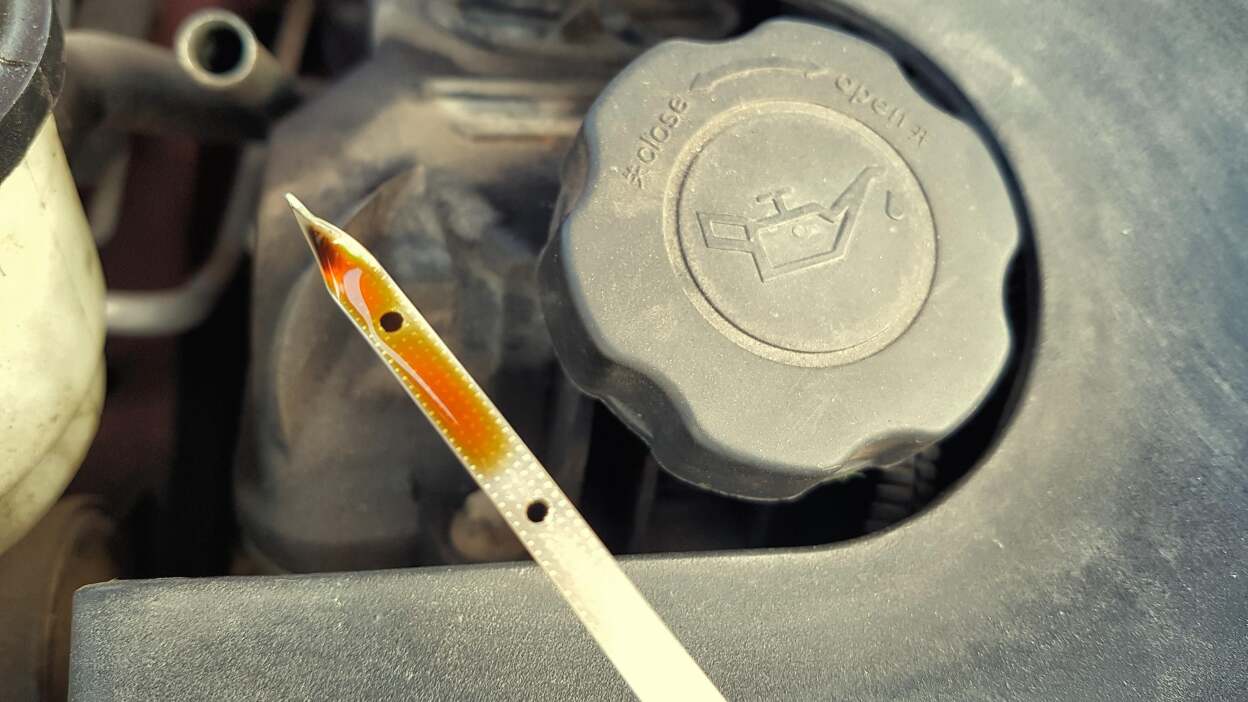
Check the oil on level ground with the engine off for the period stated in the manual. Pull the dipstick, wipe it, reinstall it fully, then remove it again and read the level between the marks. Add oil slowly and recheck rather than pouring in a large amount at once.
The oil should wet the marked area without being below minimum or above maximum. Low oil can starve the pump during turns and acceleration. Overfilled oil can foam, increase crankcase pressure, and reach the rotating crankshaft.
Look for a strong fuel smell, coolant-like contamination, metal glitter, or a sudden change in level. A dark color by itself is not a reliable reason to change oil immediately. A new engine may darken oil quickly as detergents clean surfaces, while a diesel can turn oil dark soon after a change.
Oil-pressure light versus oil-level warning
The red oil-pressure light usually warns of low pressure, not simply a low level. If it comes on while the engine is running, stop as soon as it is safe and switch the engine off. Continuing to drive can damage bearings, camshafts, or the turbocharger within a short time.
A level sensor warning is different, but it still deserves attention. Check the dipstick if the vehicle has one, look for leaks, and follow the manual. Do not assume that adding oil will fix a pressure problem caused by a failed pump, blocked pickup, worn bearings, or a sensor fault.
Oil-change mistakes that create real problems
- Using the wrong viscosity because it was already in the garage
- Ignoring a manufacturer approval and checking only the SAE number
- Overfilling after reading the level immediately after draining
- Leaving the old filter seal stuck to the housing and installing a second seal
- Failing to tighten or inspect the drain-plug washer
- Pouring used oil onto the ground or into household drains
- Waiting for the oil-pressure light to come on before checking the level
- Using aggressive flush chemicals in an engine with unknown sludge history
Double-gasketing an oil filter can empty the engine quickly. After service, start the engine, check for leaks, switch it off, wait, and recheck the level. Look under the vehicle again after the first drive, especially if the filter or drain plug was difficult to access.
What I would do if this were my engine
I would use the oil grade and approval listed for the exact engine, not the thickest oil on the parts-store shelf. I would keep the level near the full mark without overfilling, use a reputable filter, and shorten the interval if the vehicle spends its life on short trips, in traffic, or under heavy load.
If the oil pressure light came on, the level rose unexpectedly, or the oil smelled strongly of fuel, I would stop driving and diagnose the cause. If the engine had sludge, I would inspect the oil pickup, service history, and ventilation system before choosing a flush product. A clean-looking dipstick does not prove that the pickup screen is clear.
I would consider synthetic oil when it meets the required approval and suits the budget and service conditions. I would not pay extra for a product that lacks the specification the engine needs. The label, manual, filter, level, and change interval all matter more than marketing language.
The mechanic’s verdict on engine oil
Engine oil lubricates moving parts, carries heat, seals the piston rings, cleans by suspending residue, protects against corrosion, and supports hydraulic engine systems. It is made from base oils and additives, with mineral, synthetic-blend, and synthetic formulations available for different applications.
Viscosity changes with temperature, which is why SAE grades use winter and high-temperature numbers. Lower viscosity can improve cold flow and reduce pumping losses in a compatible engine, while higher viscosity can support film strength and reduce consumption in some applications. Neither is automatically better, and the owner’s manual’s specification should lead the decision.
Oil degrades through oxidation, heat, fuel, water, coolant, soot, and metal particles. You can check the level and replace oil and filters yourself when the procedure is clear, but warning lights, fuel dilution, coolant contamination, low hot oil pressure, and metal in the filter need a mechanic. The one takeaway I give customers is simple: the right oil is not just the right number on the bottle, it is the correct specification, level, condition, and service interval working together.