

A P2187 code on your Mini Cooper is the engine control module telling you something specific: the engine is running lean at idle. Not occasionally lean. Lean enough, consistently enough, that the ECM has flagged it as a confirmed fault and stored a code. That distinction matters because it tells you the problem is real and repeatable, not a one-off sensor glitch that clears itself.
Running lean means there is too much air and not enough fuel in the combustion mixture. The engine needs a precise ratio to burn cleanly and produce power. When that ratio tips too far toward air, combustion becomes unstable, performance suffers, and internal temperatures can rise to the point where engine damage becomes a genuine concern over time.
The P2187 code specifically flags a lean condition at idle in Bank 1, which is a useful piece of information because it separates idle-related lean conditions from those that only show up under load. That distinction points you toward specific causes that show up most strongly at idle, like vacuum leaks, which are far more impactful at low throttle than at higher RPMs.
Here is everything you need to know to understand, diagnose, and fix the P2187 code on your Mini Cooper.
What the P2187 Code Means in Plain Language
P2187 translates to “System Too Lean at Idle, Bank 1.” The ECM sets this code when it has been running fuel trims, specifically long-term fuel trims, at values above a threshold that indicates a persistent lean condition during idle operation.
Let’s unpack that. The ECM constantly monitors the oxygen sensors in the exhaust to determine whether the combustion mixture is rich or lean. It uses this feedback to make real-time adjustments to fuel delivery, which are called short-term fuel trims. When a lean condition is persistent, the ECM shifts its long-term fuel trim upward, essentially telling the injectors to add more fuel on a permanent basis to compensate. When that long-term trim correction has to climb high enough to exceed the ECM’s acceptable range, it recognizes that something in the system is fundamentally wrong and cannot be compensated for by fuel trim adjustment alone. That is when P2187 gets stored.
The “at idle” part of the definition is important. Some lean conditions appear across all RPM ranges. Others are specific to idle. A P2187 that appears at idle but clears at higher RPMs is a strong indicator of a vacuum leak, because at idle the throttle is nearly closed and any unmetered air entering through a leak represents a much larger percentage of total airflow than it would at wider throttle openings.
Symptoms Your Mini Cooper Will Show With a P2187 Code

Some of these you will notice immediately. Others are more subtle and build gradually as the lean condition worsens over time.
- Check engine light: This is typically the first indication. On some models, it may be labeled “Service Engine Soon” rather than “Check Engine,” but the result is the same. The light will stay on until the fault is addressed and the code is cleared.
- Rough idle: A lean mixture burns less consistently, and the result is an uneven, choppy idle. The engine may hunt up and down in RPM slightly or feel like it is struggling to maintain a stable idle speed.
- Stalling at idle: In more severe cases, the lean condition makes the engine unable to sustain combustion at low RPMs. The engine stalls, particularly when coming to a stop or when the transmission drops into drive from park.
- Hard cold start: Cold starts require a richer mixture because fuel does not vaporize as efficiently in cold temperatures. A lean condition makes starting harder, and the engine may crank for longer than usual before firing.
- Whistling or hissing from the engine bay: This is the sound of a vacuum leak. Air rushing through a gap in an intake hose or gasket surface creates an audible hiss or whistle that you can often hear at idle with the hood open. If you hear this, you have a strong clue about the cause.
- Poor fuel economy: Paradoxically, a lean condition can actually increase fuel consumption because the ECM is adding fuel via fuel trim corrections to compensate, and the engine is running less efficiently overall.
- Hesitation under light throttle: The transition from idle to light acceleration may feel sluggish or stumble because the mixture management is already compromised at low throttle positions.
Every Cause of the P2187 Code on a Mini Cooper
1. Vacuum Leaks: The Most Likely Cause
If there is one cause that stands above all others for a P2187 on a Mini Cooper, it is a vacuum leak. This is where you should start your investigation, full stop.
Here is why vacuum leaks hit so hard at idle. The engine’s throttle body controls airflow by how much it opens. At idle, the throttle is nearly completely closed. The ECM and the mass airflow sensor have calculated exactly how much fuel is needed for that tiny amount of metered airflow. When a vacuum leak introduces additional unmetered air into the intake downstream of the MAF sensor, that extra air is invisible to the ECM’s calculations. The mixture goes lean, the oxygen sensor detects it, and the ECM starts pushing fuel trims higher trying to compensate. At higher RPMs with a wider throttle opening, that same leak represents a smaller proportion of total airflow and has less impact. But at idle, it is significant.
On Mini Cooper engines, the most common vacuum leak locations are:
- The large intake boot or air duct between the MAF sensor and the throttle body
- The PCV (Positive Crankcase Ventilation) hose and its connections to the valve cover and intake manifold
- The intake manifold gaskets at the cylinder head
- Small vacuum hoses connected to the brake booster, evaporative emission system, or other vacuum-operated components
- The throttle body gasket
The PCV system deserves specific attention on Mini Cooper engines. The PCV hose on these engines is known to become brittle and crack over time, especially on higher-mileage vehicles. A cracked PCV hose introduces unmetered air directly into the intake and is a very common cause of P2187 codes on Minis. Inspect this hose carefully along its full length, including at the connection points, where cracks often start.
2. Mass Airflow Sensor Problems
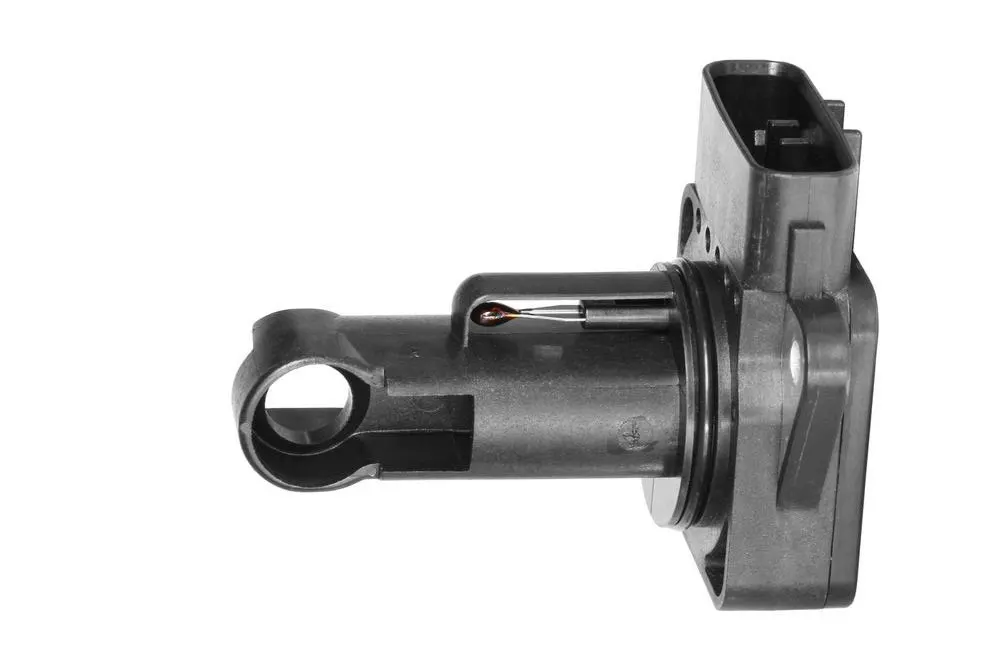
The MAF sensor measures the amount of air entering the engine and sends that data to the ECM, which uses it to calculate fuel delivery. If the MAF sensor is contaminated with oil residue or dirt, it underreports the actual airflow. The ECM injects less fuel than the engine actually needs based on the false low reading, and the mixture goes lean.
MAF sensor contamination is a gradual process. The sensor does not fail overnight. It gets progressively more inaccurate as contamination builds up on the hot wire element inside the sensor housing. You might notice the lean condition getting slowly worse over time rather than appearing suddenly, which is a pattern consistent with gradual sensor contamination.
The good news is that a contaminated MAF sensor can often be cleaned rather than replaced. Specific MAF sensor cleaner spray, applied carefully to the sensing element, can remove contamination and restore accurate readings. However, if the sensor element is physically damaged or the contamination is too severe, cleaning will not fully restore it and replacement is necessary.
3. Faulty Oxygen Sensor
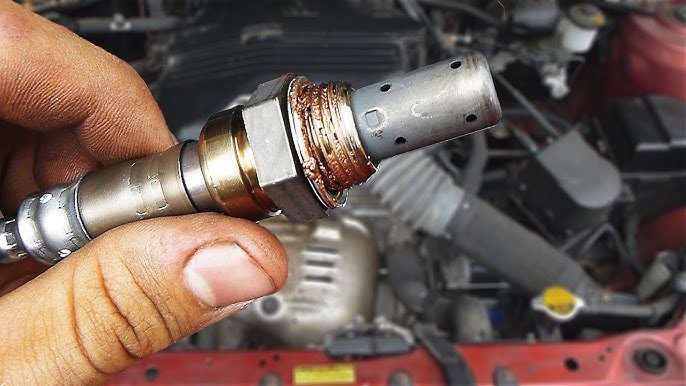
The upstream oxygen sensor is the ECM’s primary feedback tool for monitoring the air-fuel mixture. When it works correctly, it tells the ECM whether the combustion products in the exhaust are consistent with a rich or lean mixture, and the ECM adjusts fuel delivery accordingly. When the sensor fails or becomes sluggish from age and heat exposure, it sends inaccurate signals.
A failing O2 sensor can cause the ECM to misinterpret the actual mixture. In some failure modes, a faulty sensor can trigger a P2187 code by sending signals that indicate a lean condition even when the actual mixture is correct, or it can fail to accurately report a real lean condition, allowing it to worsen before the ECM catches it through other monitoring.
Oxygen sensors have a service life typically in the range of 60,000 to 100,000 miles. On high-mileage Mini Coopers, a tired O2 sensor is a legitimate suspect alongside the other causes on this list.
4. Fuel System Issues
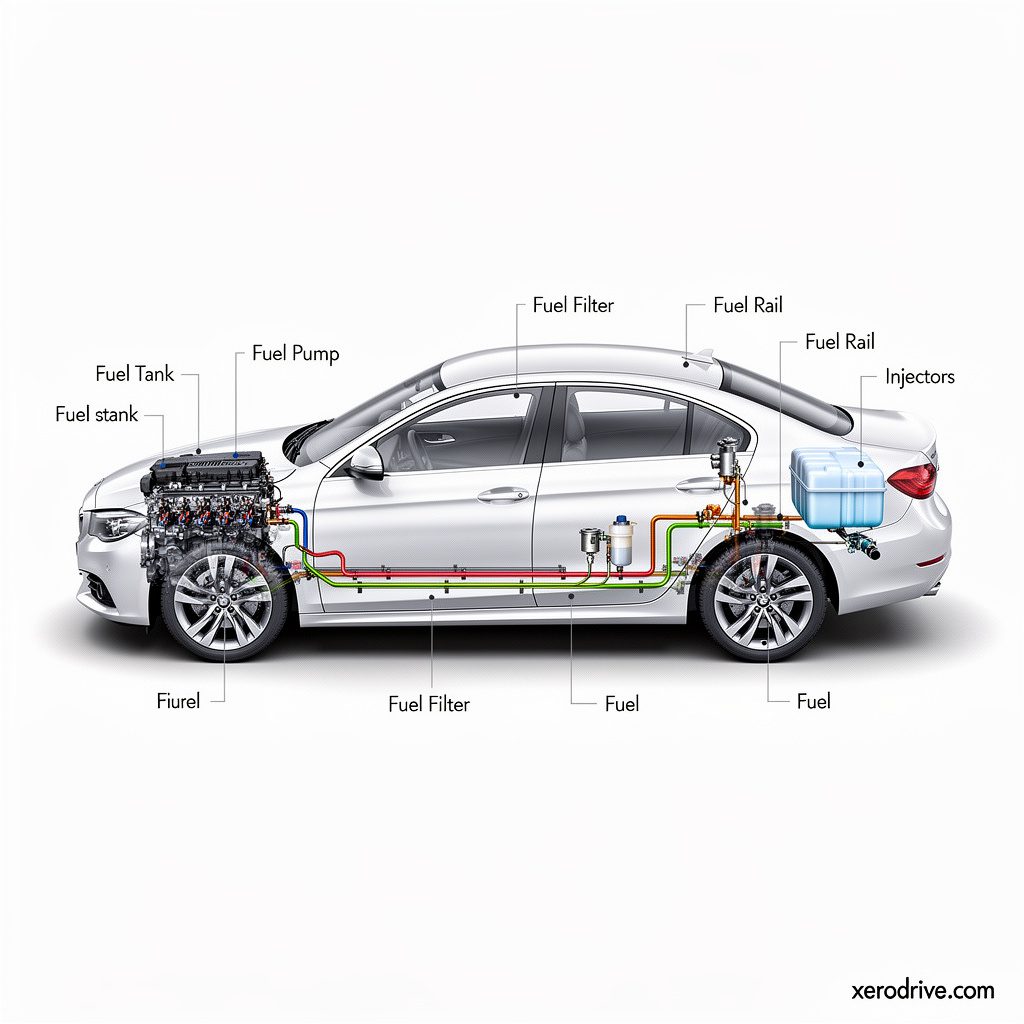
The fuel system has to deliver the right amount of fuel at the right pressure for the engine to maintain the correct mixture. Several fuel system faults can create a lean condition:
- Weak fuel pump: A pump that is losing output pressure cannot maintain the required fuel rail pressure. At idle, where fuel demand is low, a weak pump might just barely manage. Under load, the deficiency becomes more obvious. But even at idle, if the pressure is below specification, injector delivery is compromised and the mixture can go lean.
- Clogged fuel filter: A severely restricted fuel filter limits fuel flow to the point where pressure cannot be maintained. This is more common on older vehicles that have never had the fuel filter serviced.
- Faulty fuel pressure regulator: The regulator maintains consistent fuel rail pressure across varying engine loads. A faulty regulator can allow pressure to drop during idle, reducing fuel delivery and leaning out the mixture.
- Clogged or underperforming fuel injectors: Injectors that cannot deliver their commanded fuel quantity cause a lean condition in that cylinder. If multiple injectors are partially clogged, the overall mixture leans out enough to trigger the ECM’s lean condition monitoring.
5. Exhaust Leaks Near the Oxygen Sensor
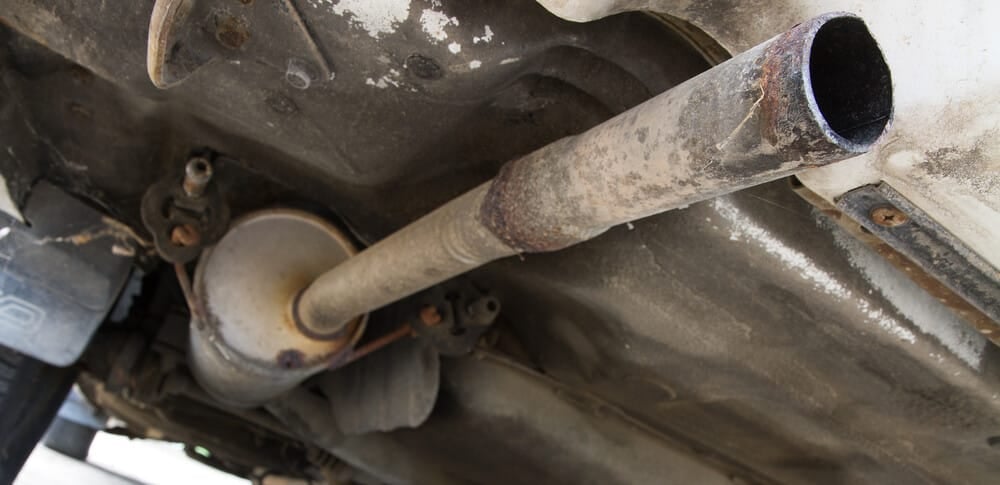
This one surprises people. An exhaust leak upstream of the oxygen sensor, or very close to it, can allow ambient air to enter the exhaust stream near the sensor. The sensor detects the extra oxygen from that incoming air and interprets it as a lean running condition, even if the actual combustion mixture is perfectly correct. The ECM responds by adding fuel based on the sensor’s false report, and the fuel trim data can look exactly like a genuine lean condition.
Exhaust leaks can be tricky to spot visually because they sometimes only open up when the exhaust heats up and the metal expands. A cold inspection might show nothing, but start the engine and a ticking or hissing sound near the exhaust manifold or header flanges can reveal the leak. Exhaust soot deposited on the surrounding components is another indicator.
6. PCV System Malfunction
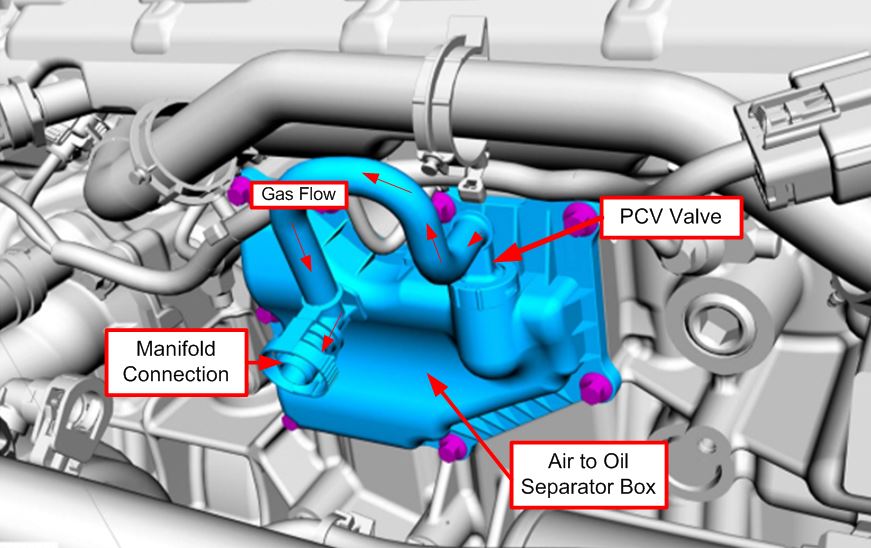
The PCV system is worth its own section because it is such a common cause of lean codes on Mini Cooper engines specifically. The PCV system routes crankcase gases back into the intake manifold to be burned rather than released into the atmosphere. When the PCV valve sticks open or the PCV hose cracks, it acts as an uncontrolled vacuum leak that introduces unmetered air into the intake.
On the R56 and similar Mini Cooper engines, the PCV system is integrated into the valve cover, and the hoses that connect it to the intake system are known wear items. They are made of rubber that becomes brittle with age and heat cycling. A small crack in a PCV hose is enough to create a lean code, and the cracks can be very hard to see without removing the hose for a hands-on inspection.
How to Properly Diagnose a P2187 on Your Mini Cooper
The diagnostic process for P2187 is all about using the available data to narrow down the cause before spending money on parts. Here is how to work through it systematically.
Step 1: Pull All Stored Codes and Review Freeze Frame Data
Connect a scan tool and retrieve every stored code. P2187 rarely travels alone. Look for companion codes that can immediately point you in a direction:
- MAF sensor codes alongside P2187 make the MAF sensor a primary suspect.
- O2 sensor codes combined with P2187 put the oxygen sensor high on the list.
- Misfire codes alongside P2187 suggest the lean condition is severe enough to be causing combustion failures.
- Fuel system codes alongside P2187 point toward the fuel delivery side.
Freeze frame data shows you the exact engine conditions when the code was stored: RPM, load, coolant temperature, and fuel trim values. High long-term fuel trim values at idle, specifically above 10 to 15 percent positive, are a strong confirmation that the ECM has been fighting a persistent lean condition.
Step 2: Check Short-Term and Long-Term Fuel Trims
With the engine warmed up and at idle, use the scan tool to monitor live fuel trim data. Here is what the numbers mean:
- Short-term fuel trim (STFT): The real-time correction the ECM is making. Positive values mean the ECM is adding fuel because the mixture is lean. A positive STFT of more than 10% is significant.
- Long-term fuel trim (LTFT): The accumulated correction the ECM has dialed in over time. Positive LTFT above 10 to 15% confirms a persistent lean condition.
Now watch what happens to the fuel trims when you rev the engine above idle. If the fuel trims improve significantly at higher RPMs, a vacuum leak is very likely the cause, because the leak has less proportional impact at wider throttle positions.
Step 3: Find the Vacuum Leak (If Present)
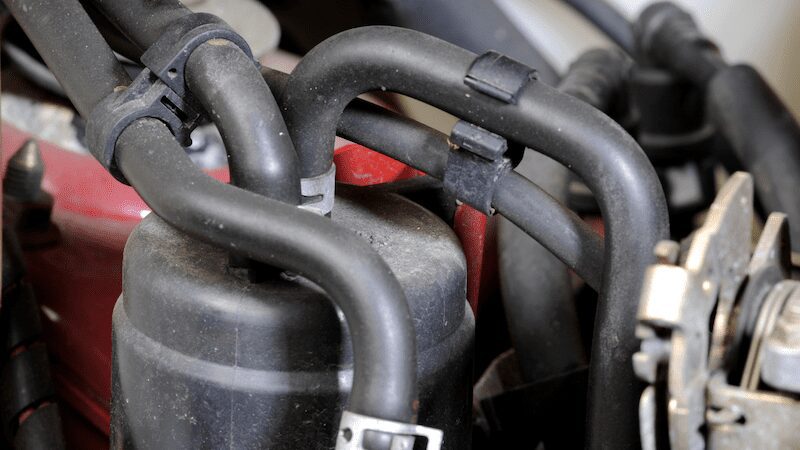
Given that vacuum leaks are the most common cause of P2187 on a Mini Cooper, this step deserves serious attention. Here is how to find one:
- Listen first. With the engine at idle and the hood open, listen for any hissing or whistling sounds from the engine bay. Get close to the intake manifold, the throttle body connection, and the PCV hose routing.
- Inspect the PCV hose physically. Remove it from its connections at both ends and flex it with your hands. Small cracks that are invisible when the hose is in its normal position may open up when flexed.
- Check the intake boot between the MAF sensor and the throttle body for cracks, tears, or loose clamps. Run your hand along its length feeling for any soft spots or deformation.
- Use a smoke machine if available. A smoke machine pressurizes the intake system with harmless white smoke, and you can watch where the smoke escapes. This method finds leaks that are genuinely impossible to locate by any other means.
- If a smoke machine is not available, carefully use an unlit propane torch or can of carburetor cleaner directed around intake gasket surfaces and hose joints with the engine idling. If the idle smooths out briefly when you hit a particular spot, that is your leak. Use extreme caution with flammable sprays near a running engine.
Step 4: Test the MAF Sensor
With the engine running at idle, use the scan tool to check the MAF sensor’s reported airflow. At idle, most Mini Cooper engines should show a MAF reading in the range of 2 to 7 grams per second depending on engine size, temperature, and configuration. Values significantly below the expected range for your specific engine may indicate a contaminated or failing MAF sensor.
You can also try cleaning the MAF sensor as a diagnostic step. Use dedicated MAF sensor cleaner spray and clean the sensing element carefully, following the product instructions. Let it dry completely before reinstalling. Clear the codes, drive the vehicle, and see if the P2187 returns. If the problem clears after cleaning, the MAF sensor contamination was the culprit. If it returns, look elsewhere.
Step 5: Test Fuel Pressure
Connect a fuel pressure gauge to the fuel rail test port and check the pressure at idle against the specification in your service manual. For most Mini Cooper engines, the target idle fuel pressure is in the range of 50 to 65 PSI depending on the specific system. Low pressure at idle that drops further when you rev the engine suggests a failing pump or a restricted fuel filter.
Also watch for pressure that bleeds down quickly after the engine is shut off, which can indicate a leaking fuel pressure regulator or a leaking injector.
Step 6: Evaluate the Oxygen Sensor
On the scan tool, pull up live data from the upstream oxygen sensor with the engine at normal operating temperature. The signal voltage should be switching rapidly and continuously between approximately 0.1 and 0.9 volts. A healthy sensor switches multiple times per second. A sluggish sensor that holds at a low voltage for extended periods or switches very slowly is starting to fail and giving the ECM poor quality feedback.
Also note whether the sensor is always reading lean, which shows as sustained low voltage. If the sensor signal is consistently low even after the engine has fully warmed up and the fuel trims have stabilized, the sensor itself may be the source of the false lean report.
How to Fix the P2187 Code on Your Mini Cooper

Fix 1: Repair Vacuum Leaks
Once you have located the leak, the repair approach depends on where it is:
- Cracked or deteriorated PCV hose: Replace the hose. Do not attempt to patch it with tape or sealant. A replacement PCV hose is an inexpensive part and it needs to be in solid condition to maintain proper crankcase ventilation. On many Mini Coopers, replacing the PCV hose is a straightforward job that takes less than an hour.
- Cracked intake boot: Replace the boot and verify the clamps on both ends are tight. Do not try to seal a cracked boot with silicone or tape. It will not hold under vacuum and heat cycling.
- Intake manifold gasket leak: This is a more involved repair that requires removing the intake manifold. The gasket should be replaced with a new one rather than resealed with gasket maker. Make sure all the intake manifold bolts are torqued to specification after reassembly.
- Small vacuum hose: If a small hose has cracked or come loose from its fitting, replace the hose and ensure the connection is secure.
Fix 2: Clean or Replace the MAF Sensor
Try cleaning first with MAF sensor cleaner. If cleaning does not restore normal fuel trim readings, replace the sensor. Make sure to buy a quality MAF sensor from a reputable supplier. Cheap aftermarket MAF sensors are notorious for causing as many problems as they solve on Mini Cooper engines. OEM or OEM-equivalent sensors from established brands are the safer choice.
Fix 3: Replace the Upstream Oxygen Sensor
If the O2 sensor is confirmed to be sluggish or consistently reading lean, replace it. Oxygen sensors are wear items and replacement is expected on higher-mileage vehicles. Use a sensor socket for removal to avoid damaging the wiring connector. Apply a small amount of anti-seize compound to the new sensor’s threads before installation to make future removal easier, and tighten to the specified torque.
Fix 4: Address Fuel System Issues
If low fuel pressure was confirmed during testing:
- Replace the fuel filter if it has not been serviced in a long time, or if it is at or past the manufacturer’s recommended interval.
- Replace the fuel pump if pressure is below specification after filter replacement or if the filter is not the issue.
- Have the fuel injectors professionally cleaned or tested if they are suspected. An injector flow test at a shop can confirm whether injector delivery is within specification.
Fix 5: Repair Exhaust Leaks
If an exhaust leak was found near the oxygen sensor, have it repaired. Depending on the location, this might involve replacing the exhaust manifold gasket, tightening a loose flange bolt, or welding a crack in the pipe. This is a repair that benefits from professional attention, since working with exhaust components requires proper equipment and knowledge of the heat and sealing requirements involved.
What Does It Cost to Fix a P2187 on a Mini Cooper?
| Repair | Estimated Cost |
|---|---|
| PCV hose replacement | $30 to $150 (DIY or shop) |
| Intake boot replacement | $50 to $200 |
| Intake manifold gasket replacement | $200 to $500 |
| MAF sensor cleaning | Under $20 (DIY) |
| MAF sensor replacement | $100 to $300 |
| Upstream oxygen sensor replacement | $100 to $250 |
| Fuel filter replacement | $50 to $150 |
| Fuel pump replacement | $300 to $700 |
| Fuel injector cleaning (professional) | $100 to $200 |
| Exhaust leak repair | $100 to $400 depending on location |
The majority of P2187 cases on the Mini Cooper are resolved at the lower end of this cost range. Vacuum leaks, especially a cracked PCV hose or intake boot, are inexpensive fixes that most owners can tackle themselves with basic tools.

The Right Order of Operations
Given everything covered here, here is the practical sequence that gets you to the fix fastest on a Mini Cooper P2187:
- Pull all fault codes and review freeze frame data.
- Check fuel trim values at idle and at higher RPMs to determine if the lean condition is idle-specific.
- Inspect the PCV hose and all intake system hoses and connections for cracks, tears, and loose clamps. This is where the vast majority of Mini Cooper P2187 codes originate.
- Clean the MAF sensor if no obvious vacuum leak is found.
- Test fuel pressure if the above steps do not resolve the issue.
- Evaluate the upstream O2 sensor if all other causes have been ruled out.
- Check for exhaust leaks near the oxygen sensor if the sensor appears to be reporting lean when fuel trims suggest the mixture is actually correct.
Work through that list in order and you will find the cause before you spend money on the wrong part. The P2187 code has a well-defined set of causes, and a Mini Cooper with this code almost always has a vacuum leak somewhere. Start there and you will likely have your answer within the first 30 minutes of diagnosis.