
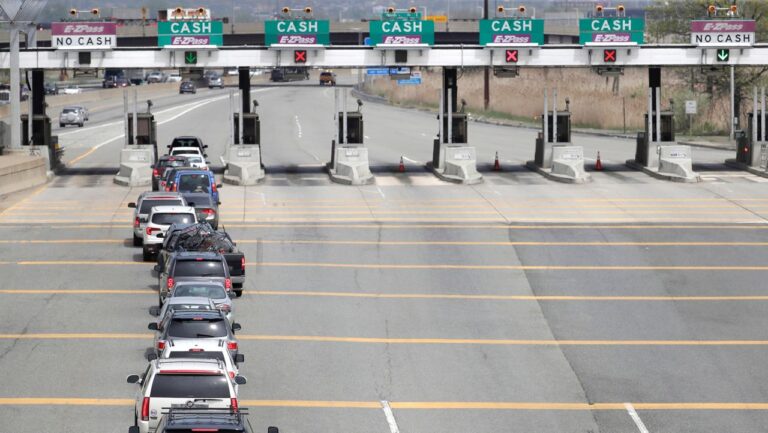
A customer of mine kept an E-ZPass in his work van that he used maybe four times a year. One morning he found a $200 notice on his kitchen counter, and it wasn’t for tolls. It was fees. Monthly service charges, a low balance fee, paper statement charges, and one violation because a tag that had been sitting in a drawer for two years finally died on him.
That’s the part nobody explains when they hand you the transponder. An E-ZPass can cost you money while it sits on the shelf, and it can cost you a lot more when it fails at 65 miles an hour with no booth to stop at.
I’ve been fixing cars long enough to know that most of these fees are avoidable with about twenty minutes of setup and one monthly habit. Below is where the money actually leaks, what each fee is, and how I’d set up my own account if I drove the Parkway every week.
Where the money actually leaks out of an E-ZPass account
People assume tolls are the bill. They’re not. The toll is the toll, and with a working tag you usually pay the lower rate for it. The fees are the extra line items that show up around the toll, and they stack without making a sound.
Here are the categories I see on customer statements.
| Fee type | What triggers it | How you stop it |
|---|---|---|
| Monthly service or account fee | The plan you enrolled in charges for account maintenance | Switch to a plan that fits how often you actually drive |
| Low balance fee | Your account drops below the minimum, often around $20, and can charge on toll transactions | Keep a buffer and turn on automatic replenishment |
| Paper statement fee | Mailed monthly statements instead of electronic ones | Go paperless in your account settings |
| Violation fee | A tag didn’t read, the balance hit zero, or the plate isn’t on your account | Mount the tag right, keep the balance positive, list every plate |
| Transponder replacement | A dead, lost, or expired tag | Replace it before it fails, and watch for mailed replacement programs |
None of these are big on their own. That’s exactly why they hurt. A few dollars a month on an account you barely look at turns into a real number over two years, and then a single violation notice on top of it feels like a punch.
Your E-ZPass isn’t one company, and that’s why the fee is different from your neighbor’s
This confuses people more than anything else in the whole system. E-ZPass is a group of independent toll agencies that agreed to share one network, roughly 20 states and a few dozen member agencies, coordinated by the E-ZPass Interagency Group. You can see the member list and the coverage map at e-zpassiag.com.
Your account belongs to the agency that issued it, not to the network. So your fees, your minimum balance, your replenishment rules, and your violation grace period all come from that agency’s own published fee schedule.
That’s why advice like “E-ZPass charges $1 a month” is useless without a name attached. A New Jersey tag, a New York tag, and a Pennsylvania tag can all work on the same road and still bill you differently at home.
Find your fee schedule before you change anything
Log into your account and look for a link called fee schedule, customer agreement, or terms and conditions. It’s usually buried in the footer. Read three things: the minimum balance, the monthly account charge for your plan, and what happens when the balance goes negative.
If you can’t find it, call customer service and ask them to email it. Keep it. When a fee shows up that you don’t recognize, that document is what you argue from, not a forum post.
What the gantry is doing when your tag beeps
Understanding the read helps you understand the fee, because every violation starts with a read that didn’t happen or a read that didn’t match.
Your transponder is a small radio device. The antenna in the gantry or the lane canopy sends a signal, the tag answers with an account ID, and the system checks that ID against a vehicle record. If everything lines up, you get the tag rate and a beep. If it doesn’t, a camera captures your plate and the toll goes into an image review queue instead.
That queue is where the delay comes from. A plate-based trip can take days or weeks to resolve, and when it finally lands, it lands at the higher rate with an administrative charge attached. So a tag that reads 95 percent of the time isn’t 95 percent fine, it’s five percent of your trips turning into violations.
Partial reads are the sneaky one
Sometimes the tag reads on one facility and not another, or it reads going north and not going south. Drivers assume the road is broken. Usually it’s mounting height, glass film, or a tag with a weak battery that only answers a close-range antenna.
If this happens twice on the same road, stop driving it blind. Order a replacement tag, and dispute the charges with the two dates written down. Agencies take a pattern seriously in a way they don’t take a one-off complaint.
Driving the Garden State Parkway and the NJ Turnpike with a tag
Using your E-ZPass on the Garden State Parkway and the NJ Turnpike saves time on both roads, and those two are where a lot of Northeast drivers rack up most of their trips. They’re also where a bad tag setup shows up fastest, because the volume is high and the tolls add up over a long run.
Make sure your license plate is listed on your account before you do a long run on either road. On facilities that mix barrier sections with cashless gantries, a missed read doesn’t always show up right away, and a trip can sit unresolved long enough for you to forget you took it.
New Jersey has been converting plazas to cashless tolling and has talked publicly about moving from plastic tags to sticker-style tags. If you hold a NJ-issued account, check the New Jersey Turnpike Authority for what device you’re supposed to have now, and whether a replacement is already on its way to you.
Two habits for these roads. Keep an eye on the toll amount shown at the gantry or on your statement after a long Turnpike run, since distance pricing means a wrong vehicle class costs real money. And if you tow, confirm your account’s axle setup, because a tag registered to the truck alone can produce a bill that doesn’t match what you expected.
Towing, motorcycles, and vehicles the system reads differently
Vehicle class is decided by what the equipment counts, not by what you think you’re driving. A pickup with a trailer, a van on a dolly, or a truck with a lift axle can be counted as more axles than the tag was set up for.
If you tow regularly, ask your agency how their multi-axle setup works. Some want a second tag for the trailer, some classify by the plate on file, and some count axles at the gantry regardless of what your account says. Know which one you have before the bill arrives.
Motorcycles are the opposite problem. A tag designed for a car windshield has nowhere good to live on a bike, and a tag in a jacket pocket or a tank bag reads inconsistently at best. Ask about a motorcycle-specific mounting option or a sticker tag, and expect to dispute the occasional miss.
Commercial vehicles should be on a commercial account, not a personal one. The reporting, the axle rules, and the fee structure are different, and mixing them is a common way for a small fleet to end up with violations it can’t explain.
Keep your balance above the minimum and stop paying for the privilege
Keep a minimum balance. Your account should never dip below the minimum your agency sets, commonly around $20. Falling under it can trigger a service fee with each toll transaction, which means one bad week of commuting can generate a stack of small charges instead of one.
Here’s how I set mine up. I figure out what a normal month of tolls costs me, then I keep roughly two months of that in the account as a buffer. If my tolls run $40 a month, I want $80 sitting there, not $21.
The reason is simple. Auto-replenishment isn’t instant in every system, and a toll trip can post days after you drive. If you ride right at the minimum, one long weekend can drag you under before the refill lands.
Set up automatic replenishment, then babysit it once
Link a card for auto-replenishment. Your balance tops itself up when it drops to a preset threshold, which saves you the monthly chore and keeps you out of low balance fee territory.
Automatic anything has one weakness, and it’s the same weakness as a car that sits: it fails silently. Here’s what breaks it in real life.
- The card expires and nobody updates it, so refills stop and you don’t notice for two months.
- The billing address on the card doesn’t match what the toll agency has, and the charge declines.
- A fraud alert blocks the merchant, which toll agencies sometimes trigger on the first attempt.
- The replenishment threshold is set too low, so the refill comes after the balance already went under.
- A prepaid or debit card with a low ceiling gets declined on the refill amount.
Set it up, then check it once a month for the first three months until you trust it. After that a quick look every other month is plenty.
Why your account still costs you when the car sits
Some plans charge a monthly account fee no matter how many trips you take. That’s the fee that hits people with a second vehicle, a seasonal car, or a tag on a truck that lives at a job site six months a year.
If you barely drive toll roads, ask your agency about a pay-as-you-go or usage-based option instead of a monthly plan. You only pay for what you use, and you skip the unused trips fee that can come with a plan built for commuters.
If the car is going away for good, close the account or transfer the tag rather than leaving it open. An open account with a small balance and no activity can keep generating charges, and in some cases the balance gets held instead of refunded until you ask.
Read the statement every month, even when it looks boring
Review monthly statements. Checking them regularly lets you track usage and fees, catch a discrepancy early, and keep a clear record of where your account stands.
I know how this sounds. Nobody enjoys reading a toll statement. Do it anyway, because the errors are easy to spot when they’re fresh and miserable to fix three months later.
What I look for in thirty seconds
- Trips I don’t remember taking. Usually a misread plate, sometimes a tag in a car I sold.
- The same trip billed twice, often an entry and exit on a distance-priced road that looks like a duplicate.
- Tolls charged at the higher plate rate when my tag should have read.
- Fees I didn’t see last month. That’s your signal something changed in the account.
- Vehicle class wrong on a trip I towed. Trailer axles cost more, but a mistake here is worth disputing.
Keep twelve months of statements in one folder, digital or paper. When you dispute a charge, “I have statement from March” beats “I’m pretty sure” every single time.
Go paperless and delete a fee you never had to pay
Electronic statements cost nothing to produce, and many agencies charge for mailing paper ones. Opt for electronic monthly statements and that line item disappears.
Two small catches. Some agencies require you to check the account online to see the statement, so the review habit matters more once you go paperless. And if you share the vehicle with a spouse or a business partner, make sure the email on the account is one you both see.
While you’re in the settings, confirm your mailing address and email are current anyway. A violation notice that goes to an old apartment is how a $50 problem becomes a $250 problem.
Stay out of violation territory before it starts
To prevent fines and violation notices, keep your account in good standing and your transponder properly mounted. If your balance drops below $0, you’re risking a violation, because your tolls won’t be covered and the road bills your plate at the higher rate plus the violation charge.
Pay any notice you get quickly. Late payment adds fines on top, and those can be substantial. Here’s the part most drivers miss: you generally get a grace period with your first violation notice where additional fees are not applied. That courtesy does not apply to subsequent notices.
Translation: your first mistake is cheap if you act on it. Your second one isn’t. Don’t treat the first notice as a warning you can file and forget, treat it as the free pass you only get once.
What a violation notice actually is
It isn’t a traffic ticket in most cases. It’s a bill for a toll the system couldn’t match to a working tag, plus an administrative charge for processing the image and mailing you. The toll portion is legitimate if you drove the road. The admin portion is what you’re trying to avoid.
If the notice is wrong, dispute it. If it’s right, pay it today and fix the cause the same day, whether that’s a dead tag, a zero balance, or a plate that isn’t listed on your account.
The three causes behind almost every violation I see
- The tag didn’t read. Loose mounting, wrong spot, dead battery, or a windshield with metallic film over the sensor area.
- The money wasn’t there. Balance at zero, declined refill, or a card that expired in March.
- The vehicle wasn’t listed. A new car, a borrowed truck, a rental, or a trailer that changed the axle count.
Mount the transponder where the antenna can actually see it
To make sure your transponder is read correctly at tolls, mount it properly on your windshield. The designated spot is typically below the rearview mirror or on the upper center of the windshield. A correctly placed transponder cuts the risk of missed tolls and every fee that follows them.
This is the fix I do most often, and it’s free. Customers hand me a tag that’s been living in the console, taped to the dash, or clipped to a sun visor, and they’ve been eating violations for a year.
Mounting steps that take two minutes
- Clean the glass with alcohol and let it dry fully. Adhesive won’t hold to a dusty or oily windshield.
- Find the spot your agency’s instructions show, usually just behind the mirror on the passenger side of it.
- Check your owner’s manual for the dotted or shaded transponder zone. On a lot of newer vehicles there’s a specific patch of glass designed for these devices.
- Press the adhesive strip firmly for a solid twenty seconds, edges first.
- Leave it alone for a day before you judge whether it stuck.
Things that block the signal and cause paid tolls anyway
- Metallic or ceramic window film across the top of the windshield. It can shield the reader, and it’s a common aftermarket job.
- A windshield with a large crack, a pit, or a resin repair patch right where the tag sits.
- A dashcam, phone mount, or radar detector crowding the same patch of glass.
- Heavy frost, condensation, or a sunshade left against the tag.
- A tag mounted low near the dash, where the gantry angle is worst.
- Sticker-style tags applied to the outside of the glass, or applied over dirt.
Some agencies now issue a sticker-style tag instead of a plastic box, and a few are moving in that direction. A sticker generally has no battery to die, but it also can’t be moved between vehicles once it’s on. Check what your issuing agency ships before you assume you’re getting the old style.
Cashless tolling: what to do when there’s nobody to hand cash to
When you approach a cashless toll point, your transponder is scanned automatically. There’s no stopping and no slowing down to pay with cash, which is the whole point of carrying the tag. Plenty of agencies have converted whole systems to cashless gantries, and the New York State Thruway is a good example of how complete that change can be.
Still, drive it like a real road. Keep a proper following distance, stay in your lane through the gantry, and don’t swerve between lanes under the reader. On the older plaza-style facilities that are still around, slow to the posted speed, keep distance from the vehicle ahead, and don’t tailgate into an E-ZPass lane, because a tag read that gets attributed to the car in front of you is a mess to unwind.
Keep your account in good standing with enough balance to cover your trips. That single habit is what keeps cashless tolling from turning into extra service fees and a violation notice three weeks later.
Transponders don’t last forever, and neither do the batteries in them
Plastic-box transponders have a sealed battery inside. There’s no way to change it and no warning light. Common life is around eight to ten years, which is why agencies run mass replacement programs when a batch of tags reaches that age. If your account is in good standing, replacement tags often get mailed to you automatically.
Here’s the detail worth writing down: agencies have skipped accounts that look dormant when they send replacements. If you haven’t used your tag in a year or more, don’t assume a new one is coming. Log in and check.
Signs your tag is about to quit on you
- It reads on some roads but not others, and nothing changed in how it’s mounted.
- You’ve started getting violations on roads you’ve driven for years without a problem.
- The tag is more than eight years old and it’s been dropped, baked on a dash, or left in a hot van.
- Your account shows plate-rate tolls where it used to show tag-rate tolls.
How to replace it without losing your history
You can usually do this online through your E-ZPass customer service portal or by calling support. Order the replacement, then update the vehicle information and license plate numbers tied to the new tag so your trips keep flowing to the right account.
Two things people forget. Return the old tag if they send a prepaid envelope, because some agencies charge for unreturned devices. And keep using the old tag until the new one is activated, since a gap between them is a gap where you’re driving with no tag at all.
Pick the plan that matches how you actually drive
The plan you signed up for years ago may not be the plan you need now. This is where a five minute phone call saves real money.
| Driver | What usually fits | Watch out for |
|---|---|---|
| Daily commuter on one toll road | A commuter or discount plan with auto-replenishment | Monthly fees that only pay off at high trip volume |
| Occasional driver, a few trips a year | Pay-as-you-go so you use only what you need | Monthly account charges on a plan built for heavy users |
| Seasonal or second vehicle | Pay-as-you-go, or close the account when the car goes away | Unused trips fees and charges on an idle account |
| Multi-state traveler | An interoperable tag from your home agency | Opening a second account in another state and paying fees twice |
| Business fleet | A commercial account with per-vehicle reporting | Personal-plan rules and one tag shared across vehicles |
Opt for pay-as-you-go if your trips are irregular. You use only what you need and you prevent the unused trips fee that comes with a prepaid bundle.
| Plan style | Fee exposure | Best for |
|---|---|---|
| Monthly account plan | Fixed monthly charge whether you drive or not | Daily commuters who easily out-drive the fee |
| Pay-as-you-go | No monthly charge, you pay for trips you take | Occasional drivers, second vehicles, seasonal cars |
| Prepaid trip bundle | Can carry an unused trips fee if you don’t burn through it | Predictable mileage on one specific road |
| Discount or commuter tier | Lower tolls, sometimes waived admin fees, sometimes a required trip count | Frequent travelers on the roads the tier covers |
| Commercial account | Per-vehicle reporting, different fee rules | Fleet vehicles and anything that tows for work |
Discounts and offers that people never bother to ask for
Check for E-ZPass discounts and offers, since they can cut your toll costs directly. Some states provide special plans that waive the administrative fee entirely, especially if you’re a frequent traveler or use specific toll roads often.
Two ways to find them. Contact customer service and ask outright what discount plans exist for your vehicle type and your roads. Then review your E-ZPass agreement to see whether you’re eligible for discounted toll rates or an occasional amnesty on fees.
Discounts worth asking about by name
- Commuter or volume discounts tied to a set number of trips in a month.
- Carpool programs that reduce or waive tolls when the vehicle carries enough passengers. These almost always need a special switchable tag and advance registration.
- Off-peak pricing on some facilities, where the same trip costs less at night.
- Green vehicle or motorcycle plans, which a few agencies run.
- Resident discount programs for people who live near a specific bridge or toll road.
- Fee amnesty or waiver programs, which are usually announced rather than advertised.
Ask the question even if you think you don’t qualify. I’ve watched a customer get a monthly fee dropped just by pointing out that his plan didn’t match his mileage.
Rental cars and company vehicles: the fee generator nobody warns you about
Most rental companies offer a toll program, and it usually works like this: they cover the toll, then bill your card the toll plus an administrative fee. That fee can be per day or per use, and over a week it can dwarf the tolls.
Read the toll section of the rental agreement before you leave the lot. If the daily charge applies whether or not you touch a toll road, your cheapest move is to decline the program and plan a route around tolled facilities.
Company vehicles are the other trap. If your employer’s tag is registered to that vehicle, great. If you drive a personal tag in a work van, or you take a fleet truck home on the weekend, the vehicle may not be listed on any account. That’s a plate-rate toll plus a violation waiting to happen.
Before a long rental or a borrowed truck, add the plate to your account if your agency allows temporary vehicles, or ask the owner which account covers it. Ten minutes of checking beats a notice in the mail.
Every plate you drive belongs on your account
Make sure your license plate is listed on your account to prevent misreads at toll points. When the tag fails to read, the system falls back to the plate, and if that plate isn’t tied to a funded account, you get billed as a violator instead of as a customer.
Common reasons for additional charges include not having your transponder properly mounted, or driving a vehicle that isn’t listed on your account. Both are fixable in one sitting.
Plates people forget to add
- The new car they bought last month, still running on the dealer’s paperwork.
- A trailer, which changes axle count and sometimes needs its own entry.
- A motorcycle or a second household vehicle with a different plate.
- A replacement plate issued by the state after a theft or a worn-out original.
- A vehicle sold or traded, still listed and still generating charges you no longer own.
Do a plate audit once a year. Open the vehicle list on your account and compare it to what’s actually in your driveway, then remove what’s gone and add what’s new.
Disputing a charge that isn’t yours
If you hit a charge you believe is incorrect, disputing the fee is your first step. Gather evidence before you contact anyone: monthly statements, trip dates and times, and license plate images if the notice includes them.
To start, go through your E-ZPass customer service center or the agency’s official website. Most have an online dispute form tied to the specific transaction, which is faster than a phone call and leaves a written trail.
Always keep a record of your communications in case you need to follow up. I mean that literally: date, time, name of the rep, and a case number. When a dispute gets denied and you ask for a review, that log is the difference between being heard and being brushed off.
What makes a dispute actually win
- A photo of your front and rear plates, clean and straight-on.
- Your registration showing the plate belongs to that vehicle.
- The statement page with the disputed line highlighted.
- A note on where you and the vehicle actually were that day, with anything that proves it: a work order, a receipt, a phone photo with a timestamp.
- A calm, specific request. Ask for the charge to be removed and the tag rate applied, not for somebody to fix it.
Pay the undisputed portion while the dispute is open if you can. Letting the whole balance sit unpaid is how a misread plate turns into a late fee, a second violation, and a collections letter.
Managing an account when you drive toll roads all the time
For frequent drivers, checking the account regularly prevents surprises. Keep your payment information current to hold a positive balance and dodge the low balance fee.
High mileage changes the math on everything. A monthly plan that costs too much for a weekend driver can be a bargain for a commuter, and discount tiers that need 20 trips a month suddenly become reachable.
If your travel patterns change, update the account right away with the correct vehicle information so you keep getting the discounts you qualify for. A new job, a move, a different route, or a new truck all count.
A routine that takes ten minutes a month
- Skim the statement for trips and fees you don’t recognize.
- Confirm the balance is above the minimum with room for a bad week.
- Check the card on file, especially around renewal dates.
- Verify the vehicle list matches your driveway.
- Look for a message about plan changes, rate changes, or tag replacements.
When the account goes negative or goes dormant
A negative balance usually stops the tag from working in the tolling system’s eyes, so you drive with what is effectively no tag. Every trip from that point is a plate-rate toll with violation potential. Fix it the day you notice it.
Dormant accounts cause a different set of problems. Some agencies close or restrict an account after a long stretch with no activity, and you may miss mailed replacement tags for aging transponders. If you have an old account with a small leftover balance, log in, check the status, and ask whether you can reactivate it or get the balance refunded.
If you’re closing an account for good, request the refund in writing and note the date. Also remove any saved card from it, the same way you’d take your personal stuff out of a car before trading it in.
Mistakes that cost E-ZPass drivers real money
- Riding right at the minimum balance. Keep a buffer of about two months of tolls so a delayed refill can’t drag you under.
- Setting auto-replenishment and forgetting it exists. Expired cards and declined refills fail silently.
- Leaving the tag loose. A transponder in the cupholder is a violation notice with extra steps.
- Ignoring the first violation notice. That first one often carries a grace period with no added fees. The next one won’t.
- Staying on paper statements. It’s a fee for something you could read on your phone.
- Keeping a plan that no longer fits. A commuter plan on a car that drives twice a year is a monthly fee for nothing.
- Not adding new plates. The car you bought in April still isn’t on the account in October.
- Assuming the rental covers tolls. It usually covers tolls plus an administrative fee, sometimes daily.
- Driving on a tag older than ten years. The battery dies without warning and the road bills your plate.
- Disputing without documentation. No statement, no plate photo, no case number, no result.
Questions I get at the service counter
My tag works on one road but not another. Is it broken?
Maybe, but check the simple stuff first. Same mounting spot, clean glass, no new window film, and no metal objects near it. If nothing changed on your windshield, the tag is likely near the end of its battery life, and readers on different facilities have different sensitivities. Order a replacement and use the old one until the new one activates.
Can I move my tag between two cars?
Not without consequences. Tags are assigned to a vehicle on the account, and moving one around causes reads that don’t match the plate on file. Add both vehicles to the account instead, and if your agency only allows one tag per vehicle, ask what their multi-vehicle setup looks like.
I sold the car. Why am I still getting charges?
Because the plate may still be listed on your account, or the new owner hasn’t registered it and the tolling record still points at you. Remove the vehicle from your account, keep your bill of sale, and contact the agency with the sale date if a charge comes through after it.
Do I get a refund if I close the account?
Usually yes for a remaining prepaid balance, but the process and timing depend on your issuing agency, and dormant accounts can complicate it. Ask in writing and keep the request.
Is a violation notice a ticket on my record?
In most cases it’s an administrative toll violation, not a moving violation, so it doesn’t hit your driving record the way a speeding ticket does. Left unpaid long enough it can escalate, and in some states unpaid toll obligations can affect registration renewal. Pay it or dispute it, just don’t ignore it.
Moved to another state? Don’t run two accounts
People move and open a new E-ZPass account in the new state while the old one sits open with $14 in it. Now they have two monthly fees, two statements, and a tag in a drawer that still belongs to a state they don’t live in.
One tag from your home agency works across the whole network, so there’s no toll advantage to holding two accounts. The only reason to keep a second one is a specific discount program tied to a road you drive constantly, and even then check whether your home agency offers the same thing.
If you did move, close or transfer the old account, ask for the balance back, remove the card on file, and make sure the vehicle list on the new account matches your current plates and your current state registration.
The setup I’d do on my own account, in order
- Pull the fee schedule and read the minimum balance, the monthly plan charge, and the negative balance rules.
- Switch to electronic statements and confirm the email on the account is one you actually open.
- Check whether a pay-as-you-go plan fits better than the one you’re on, and switch if it does.
- Add a card for automatic replenishment and set the threshold so the refill happens well above the minimum.
- Fund the account with about two months of normal tolls.
- Audit the vehicle list. Add what’s in the driveway, remove what’s gone, and include the trailer if you tow.
- Clean the windshield, find the transponder zone, and mount the tag there with fresh adhesive.
- Note the tags age. If it’s over eight years old, order the replacement now instead of later.
- Ask customer service what discounts exist for your mileage and your roads, and get the answer in writing.
- Set a monthly calendar reminder to skim the statement, then a quarterly one to re-check the card and the vehicle list.
That whole list is an afternoon, and it removes almost every fee on the table above except the toll itself. I’ve done it for family members who swore they “didn’t have time,” and it took under an hour both times.
Set it up once, then let it work
Do it yourself if: your balance is low, your card expired, a plate is missing, or you want to switch from paper statements and a monthly plan to electronic and pay-as-you-go. All of that is a settings page and twenty minutes.
Call the agency if: a fee appeared that isn’t in your fee schedule, you want a discount plan matched to your mileage, your tag needs replacing, a violation notice arrived, or you want the first-notice grace applied. Have your account number, the transaction date, and your card ready.
Push it in writing if: a dispute was denied and you have documentation, or charges keep coming for a vehicle you no longer own. Send copies, ask for a review, and keep the case number.
Get outside help if: the matter escalated to collections or a hearing, or your credit report picked something up. At that stage the toll agency isn’t the decision maker anymore.
The takeaway for drivers who hate surprise fees
Most E-ZPass fees aren’t punishment, they’re neglect with a price tag. Keep the balance above the minimum, around $20 as a floor and two months of tolls as a real buffer, set auto-replenishment and then verify it actually worked, go paperless, mount the tag where the reader can see it, and list every plate you drive.
Do those six things and the only fee you should ever see is the toll itself, at the tag rate, which is the cheapest way to drive that road.
My verdict: a monthly plan earns its keep for a real commuter, and pay-as-you-go is the right call for everyone else. If your tag is more than eight years old, replace it this month rather than the day it quits on a cashless gantry.
Do one thing today. Log in, look at your last statement, and confirm your card on file hasn’t expired. That single check prevents most of the low balance fees I hear about at the counter.