
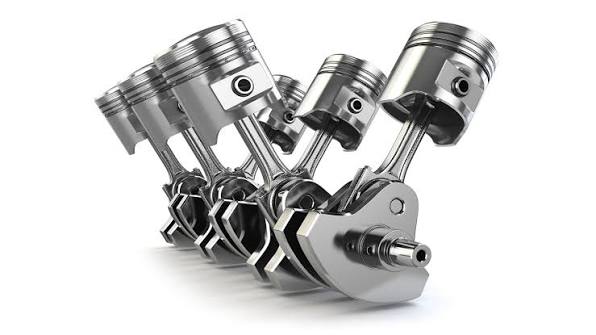
Pistons are not something most car owners think about until something goes wrong. But when they do go wrong, the symptoms are hard to ignore – excessive oil consumption, clouds of smoke coming out of the exhaust, or an engine that just feels tired and worn out. At that point, replacement becomes the conversation.
Here is where a lot of people get confused: they hear the word “balancing” thrown around and assume it is always required whenever pistons are replaced. That is not entirely accurate. Whether or not you need to balance pistons depends on the specific situation, and understanding the difference can save you time and money.
Let’s break this down in plain language so you actually understand what is happening inside your engine and what steps make sense for your specific repair.
Can You Change Pistons Without Balancing Them?
Yes, you can change pistons without balancing – under the right circumstances. This catches a lot of people off guard because they assume any internal engine work requires a full balancing job. But that is not how it works in practice.
Here is the logic behind it: if you are replacing a piston with a new one of the same brand, same size, and same weight spec, the new piston slots into the exact position the old one occupied. The rotating assembly was already balanced around that original piston’s weight. A like-for-like replacement preserves that balance without any additional work needed.
Think of it the way you would replacing a wheel on a car. If you put the exact same size and model tire back on the same wheel, you do not necessarily need to rebalance. But if you go to a different tire brand with a different weight distribution, now balancing becomes relevant. Pistons follow the same principle.
That said, there are specific situations where balancing becomes necessary:
- Aftermarket components: If you are installing pistons, connecting rods, or a crankshaft that are not factory spec — even slightly different — balancing becomes important. Aftermarket parts do not always match factory weights precisely, and those small differences add up at high RPM.
- Weight difference greater than ten grams: A new piston that is lighter than the original is generally fine if the difference is minor. But substitute a piston that is more than ten grams heavier than the one it is replacing, and you are introducing an imbalance that the engine was not designed to tolerate.
- Performance builds: If you are rebuilding a high-performance engine — whether for a track car or a high-revving street build — balancing is worth doing regardless of whether the parts are technically compatible. At that level, precision matters more.
- First-time full rebuild with mixed components: If you are assembling an engine from scratch using a combination of new and salvage parts from different sources, balancing the full rotating assembly is the right call.
For a standard replacement using factory-spec pistons on a daily driver, balancing is not required. But understanding when the exception applies keeps you from making a costly mistake.
Common Reasons You Might Need to Replace Pistons in the First Place
Before we go deeper into balancing, it helps to understand why piston replacement comes up in the first place. This is not a repair that happens for trivial reasons — it usually means something significant has been going on inside the engine.
- Worn or stuck piston rings: Piston rings seal the combustion chamber and control oil consumption. When they wear out or get stuck in their grooves, the engine starts burning oil and loses compression. Blue smoke from the exhaust is a classic sign.
- Excessive oil consumption: If you are topping off the oil every few hundred miles without any visible leaks underneath the car, the oil is going somewhere — usually past worn piston rings into the combustion chamber where it gets burned.
- Continuous excessive smoke: Blue or gray smoke from the exhaust on startup or under acceleration typically points to oil burning. White smoke can indicate coolant entering the combustion chamber — a more serious issue involving head gaskets, but one that can also cause piston damage over time.
- Loss of compression: A compression test across all cylinders will reveal whether the pistons and rings are sealing properly. Low compression in one or more cylinders often means the rings have worn beyond their serviceable limit.
- Physical piston damage: Detonation (engine knock), overheating, or running lean can physically damage piston crowns. In severe cases, you will find cracked, melted, or burned pistons when the engine is disassembled.
If your engine is showing any of these symptoms, a proper diagnosis before tearing into the engine is the right move. A compression test and leak-down test together give you a clear picture of what is happening inside before you commit to a repair.
Are Engines Balanced at the Factory?
Yes, every production engine is balanced at the factory before it leaves the assembly line. But here is the important distinction that gets glossed over: factory balancing is not the same as the precision balancing done for high-performance or racing applications.
Factory balancing is designed to meet the tolerances required for a normal production car running normal road speeds and typical RPM ranges. It is more than adequate for commuting, highway driving, and everyday use over the designed life of the engine. But it does not chase perfection — it chases acceptable.
A high-performance engine build, on the other hand, involves matching components to within fractions of a gram and removing material where necessary to achieve a level of precision that the factory never attempted. That precision pays off in smoother power delivery, reduced vibration at high RPM, and reduced wear on bearings over time.
For most car owners doing a standard engine repair on a daily driver, factory-level balance is perfectly sufficient. For anyone building a performance engine — even a spirited street car — investing in precision balancing is money well spent on the longevity and smoothness of that build.

What Does Piston Balancing Actually Mean?
Balancing pistons sounds complicated, but the underlying concept is straightforward. Inside your engine, multiple pistons are moving up and down at high speed simultaneously. If one piston assembly weighs noticeably more than the others, it creates an uneven force distribution through the rotating assembly — the pistons, connecting rods, and crankshaft that all move together.
At low RPM, small weight differences are relatively harmless. But as engine speed increases, even a few grams of imbalance generates significant vibration forces. Those vibration forces put additional stress on crankshaft bearings, connecting rod bearings, and the engine block itself. Over time, that additional stress shortens the life of those components.
Balancing the piston assembly means weighing all the components that make up each piston’s reciprocating mass — the piston itself, the wrist pin, the pin locks, and the ring pack — and then matching them so that every piston assembly in the engine weighs within a very tight tolerance of the others. The target is generally within one-tenth of a gram for precision builds, though a practical tolerance of within two to five grams is acceptable for most standard street engine rebuilds.
When assemblies that are heavier need to be brought down to match lighter ones, material is carefully removed from specific areas of the piston — areas that do not affect structural integrity or sealing — until the weights match. That is the process in a nutshell.
How to Balance a Set of Pistons — Step by Step
Balancing pistons is one of those tasks that sounds like it belongs exclusively in a professional machine shop, but in reality, a careful and patient home mechanic can handle it with the right tools. You do not need thousands of dollars worth of equipment. You need precision and patience.
Here is what the process looks like:
What You Need Before You Start
- A high-precision digital scale capable of measuring in tenths of a gram
- All piston assembly components: pistons, wrist pins (also called the “pin” or “respin”), pin locks (circlips), and ring packs
- A die grinder, power file, or rotary tool for material removal
- A clean, organized workspace with containers to keep each cylinder’s components separate
- A notepad or spreadsheet to track weights for each assembly
The Balancing Process
- Weigh each component individually and as an assembly. Start with the pin locks (circlips) — weigh them in pairs since each piston uses two. Record every weight. Then weigh the ring packs for each cylinder individually. Weigh the wrist pins one at a time. Finally, weigh each bare piston on its own.
- Calculate total assembly weight for each cylinder. Add up all the component weights for each cylinder’s piston assembly. This gives you the total reciprocating mass for each piston position.
- Identify the lightest assembly. The lightest complete assembly becomes your target weight. Every other assembly needs to come down to match it as closely as possible.
- Remove material from heavier assemblies. Using a die grinder or power file, carefully remove small amounts of material from designated areas on heavier pistons — typically from the underside of the piston in non-structural areas away from the ring grooves and pin bosses. Work in small increments and re-weigh frequently.
- Verify and record final weights. Once all assemblies are within your target tolerance of each other, do a final weigh-in of each complete assembly and record the results. Keep those records with your engine build documentation.
A few important cautions here: never remove material from areas that affect the structural integrity of the piston, the ring groove, or the wrist pin bore. If you are not confident in knowing where it is safe to remove material, have a machine shop handle this step. The cost is reasonable and the precision they bring is worth it.
How Close Should Piston Weights Be?
For most standard engine rebuilds on a street car, keeping all piston assemblies within two to five grams of each other is a reasonable and practical target. This level of balance is achievable at home without specialized equipment and is more than adequate for normal driving conditions.
For performance applications — high-revving engines, forced induction setups, or anything that spends significant time at elevated RPM — tighter is better. Professional engine builders aiming for precision balance work to within one-tenth of a gram across all assemblies. At that level, you are getting into territory where a professional machine shop is the right call.
A rough guideline by application:
| Application | Acceptable Weight Tolerance | Recommended Approach |
|---|---|---|
| Standard street car rebuild | 2 to 5 grams | Home workshop with precision scale |
| Performance street build | 1 to 2 grams | Machine shop preferred |
| High-performance or track engine | 0.1 gram or better | Professional machine shop required |

The tighter the tolerance, the more time and expertise required. Be honest about the purpose of your build before deciding how much precision to chase.
What Actually Happens When an Engine Runs Out of Balance?
This is where it gets real. An unbalanced rotating assembly is not just a performance inconvenience — it is a reliability problem that gets progressively worse over time.
When the reciprocating mass in one cylinder is significantly different from the others, the engine generates vibration forces that the crankshaft and engine mounts have to absorb with every revolution. At idle, this might produce a noticeable shake. At highway speeds, it creates sustained stress on components not designed to handle it.
Here is what an unbalanced engine can lead to over time:
- Accelerated bearing wear: The crankshaft main bearings and connecting rod bearings take the most direct punishment from imbalance. They are precision components designed to run within very tight clearances — excessive vibration forces them beyond those clearances and accelerates wear rapidly.
- Frozen bearings: In severe cases, bearing surfaces that are continuously overloaded can seize — essentially welding themselves to the journal they ride on. A seized bearing means a destroyed crankshaft and a ruined engine block.
- Broken or cracked components: Sustained vibration at the wrong frequencies can cause fatigue cracking in connecting rods, crankshafts, and even the engine block over extended periods.
- Stressed engine mounts: Engine mounts are designed to absorb a normal amount of vibration. An unbalanced engine puts excessive load on mounts, shortening their lifespan and eventually allowing enough engine movement to cause secondary problems with drive shafts, exhaust components, and surrounding components.
- Driver discomfort and noise: Beyond the mechanical damage, an unbalanced engine produces vibrations that transmit through the chassis into the cabin. What starts as a subtle shake can become an unpleasant, tiring driving experience over time.
The severity of the consequences scales with the degree of imbalance and the RPM range the engine operates at. A small imbalance in a diesel that rarely exceeds 3,000 RPM will cause far less damage than the same imbalance in a high-revving gasoline engine that regularly sees 6,000 RPM or more.
How Much Does Professional Piston Balancing Cost?
If you decide to have a professional machine shop handle the balancing — which is the right call for performance builds or anyone not comfortable doing this work at home — expect to pay in the range of $200 for a standard piston balancing job on a typical four or six-cylinder engine.
That price assumes a straightforward job where the assemblies are relatively close to each other in weight and only minor material removal is needed. The actual time investment for a standard job runs roughly two hours of labor.
Costs can rise based on several factors:
- Significant weight differences between assemblies: If the pistons came from a mixed set or aftermarket parts vary considerably in weight, more material needs to be removed from more components, which takes more time.
- Adding balance weight: In some situations, material cannot be removed to achieve balance — weight needs to be added instead. This requires additional steps and materials, which adds to the cost.
- Engine cylinder count: Balancing a V8 takes significantly more time and work than balancing a four-cylinder. The shop rate is the same, but the number of assemblies multiplies the time required.
- Precision level required: Chasing tighter tolerances takes more time. A racing engine balanced to within 0.1 grams across eight cylinders is a full day of careful work at a qualified machine shop.
Before committing to any machine shop for this work, ask for a quote that specifies what the price includes and how tight a tolerance they are working to. A reputable shop will tell you exactly what they did and provide weight documentation for each assembly when the work is complete.
Should You Balance Pistons at Home or Use a Machine Shop?
Honest answer: it depends on the application and your comfort level with precision work.
Home balancing is absolutely viable for a standard street engine rebuild using matched factory-spec components. If you have a quality digital scale, patience, and some experience with a die grinder, achieving a two to five gram tolerance across your assemblies is a realistic goal. For most daily drivers, that level of balance is more than adequate.
Where home balancing gets risky is when people rush it, do not have a precise enough scale, or remove material from the wrong areas of the piston. Removing too much material weakens the piston structurally. Removing material from the wrong location can distort how the rings seat or affect thermal behavior. These are mistakes that are not immediately obvious — but they show up later as recurring problems inside the engine.
The professional machine shop route is the right choice for:
- Any performance or forced induction engine build
- High-revving applications where tighter tolerances matter
- Engines using mixed aftermarket components from different manufacturers
- Situations where you are not confident in your ability to safely remove material from pistons
- Anyone who wants documented proof of the balance work for a build they are proud of
For a standard rebuild on a daily driver using matched replacement pistons from the same manufacturer? The home approach is reasonable. For anything performance-oriented, pay the machine shop. The cost is minor relative to the total rebuild investment and the peace of mind it buys.
The Full Picture: When Balancing Is Required vs. When You Can Skip It
To pull all of this together clearly, here is a straightforward reference for the most common piston replacement scenarios:
| Scenario | Balancing Required? | Notes |
|---|---|---|
| Replacing one piston with same brand/spec | No | Like-for-like swap preserves existing balance |
| Full set replacement with matched factory pistons | Generally not required | Factory-matched sets should be within tolerance |
| Installing aftermarket pistons | Yes | Aftermarket parts vary; verify weights before assuming |
| Mixing components from different sources | Yes | Weight differences between sources can be significant |
| New piston more than 10 grams heavier than original | Yes | Imbalance at this level causes real problems |
| High-performance or track engine build | Yes — professionally | Precision balancing justifies the investment at this level |
| Full rebuild with all factory components | Optional | Balancing will improve the result, but is not strictly required |

One More Thing Worth Knowing: Rotating vs. Reciprocating Balance
There is a distinction that sometimes gets missed in these conversations. When engine builders talk about “balancing an engine,” they are actually talking about two separate types of balance: reciprocating balance and rotating balance.
Reciprocating balance refers to the pistons and the small end of the connecting rods — the components that move up and down. This is what piston balancing addresses directly.
Rotating balance refers to the crankshaft and the big end of the connecting rods — the components that rotate. Balancing the crankshaft requires a balancing machine and is work that always belongs in a machine shop.
A fully balanced engine addresses both. For the purposes of a standard piston replacement, you are only dealing with the reciprocating side. But if you are doing a full rotating assembly rebuild, knowing that both sides of the equation exist — and that they require different approaches — keeps you from thinking the job is done when it is only half finished.
If you are doing a piston swap on a standard street car with matched replacement parts, skip the balancing and get the job done. But if anything about your build deviates from a straight factory-spec replacement — different pistons, different rods, any kind of performance intent — take the time to get it right. An engine that is properly balanced runs smoother, lasts longer, and makes more power than one that is close but not quite there. Those extra grams matter more than most people realize.