
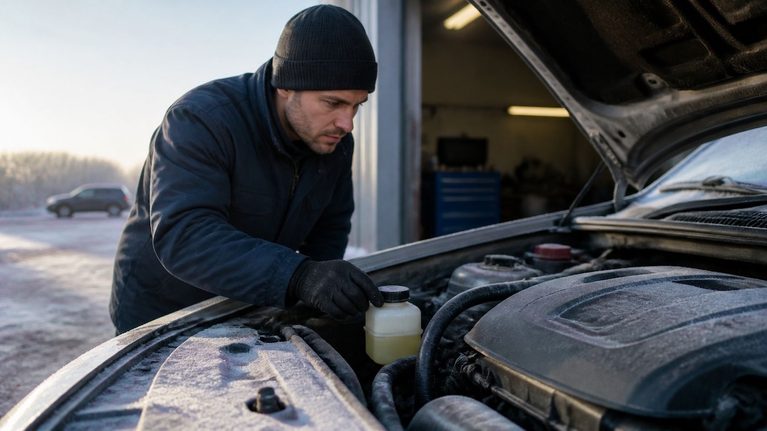
I had a customer call me on a brutally cold morning a few winters back, panicked because her steering felt like she was fighting the wheel through wet cement. She was convinced the power steering fluid had “frozen solid” overnight. It hadn’t, not in the way she was picturing, but what was actually happening to that fluid explains a lot about why cold mornings make steering feel heavy, and it’s worth clearing up the myths floating around this topic.
Power steering fluid is a hydraulic fluid that lets you turn the wheel with way less effort than you’d need without it, using pressure generated by a pump to assist your steering input. A lot of questions come up about how this fluid behaves in winter, whether it freezes, whether it needs special care in cold climates, and what you should actually do if your steering feels off on a cold morning. Let’s get into what’s actually true here.
Does power steering fluid actually freeze?
Here’s the straightforward answer: standard power steering fluid does not freeze into a solid block of ice the way water does. Most power steering fluids on the market are either a petroleum-based mineral oil formula or a repurposed automatic transmission fluid, and neither of those behaves like water when the temperature drops. They don’t contain the water content needed to form ice crystals in the first place.
What actually happens in extreme cold is that the fluid’s viscosity increases, meaning it gets noticeably thicker and flows more sluggishly through the pump, hoses, and valves in your steering system. That thickening is real and it does affect how your steering feels, but it’s a different phenomenon than freezing. Nothing is turning to ice inside your power steering reservoir.
This distinction matters because some articles and forum posts online describe power steering fluid freezing the same way antifreeze or coolant does, using ethylene glycol chemistry and citing specific freezing points like you’d see on a coolant spec sheet. That’s mixing up two completely different fluids. Engine coolant is ethylene glycol based specifically because it needs to prevent water in your radiator system from freezing. Power steering fluid isn’t built around that same chemistry and isn’t trying to solve that same problem, so applying coolant freezing points to power steering fluid doesn’t hold up.
So why does steering feel so stiff on a freezing morning?
The thickened fluid is the main culprit, but it’s helpful to understand the mechanism behind it rather than just accepting “it gets thick” as the full explanation.
Power steering fluid needs to flow freely through narrow passages, valves, and the pump itself to deliver hydraulic assist quickly when you turn the wheel. As temperatures drop, the fluid’s molecules move more slowly and the fluid resists flowing, the same basic principle behind why honey pours slower out of the fridge than it does sitting on the counter. That resistance means the pump has to work harder to push the same amount of fluid through the system, and you feel the result as stiffer, heavier steering, especially right after startup.
Once the engine’s been running a few minutes and both the engine and the fluid warm up, that viscosity drops back toward normal and steering effort returns to what you’re used to. This is why the stiff feeling is almost always worst in the first minute or two after starting the car on a cold morning and fades out as you drive.
What can actually go wrong if you ignore it
A little extra steering effort on a cold start isn’t itself damaging, your pump is designed to handle some resistance. But there are real failure points worth knowing about if you’re dealing with genuinely harsh winter temperatures on a regular basis.
- Pump strain: consistently forcing the pump to push thick, cold fluid through the system puts extra load on the pump’s internal components and the drive belt. Over years of repeated cold starts, this can contribute to premature pump wear.
- Binding components: thick fluid moving sluggishly through valves can occasionally cause momentary binding or stiffness in specific steering positions until things warm through fully.
- Whining or groaning noise: a pump straining against thick, cold fluid will sometimes make a noticeable whine or groan on startup that fades as the fluid warms, this is usually harmless but worth noting if it’s new or getting louder over time.
None of this is an emergency. It’s more a case of “don’t be surprised” than “something’s broken.” If the stiffness doesn’t fade within a couple of minutes of driving, or if the noise sticks around well after the car’s warmed up, that’s when it’s worth having a shop take a look rather than chalking it up to cold weather.
Does cold weather affect the fluid level itself?
Cold weather doesn’t directly consume power steering fluid, but it’s still a smart habit to check your fluid level more often during winter months. Cold temperatures can make small existing leaks more apparent, since seals and hoses contract slightly in the cold and may reveal a seep that wasn’t visible in warmer weather when everything was expanded and sealed tighter.
If you check your reservoir on a cold morning and the level has dropped noticeably from where it normally sits, don’t assume it’s just “a cold weather thing.” A consistent drop in fluid level points toward an actual leak somewhere in the system, a hose connection, the pump shaft seal, or the rack and pinion itself, and that’s worth having looked at rather than just topping it off repeatedly all winter.
Good winter habits for your power steering system
- Check your fluid level monthly during cold months, more often if you notice any change in steering feel.
- Park in a garage when you can. It won’t stop the fluid from thickening entirely, but it reduces how extreme the temperature swing is, which is easier on the pump and seals over time.
- Give your car a minute of idle time on especially cold mornings before you start driving aggressively, letting the fluid warm slightly before you ask the pump to work hard.
- If your fluid level is dropping and you can’t visually spot a leak, get it looked at rather than just refilling it indefinitely. A slow leak in a power steering system can progress to pump damage if the fluid level gets low enough to let air into the system.
About that red color you see in the reservoir
This is a spot where I want to clear up some confusion I’ve seen floating around. Power steering fluid is often dyed red or pink, but that color comes from the manufacturer adding dye during production, it’s not something that changes based on the fluid’s temperature, and it’s not caused by mineral concentration shifting around inside the fluid as it heats or cools.
The dye exists mainly so you can visually identify the fluid and distinguish it from other fluids under the hood, like engine oil or coolant, when you’re checking levels or looking for a leak. Different manufacturers use different colors for different fluids specifically so a quick glance at a stain on your driveway gives you a clue about what’s leaking. Power steering fluid being red doesn’t tell you anything about its temperature, and you won’t see it shift to orange as it warms up. If your fluid looks murky, dark brown, or has a burnt smell, that’s a sign it’s old and due for a change, not a temperature indicator.
If you ever want to actually gauge whether your power steering fluid is running too hot (which can happen under heavy steering use, towing, or very high ambient temperatures), the reliable way to check is with an infrared thermometer pointed at the reservoir or return line, not by eyeballing the fluid’s color through the cap.
Does power steering fluid need to warm up before you drive?
No, you don’t need to let your power steering fluid specifically warm up before driving, and you shouldn’t feel like you need a special warm-up ritual beyond normal cold weather habits. Once you start the engine and begin driving, the fluid will warm naturally as it circulates through the system and picks up heat from the pump and nearby engine components.
Where I’d actually encourage a short warm-up period is less about the power steering fluid specifically and more about general engine and drivetrain health in extreme cold, letting oil circulate properly, letting the transmission fluid loosen up a bit, that kind of thing. The power steering system benefits from that same general warm-up without needing its own dedicated process.
Changing your power steering fluid, what the job actually involves
If you’re due for a fluid change, here’s the realistic rundown of what that looks like. This isn’t a job you want to attempt with the engine running, and depending on your comfort level with basic automotive maintenance, it can be a reasonable DIY task or something you hand off to a shop.
- Confirm the correct fluid type for your specific vehicle. Check your owner’s manual, this matters because some manufacturers require a specific power steering fluid formula or even automatic transmission fluid instead, and using the wrong type can cause seal damage or poor performance over time.
- Turn the engine off completely before opening the reservoir. Never work on the system or open the cap with the engine running, you risk fluid spraying under pressure or getting pulled into moving components.
- Remove old fluid from the reservoir using a turkey baster or fluid extractor, then refill with fresh fluid and repeat a few cycles of running the engine briefly and extracting fluid again to flush out as much of the old fluid as possible without a full system flush.
- For a more thorough flush, a shop will typically disconnect a return hose, run the pump to push old fluid out, and refill with fresh fluid until clean fluid runs through, which gets more old fluid out than the baster method alone.
- Check for leaks after the service, inspecting hose connections and the pump area for any seepage before considering the job finished.
Have your fresh fluid, the correct type for your vehicle, clean rags, and a drain pan ready before you start so you’re not scrambling mid-job. If you’re not confident identifying the correct fluid type or you don’t want fluid residue in your driveway, this is a cheap and quick job for most shops to handle.
What temperature actually causes problems
Rather than citing a single freezing point the way you would for coolant or straight water, the honest answer is that most power steering fluids remain functional in a very wide temperature range, typically rated to perform down to well below zero Fahrenheit depending on the specific formulation. The fluid doesn’t have a sharp “freezing point” the way water does at 32°F, it has a gradual thickening curve as temperatures drop, and the exact point where that thickening becomes noticeable varies by fluid brand and formulation.
If you live somewhere that regularly sees extreme cold, check your owner’s manual or ask your dealership parts department whether your vehicle calls for a specific cold-weather rated power steering fluid. Some manufacturers do offer formulations better suited to harsh climates, and that’s a more reliable path than assuming a generic bottle off the shelf will perform the same in Minnesota in January as it would in Georgia.
If your steering feels unusually stiff on a cold morning
Here’s what I’d actually recommend rather than any elaborate workaround.
- Start the car and let it idle for a minute or two before driving off, giving the fluid a little time to begin warming.
- Turn the wheel gently side to side a few times at low speed once you start moving, this helps circulate the fluid through the system faster than idling alone.
- Avoid cranking the wheel hard to full lock immediately after a cold start, since that’s when the pump is working against the thickest, least cooperative fluid.
- If the stiffness persists well beyond the first few minutes of driving, or if you hear a persistent whine that doesn’t fade, get the system checked. That’s no longer a normal cold weather quirk, it’s pointing toward a pump or fluid issue worth diagnosing properly.
There’s no need for anything more dramatic than this. You don’t need to drive in circles in your yard or run any kind of extended warm-up ritual specifically for the power steering system. Normal driving after a short idle period is enough to bring the fluid back to proper working viscosity.
Signs of an actual power steering problem versus normal cold weather stiffness
| Symptom | Normal cold weather behavior | Sign of an actual problem |
|---|---|---|
| Stiff steering right after startup | Common, fades within a couple minutes of driving | Persists well past warm-up, every drive |
| Whining noise on startup | Can happen briefly in extreme cold, fades as fluid warms | Continuous whining that doesn’t fade, or gets worse over weeks |
| Fluid level | Stable month to month aside from very minor variation | Noticeably dropping, requiring repeated top-offs |
| Fluid appearance | Clear to light red/pink | Dark brown, murky, or smells burnt |
| Steering feel while driving | Normal once warmed up | Loose, inconsistent, or jerky even after warm-up |
Mistakes I see people make with this
- Assuming stiff cold-morning steering means something’s broken and rushing to replace the pump when it’s just normal viscosity behavior that resolves after warm-up.
- Topping off a consistently low reservoir indefinitely without ever tracking down the actual leak causing the drop.
- Using the wrong fluid type because it was whatever was on the shelf, rather than checking the owner’s manual first. Some systems are picky about this and using the wrong fluid can degrade seals over time.
- Opening the reservoir cap with the engine running, which risks a pressurized fluid spray and is just not necessary for any part of a fluid check or change.
- Ignoring a whine that doesn’t fade after warm-up, assuming it’s “just a cold weather thing” indefinitely instead of having it checked after a reasonable amount of time.
DIY versus taking it to a shop
Checking your fluid level and topping it off with the correct fluid type is a simple job almost anyone can do with the hood up and five minutes to spare. A basic fluid change using the extraction and refill method is also reasonable for a confident DIYer, as long as you confirm the correct fluid type first and you’re careful not to introduce air into the system.
If you’re dealing with a genuine performance issue, persistent noise, a real leak, or inconsistent steering feel, that’s shop territory. Diagnosing whether a problem is coming from the pump, the rack, a hose, or a seal takes some experience and sometimes pressure testing equipment most home garages don’t have, and getting the diagnosis wrong means potentially replacing the wrong part.
My takeaway here: power steering fluid thickening in cold weather is normal and not something to panic over, it’s not freezing into ice and it’s not a sign your car is falling apart. Keep an eye on your fluid level through winter, use the correct fluid type for your vehicle, and if stiffness or noise sticks around well past a normal warm-up period, that’s your cue to get it looked at rather than waiting out the season.