
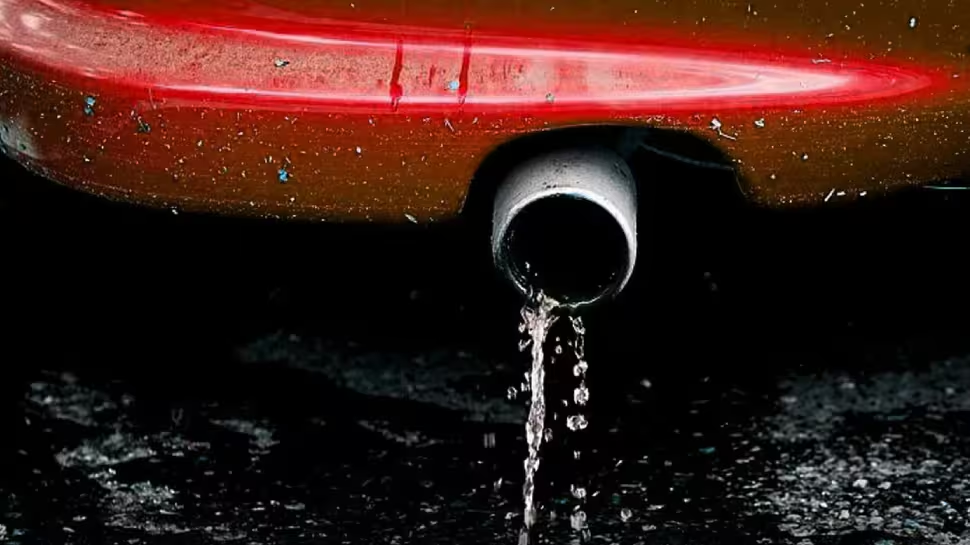
You park after a short drive and notice clear water dripping near the tailpipe. It is easy to assume the catalytic converter is leaking or failing, especially when the drip appears underneath the middle of the car. In many cases, a small amount of clear water is normal condensation from the exhaust system, not a damaged converter.
The important details are where the liquid comes from, what it looks like, how much is coming out, and how the engine is running. A few drops from the tailpipe during a cold start can be harmless. Coolant, fuel, oil, or water escaping from a cracked exhaust component is a different problem and needs attention.
The catalytic converter cleans harmful exhaust compounds by using a coated internal substrate and precious-metal catalysts. Water can be created during combustion and emissions treatment, then condense inside a cold exhaust. This guide explains why it happens, how to tell normal condensation from a real leak, what not to repair with putty, and when the exhaust needs a professional inspection.
Is water dripping from a catalytic converter normal?
Often, yes. When gasoline burns, one of the products of complete combustion is water vapor. The exhaust system is cold when the engine first starts, so that vapor can condense into liquid water inside the pipes, muffler, and converter area. Once the exhaust reaches operating temperature, much of the water should leave as vapor.
You may see a few drops fall from the tailpipe or a small drain hole in the muffler. Some exhaust systems also have seams, joints, and low points where condensation collects. A clear drip that stops as the system warms is usually less worrying than a continuous leak that remains after a long drive.
A catalytic converter does not normally hold a tank of water. If you see water near it, the liquid may have traveled along the pipe from another point. The actual source could be the tailpipe, muffler, exhaust joint, drain hole, air-conditioning drain, coolant leak, or rainwater trapped around a shield.
Do not diagnose the source by touching the liquid while the exhaust is hot. Exhaust components can burn skin long after the engine is switched off. Let the system cool, place clean cardboard under the vehicle, and observe where the next drops land.
What normal condensation usually looks like
- Clear, watery liquid with little or no smell
- A few drops or a small amount during cold startup
- More noticeable in cool or damp weather
- Dripping from the tailpipe or a low point in the exhaust
- Less water after the exhaust warms up
- Normal engine idle, power, and exhaust color
If the liquid matches that description and the engine runs normally, you usually do not need to replace the catalytic converter. A little water from the exhaust is a normal result of combustion and condensation.
How the catalytic converter produces water vapor
A catalytic converter contains a honeycomb substrate coated with catalyst materials. Exhaust flows through the passages, where chemical reactions reduce nitrogen oxides and convert carbon monoxide and unburned hydrocarbons into less harmful compounds. The exact reaction depends on the engine, converter design, air-fuel mixture, temperature, and emissions system.
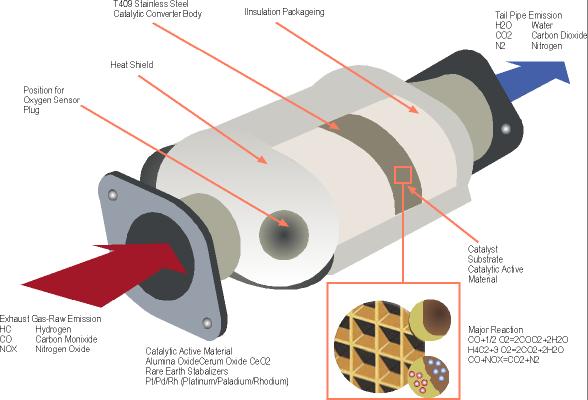
Reduction reactions help separate oxygen from nitrogen oxides, leaving nitrogen and oxygen-related products that are less harmful under the system’s operating conditions. Oxidation reactions help convert carbon monoxide and unburned hydrocarbons. Hydrogen in the fuel and combustion products can combine with oxygen to form water vapor.
The water usually begins as vapor. When the exhaust pipe and converter are colder than the vapor’s condensation point, the vapor becomes liquid. This is why a vehicle can drip water after a cold start and stop dripping after the exhaust gets hot.
The Environmental Protection Agency’s vehicle emissions-control information describes the role of emissions equipment and why catalytic converters are part of the control system. A converter must reach the proper operating conditions to work effectively, and it should not be removed or bypassed.
Why cold starts create more visible water
During a cold start, the engine and exhaust are below normal operating temperature. The exhaust contains water vapor, but the cold metal surfaces turn some of that vapor into liquid. The longer the exhaust system stays cold, the more condensation can collect.
Short trips make this more noticeable. If you drive only a few minutes, the muffler and tailpipe may never get hot enough to evaporate the collected moisture. Repeated short trips can leave moisture in the exhaust and contribute to internal corrosion over time.
On a cold morning, you may see water dripping for several minutes. That alone is not a converter failure. Watch what happens after the engine reaches normal temperature and compare the liquid with the symptoms listed below.
Where the water may actually be coming from
People often point to the converter because it sits under the car in the middle of the exhaust system. The water may be coming from somewhere else. Exhaust pipes slope and vibrate, so liquid can run along the outside or inside of a pipe before it drips at the lowest point.
Tailpipe condensation
The tailpipe is the most common place to see normal condensation. A short stream or a few drops from the tailpipe during warm-up is generally expected. The exhaust gas itself can carry water vapor, and the outlet is where that moisture becomes easy to see.
Muffler drain water
Mufflers have internal chambers where condensation can collect. Some exhaust systems include small drain holes that let moisture escape. Do not plug a drain hole just because it is dripping. The opening may be there to prevent water from remaining inside and rusting the muffler.
Air-conditioning drain water
When the air conditioner runs, moisture from cabin air condenses on the evaporator and drains under the vehicle. That water is usually clear and may drip near the passenger side of the firewall or beneath the HVAC case. It can be mistaken for an exhaust leak if you notice it after a hot drive.
Air-conditioning water is often cool and odorless. It should not smell like fuel, coolant, or oil. If the carpet inside the car is wet or the drain is blocked, the water may appear in the cabin rather than under the vehicle.
Rainwater around the exhaust
Rain can collect on heat shields, bumper openings, and exhaust surfaces. A car parked outside may drip water after it is moved, even when the engine has not been started. Check the liquid after the vehicle has been dry for a while before assuming the exhaust created it.
Coolant or engine-fluid leaks
Coolant can reach the exhaust through an internal engine problem, such as a failed head gasket or a cracked component. It can also leak externally onto a hot exhaust part from a hose, thermostat housing, water pump, or other cooling-system area. Coolant usually has a distinctive sweet smell and may be colored, but color is not a reliable test because modern coolants come in several colors.
Fuel or oil near the exhaust is more serious. Fuel may smell strong and evaporate quickly. Oil leaves a greasy mark and can smoke when it reaches a hot shield or pipe. Do not drive with a fuel leak or oil leak spraying onto the exhaust.
Normal condensation versus a real exhaust problem
The amount and timing of the drip matter, but they are not the only clues. A converter or exhaust system that is damaged may also produce noise, odor, poor performance, warning lights, or visible soot. A converter that is working normally can still have water around it because of condensation from another part of the exhaust.
| What you notice | More likely explanation | What to check next |
|---|---|---|
| Clear drops at cold start that stop as the exhaust warms | Normal condensation | Monitor the amount and confirm the engine runs normally. |
| Water from the tailpipe with no smell or smoke | Combustion moisture and exhaust condensation | Check whether it reduces after a complete warm-up. |
| Sweet-smelling liquid, white exhaust smoke, or coolant loss | Possible coolant entering the combustion or exhaust system | Stop ignoring it and arrange cooling-system and engine testing. |
| Black soot, loud exhaust, or hissing near the converter | Cracked pipe, flange, gasket, or converter housing | Inspect for an exhaust leak when the system is cold. |
| Rattle, loss of power, or check-engine light | Loose converter substrate, restriction, sensor fault, or engine problem | Scan the vehicle and test converter flow and sensor data. |
| Greasy fluid or smoke from underneath | Oil or another fluid leaking onto a hot exhaust component | Switch the engine off and inspect before driving farther. |
Why a large amount of water deserves attention
A small amount of water is usually normal. A steady stream that continues after the engine is fully warm is different. It could still be water from the air conditioner or rain, but the source should be confirmed rather than blamed on the catalytic converter.
Large amounts of white vapor from the tailpipe can indicate water or coolant entering the combustion chamber. Normal condensation tends to thin out as the exhaust warms. Persistent thick white smoke, a sweet smell, rough running, low coolant, or an overheating gauge points toward a possible engine or cooling-system fault.
Coolant entering the cylinders can damage the catalytic converter because the converter is not designed to process coolant. It can also cause misfires, overheating, cylinder damage, and contaminated engine oil. Repairing the converter without repairing the coolant leak usually wastes money.
Check the coolant level safely
Never open a hot radiator cap. Let the engine cool completely, then check the coolant reservoir and follow the vehicle’s manual. A low level combined with white exhaust, overheating, or a sweet smell needs prompt diagnosis.
Do not use the liquid on the ground as a color test. Place a clean piece of cardboard beneath the suspected area and compare the smell and texture only when the system is cool. If you are unsure, collect a small sample in a clean container and show it to a technician, without touching it to your skin.
Can a leaking catalytic converter be repaired?
The answer depends on what is leaking. If water is simply condensation from the tailpipe or muffler drain, there is nothing to repair. If an exhaust pipe, flange, gasket, flex section, or converter housing has a crack, the correct repair may involve replacing a gasket, welding a suitable section, or replacing the affected converter assembly.
The converter’s internal substrate is not repaired with exterior putty. If the ceramic honeycomb has melted, broken, or become restricted, the converter needs proper testing and usually replacement. If the metal shell has a small external crack, an exhaust specialist may determine whether a safe repair is possible, but the repair must tolerate heat, vibration, and exhaust pressure.
A catalytic converter is part of the emissions system. It must remain sealed and correctly fitted, and the replacement must meet the requirements for the vehicle and location. Removing the converter, gutting the substrate, or fitting a bypass pipe can create emissions, inspection, noise, and legal problems.
Why steel putty is not a permanent converter repair
The original instructions suggest applying steel putty to a hole and waiting several hours for it to dry. That may be marketed as a temporary exhaust patch for certain low-temperature areas, but it should not be described as a permanent repair for a catalytic converter. Converter temperatures, vibration, surface contamination, and pressure can make a patch fail.
Putting your finger on a hot converter is dangerous, and running the engine while searching for an exhaust leak can expose you to carbon monoxide. Do not seal a leak with putty while the surface is hot or dirty. Do not crawl under a vehicle supported only by a jack.
If a temporary exhaust repair product is used, follow the product instructions and understand its limits. Keep it away from sensors, oxygen-sensor ports, moving parts, and heat-sensitive wiring. A temporary patch should lead to a proper exhaust repair, not replace it indefinitely.
How to locate the catalytic converter and exhaust leak safely
A catalytic converter is a metal canister in the exhaust path between the engine-side exhaust manifold or head pipe and the muffler or tailpipe. It may be close to the engine or farther underneath the vehicle, depending on the design. Heat shields often cover it, so do not identify every metal shield as the converter itself.
Start the inspection with the vehicle cold. Look for a missing section, cracked pipe, black soot around a joint, loose flange, damaged oxygen-sensor wiring, broken hanger, or a dented converter housing. A leak often leaves a dark carbon mark where exhaust has escaped.
Do not block the tailpipe with your hand or a rag to force pressure into the exhaust. That can create dangerous back pressure and expose you to exhaust gases. A shop can use a smoke machine, listening equipment, or an approved low-pressure method to find a leak.
Listen for the type of noise
A sharp ticking near the engine or converter during cold start may indicate an exhaust manifold, gasket, or flange leak. A deeper rumble suggests a larger opening farther down the exhaust. A metallic rattle when the engine is revved lightly may come from a loose heat shield or broken converter substrate.
Noise alone does not tell you the converter has failed. Tap testing a cold converter gently with a rubber mallet may reveal loose material, but a heat shield can make the same rattle. A back-pressure or flow test is more useful when the engine lacks power.
Check for exhaust fumes
Exhaust leaks near the engine or passenger compartment can allow carbon monoxide and other gases into the cabin. Carbon monoxide has no reliable smell, so do not use your nose as a safety test. Headache, dizziness, nausea, or unusual tiredness while driving are reasons to leave the vehicle and get fresh air.
Open windows are not a complete solution to a dangerous exhaust leak. Stop driving and arrange repair if you smell exhaust in the cabin or see a leak near the firewall. The National Highway Traffic Safety Administration’s vehicle safety resources provide general safety information, but an exhaust technician should inspect the actual vehicle.
Why the check-engine light may come on
A converter-related fault can set a check-engine light, but water dripping does not automatically mean the converter has failed. Common catalyst-related codes include P0420 and P0430 on vehicles that use those monitoring strategies. The code indicates an emissions efficiency concern, not proof that the converter itself is the only problem.
An exhaust leak near an oxygen sensor can draw outside air into the pipe and distort sensor readings. A misfire can send unburned fuel into the converter and overheat it. A bad oxygen sensor, rich fuel mixture, oil consumption, coolant leak, or incorrect replacement part can also lead to catalyst codes.
Scan the car before clearing the code. Record all codes and freeze-frame information, including misfire, fuel-trim, oxygen-sensor, and temperature faults. Replacing a converter while an engine misfire is active can destroy the new part.
Symptoms of a restricted converter
- Loss of power that becomes worse under load
- Difficulty accelerating at highway speed
- An engine that runs better briefly after cooling down
- Rattle from loose material inside the converter
- Excessive heat or a glowing converter after a misfire
- Check-engine light with catalyst, misfire, or fuel-mixture codes
A restricted converter can be tested with exhaust back-pressure measurements, vacuum behavior, temperature comparison, and scan-tool data. Do not diagnose restriction by drilling a hole in the pipe. That creates an exhaust leak and can damage the vehicle.
How much does a leaking catalytic converter cost to fix?
The original article gives a broad repair range of about $940 to $2,400, including labor and catalytic-converter parts, and states that a new converter may cost $2,200 or more. Treat those figures as general reference points rather than a guaranteed quote. The final price depends on the vehicle, converter design, emissions certification, labor access, corrosion, sensors, gaskets, and the cause of failure.
A condensation drip costs nothing to repair because it is normal. A loose heat shield or clamp may be a small repair. A rusted flange, broken stud, damaged oxygen sensor, welded converter, or seized fastener can add labor. If the converter failed because of a misfire, coolant leak, oil burning, or fuel problem, the engine repair must be included in the estimate.
Ask the shop to separate diagnosis, parts, labor, gaskets, oxygen sensors, exhaust fabrication, taxes, and calibration if applicable. Ask whether the converter is new, used, aftermarket, or original equipment. Confirm that it meets the emissions requirements for the vehicle’s registration area.
Why a cheap converter can become expensive
A low-cost converter may not fit the pipes, may need extra cutting and welding, may trigger the same catalyst code, or may not meet local emissions requirements. It can also have a different sensor location or heat shield arrangement. A part that looks similar in a photo is not proof of correct fitment.
Do not replace the converter based on water alone. Confirm the failure. If the converter is healthy and the water is condensation, a replacement wastes money and does not change the symptom.
When water from the exhaust means stop driving
Stop and arrange an inspection if you see smoke from underneath, smell fuel, smell exhaust inside the cabin, see coolant disappearing, or notice an oil leak reaching the exhaust. A glowing converter, flashing check-engine light, severe misfire, overheating gauge, or major loss of power also calls for stopping.
A few clear drops from the tailpipe with normal engine operation are usually not an emergency. A stream of liquid that continues after warm-up needs a source check. Do not let a normal condensation explanation make you ignore a sweet smell, white smoke, or a rising temperature gauge.
If the vehicle has just driven through deep water, check for water in the air intake before restarting. That is not a catalytic-converter problem, but restarting a flooded engine can cause severe damage. When in doubt, leave the vehicle off and call for help.
Common mistakes owners make with catalytic-converter water
Replacing the converter because the tailpipe drips
Water at the tailpipe is often a combustion and condensation byproduct. Confirm the liquid source and the engine symptoms before approving an expensive emissions repair.
Calling every clear liquid coolant
Air-conditioning water and exhaust condensation can both be clear. Coolant may be colored or sweet-smelling, but color and smell are not enough to prove the source. Check the level and arrange testing if coolant is disappearing.
Plugging an exhaust drain hole
A small hole in a muffler or exhaust low point may be designed to drain condensation. Sealing it can trap moisture and speed internal rust. Confirm whether the opening is intentional before repairing it.
Applying putty to a hot exhaust
Hot metal can burn you and prevent the product from bonding. A patch may also fail when the exhaust reaches high temperature. Let the system cool and use a proper exhaust repair when a component is cracked.
Clearing the check-engine light without fixing the cause
Clearing a catalyst code does not repair an oxygen sensor, misfire, exhaust leak, or converter. The code may return after the vehicle completes its readiness checks. Save the data before clearing anything.
DIY checks versus professional diagnosis
You can observe the liquid, check whether it stops after warm-up, inspect the coolant level when the engine is cold, and look for obvious exhaust damage. You can also read engine codes with a suitable scanner. Do not crawl under a vehicle supported only by a jack, and never touch a hot converter or pipe.
Exhaust repair is better left to a shop when the converter is rusted, welded, close to the engine, or connected to damaged oxygen sensors. A technician can lift the vehicle safely, check for fumes, test the converter, inspect the fuel and ignition systems, and verify that the replacement part is correct.
If you have welding equipment and experience, a small exhaust-pipe repair may be possible, but a converter repair still has emissions and heat considerations. Do not remove the converter or install a bypass pipe. That can create legal and inspection problems and may increase harmful emissions.
How a mechanic confirms the source
A technician will usually start by asking when the water appears, how long it continues, and whether the vehicle has any other symptoms. The temperature outside, length of the trip, recent weather, air-conditioner use, and whether the vehicle is driven mostly on short trips all matter. A clear answer can prevent an unnecessary converter diagnosis.
With the exhaust cold, the technician can inspect the tailpipe, muffler, converter shell, flanges, flex pipe, hangers, heat shields, and oxygen-sensor ports. Black soot around a joint often shows where exhaust has escaped. White mineral marks or rust trails may show where water has been sitting, although neither mark alone identifies the original leak.
The vehicle may then be warmed while it remains safely raised or parked in a ventilated area. The technician listens for ticking, hissing, rattling, and changes in sound as the metal expands. An exhaust smoke machine can make small leaks easier to see without forcing dangerous pressure into the system.
Tests for a converter that may be restricted
If the engine lacks power, the shop may check exhaust back pressure through a suitable sensor port or compare vacuum behavior under load. The technician may also compare temperatures before and after the converter with an infrared thermometer. Temperature readings are useful only when interpreted with engine speed, load, and the converter design in mind.
A scan tool can show oxygen-sensor patterns, fuel trims, misfire counts, coolant temperature, and catalyst-related codes. A rear oxygen sensor that behaves like the front sensor can support a low-efficiency diagnosis on some systems, but it does not prove the converter is the only fault. An exhaust leak, sensor problem, or fuel issue can produce similar data.
If coolant entry is suspected, the technician may perform a cooling-system pressure test, combustion-gas test, compression test, leak-down test, or other checks. The correct test depends on the engine and symptoms. Replacing the converter before confirming an internal coolant leak can leave the new part damaged again.
Why the engine must be checked with the exhaust
A catalytic converter is often the victim of an engine problem rather than the starting point. An ignition misfire sends unburned fuel into the converter, where it can burn and raise the temperature. A rich mixture, leaking injector, oil consumption, or coolant leak can contaminate the converter and reduce its efficiency.
Look for a flashing check-engine light, rough idle, fuel smell, poor acceleration, hard starting, or a sudden change in fuel use. These symptoms need engine diagnosis before the converter is condemned. The same rule applies after a converter replacement. The engine must be healthy enough to protect the new emissions component.
How short trips affect moisture in the exhaust
Short trips are hard on exhaust systems because the muffler and tailpipe may stay below the temperature needed to evaporate condensation. Moisture can remain inside the pipes and muffler, where it mixes with acidic exhaust residue and contributes to rust. A car driven several short distances each day may show more water than one used for longer trips.
This does not mean you should take an unnecessary long drive just to dry the exhaust if the engine has a warning light, misfire, overheating problem, or fluid leak. A normal drive that reaches operating temperature may reduce condensation, but it is not a repair for a damaged exhaust or coolant leak.
Long idling is not the same as a normal road warm-up. The engine may warm while the tailpipe remains relatively cool, and idling in an enclosed garage creates a carbon-monoxide hazard. If the vehicle is used mainly for short trips, keep the exhaust inspected and follow the maintenance schedule.
What I would do if this were my car
I would first place cardboard under the car and identify whether the drops came from the tailpipe, muffler, air-conditioning drain, or a pipe joint. I would check the liquid only when the vehicle was cool and look for a fuel or coolant smell, but I would not touch a hot exhaust to confirm anything.
If the water appeared only during cold starts and stopped after the exhaust warmed, with no smoke, odor, warning light, or loss of power, I would monitor it. If the drip continued, the engine smoked white, coolant dropped, or the check-engine light was on, I would scan the car and arrange a proper diagnosis.
I would not buy a converter because a forum said water means the part is failing. I would test for leaks, misfires, fuel dilution, coolant entry, and restriction first. When a converter really needs replacement, I would repair the cause before installing the new one.
Questions to ask before approving a converter
Ask the shop to show you where the liquid came from. If it is normal condensation, no converter replacement is needed. If there is a leak, ask whether the damaged part is the converter shell, a gasket, a flange, a flex pipe, or another section of the exhaust.
Ask what test proves the converter has failed. A code alone is not enough, and water alone is not enough. The repair explanation should include the exhaust inspection, scan data, engine checks, and any restriction or temperature test used.
Ask whether the estimate includes oxygen-sensor removal, replacement gaskets, rusted fasteners, welding, heat shields, and emissions certification. Parts that are difficult to access may take longer than the original quote suggests, so a written estimate is better than a vague promise.
Finally, ask what caused the converter failure. If the answer is a misfire, fuel problem, oil burning, coolant leak, or overheating, that issue needs to be repaired before or alongside the converter. Otherwise, the replacement may fail for the same reason.
The mechanic’s verdict on water near a catalytic converter
A small amount of clear water from the tailpipe or exhaust during a cold start is usually normal. Combustion creates water vapor, and cold exhaust parts turn some of that vapor into liquid. The catalytic converter participates in emissions reactions, but the water may be produced by combustion or condensation anywhere in the exhaust system.
Large or persistent leaks, sweet-smelling liquid, white smoke, coolant loss, fuel odor, oil, loud exhaust, rattling, power loss, or warning lights are different. Do not seal a hot converter with putty or replace the converter without confirming the source and cause.
You can monitor normal condensation and perform a safe visual check when the vehicle is cool. A technician should handle exhaust leaks near the cabin, converter restriction, sensor faults, coolant contamination, damaged wiring, and replacement decisions. The clear takeaway is simple: water alone is usually harmless, but water combined with smoke, odor, loss of coolant, or poor engine operation deserves prompt diagnosis.