
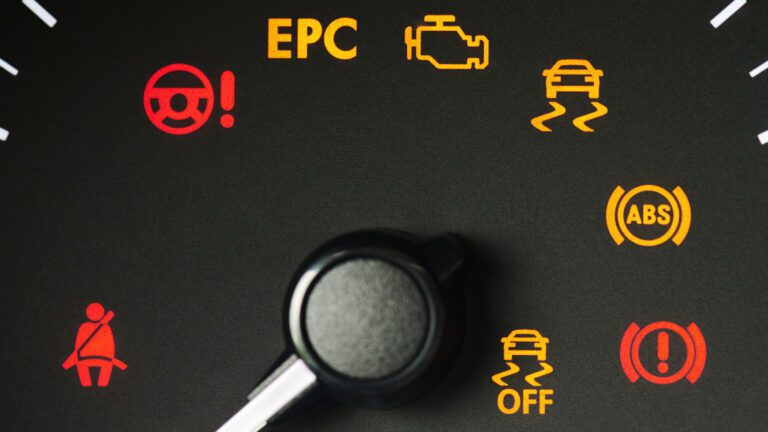
A customer once handed me a repair estimate and asked whether the car needed five new parts. It did not. The estimate listed five diagnostic abbreviations, including a DTC, an ECT code, and an EVAP test, and the customer had read each line as a separate failure. This happens all the time because modern cars use a language of short terms that makes sense to technicians but can look like alphabet soup to everyone else.
Automotive abbreviations appear on dashboard displays, scan-tool reports, wiring diagrams, service invoices, vehicle listings, and owner’s manuals. Some describe safety systems, some identify sensors, and others refer to fuel injection, transmissions, emissions equipment, batteries, communication networks, or government standards.
This reference puts the common terms into plain language. It is not a substitute for the service information for a particular vehicle, because manufacturers sometimes use the same letters for different systems. When an abbreviation is brand-specific, the table says so. When it can mean two different things, the context is included.
How to use this automotive abbreviation guide
The table is arranged alphabetically. Start with the abbreviation exactly as it appears on the scan report, dashboard, parts listing, or repair estimate, then read across to the full term and explanation.
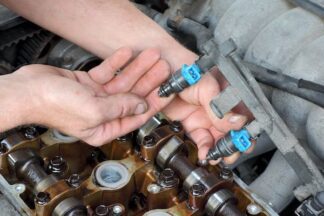
Pay attention to punctuation and context. ATF means automatic transmission fluid, while AT may describe an automatic transmission. TCU can mean transmission control unit, but it can also mean telematics control unit in some documents. A technician should be able to tell you which meaning applies to your vehicle.
Abbreviations also change between markets. A European manual may use EOBD, while a North American scan tool may display OBD-II. The systems are related, but the legal requirements, connector standards, emissions tests, and code descriptions can differ.
Use this list to ask better questions. If a repair order says “MAF circuit, DTC P0101,” you can ask whether the shop tested the intake for leaks before replacing the sensor. If it says “ABS and EBD,” you know the issue concerns braking control, not the engine. Understanding the short form is the first step, not the diagnosis itself.
Automotive abbreviations from ACC to CVVT
| Abbreviation | Full term | What it means in practical terms |
|---|---|---|
| ACC | Adaptive cruise control | Cruise control that can adjust vehicle speed to maintain a selected gap from traffic ahead. |
| ABS | Anti-lock braking system | Uses wheel-speed information to reduce wheel lock during hard braking so the driver can keep steering control. |
| AC | Air conditioning, or alternating current | In a cabin discussion, AC usually means air conditioning. In electrical documents, it can mean alternating current. |
| AFS | Adaptive front-lighting system | A lighting system that changes headlamp direction or beam pattern with steering angle, speed, or road conditions. Some brands use AFS for other steering systems. |
| ATF | Automatic transmission fluid | Fluid that lubricates, cools, and creates hydraulic pressure inside an automatic transmission. Use the exact specification in the manual. |
| AWD | All-wheel drive | A drivetrain that can send torque to front and rear axles. The system may be permanent, selectable, or computer-controlled. |
| B20 | Biodiesel blend containing 20 percent biodiesel | A diesel fuel blend made with 20 percent biodiesel and 80 percent conventional diesel, subject to the vehicle maker’s approval. |
| B100 | 100 percent biodiesel | Pure biodiesel. It is not approved for every diesel engine, fuel system, climate, or emissions system. |
| BARO | Barometric pressure | A measurement of atmospheric pressure used by the engine computer to adjust load and fueling, especially at different altitudes. |
| BAS | Brake assist system | Detects rapid brake-pedal application and helps provide high braking force during an emergency stop. |
| BCM | Body control module | Controls non-engine functions such as lighting, locks, windows, wipers, alarms, and other body electronics. |
| BMS | Battery management system | Monitors battery voltage, temperature, charge, and health in hybrid and electric vehicles, and may control charging and protection. |
| CAI | Controlled auto ignition | A combustion method in which heat and pressure trigger combustion instead of a conventional spark event. |
| CAN | Controller area network | A vehicle communication network that lets modules exchange data without each module having a separate wire to every other module. |
| CARB | California Air Resources Board | The California agency that sets vehicle-emissions requirements. CARB approvals matter when a replacement part is sold for certain markets. |
| CC | Cubic centimetres | A measure of engine displacement. In electrical documents, DC means direct current, while CC can have a manufacturer-specific meaning. |
| CKP | Crankshaft position sensor | Reports crankshaft speed and position so the computer can control ignition, injection, and engine synchronization. |
| CMP | Camshaft position sensor | Reports camshaft position so the engine computer can synchronize valve timing and cylinder events. |
| CNG | Compressed natural gas | Natural gas stored under high pressure and used as an alternative fuel in some passenger and commercial vehicles. |
| CPU | Central processing unit | The processor inside an electronic control unit that runs calculations and control instructions. |
| CR | Common rail | A diesel injection arrangement where a high-pressure rail supplies fuel to electronically controlled injectors. |
| CRT | Continuously regenerating trap | A diesel particulate system that uses catalyst chemistry to reduce soot under suitable operating conditions. |
| CVT | Continuously variable transmission | A transmission that varies its ratio rather than using a fixed set of conventional gears. It may use a belt, chain, and pulley system. |
| CVVT | Continuously variable valve timing | Adjusts camshaft timing as engine speed and load change. Manufacturer names vary, including VVT-i, VTEC, and Ti-VCT. |
Terms from DCT to EVAP
| Abbreviation | Full term | What it means in practical terms |
|---|---|---|
| DCT | Dual-clutch transmission | Uses two clutches for alternating gear sets, allowing fast gear changes. It still needs the correct fluid and service procedure. |
| DCU | Dosing control unit | Controls reductant or urea dosing in an SCR emissions system on applicable diesel vehicles. |
| DLC | Data link connector | The diagnostic connector where a scan tool plugs in, commonly located under the dashboard. |
| DMF | Dual-mass flywheel | A flywheel with two rotating sections and damping springs that reduce drivetrain vibration, common on some manual diesels. |
| DOC | Diesel oxidation catalyst | An exhaust catalyst that reduces diesel carbon monoxide and hydrocarbon emissions. |
| DOHC | Double overhead camshaft | An engine layout with two camshafts per cylinder bank, commonly one for intake valves and one for exhaust valves. |
| DSC | Dynamic stability control | A brand or system name for electronic stability control that can reduce engine power and apply individual brakes. |
| DTC | Diagnostic trouble code | A stored code identifying a condition detected by an electronic control module. It is a starting point for testing, not a complete diagnosis. |
| DV | Dump valve or diverter valve | A turbocharger pressure-control valve that releases or redirects pressure when the throttle closes. Usage varies by manufacturer. |
| EBD | Electronic brakeforce distribution | Adjusts brake force between wheels using speed, load, and braking information, usually working with ABS. |
| ECM | Engine control module | The computer that manages engine functions such as fuel, ignition, throttle, boost, and emissions. |
| ECO | Economy mode | A selectable mode that changes throttle response, shift strategy, climate operation, or hybrid control to prioritize efficiency. |
| ECT | Engine coolant temperature sensor | Reports coolant temperature to the engine computer. A bad reading can affect starting, fueling, cooling fans, and warning lights. |
| ECU | Electronic control unit | A general term for an embedded computer controlling one vehicle system or several related functions. |
| EFI | Electronic fuel injection | Uses electronic injectors and computer control instead of a traditional mechanical carburetor. |
| EGR | Exhaust gas recirculation | Routes a controlled amount of exhaust back into the intake to reduce combustion temperature and NOx emissions. |
| EMS | Engine management system | The combined sensors, actuators, wiring, and control modules that manage engine operation. |
| EOBD | European on-board diagnostics | The European emissions-diagnostic system related to OBD requirements. The exact coverage depends on vehicle age and market. |
| EPA | Environmental Protection Agency | The US federal agency responsible for environmental rules, including vehicle emissions requirements. |
| EPS | Electric power steering | Uses an electric motor to assist steering rather than an engine-driven hydraulic pump. |
| ESP | Electronic stability program | A brand name used for electronic stability control. It detects loss of control and applies selective braking or reduces power. |
| EV | Electric vehicle | A vehicle driven by electric motor power from a high-voltage battery rather than a combustion engine. |
| EVAP | Evaporative emissions system | Captures fuel vapors and routes them into the engine to prevent them escaping into the atmosphere. |
Fuel, engine, and battery abbreviations
| Abbreviation | Full term | What it means in practical terms |
|---|---|---|
| FGT | Fixed-geometry turbocharger | Uses a fixed turbine housing. It is mechanically simpler than a variable-geometry unit but cannot change exhaust flow across the rev range. |
| FSI | Fuel stratified injection | A Volkswagen Group direct-injection gasoline system name. The exact fuel strategy depends on the engine and operating condition. |
| GDI | Gasoline direct injection | Injects gasoline directly into the combustion chamber rather than the intake port. |
| GPCU | Glow plug control unit | Controls diesel glow plugs during starting and, on some engines, after-start operation. |
| GPS | Global positioning system | Satellite positioning used in navigation, fleet tracking, emergency services, and connected-car functions. |
| HEV | Hybrid electric vehicle | Combines an internal-combustion engine with electric motor assistance and a battery. |
| HP | Horsepower | A unit used to describe power output. One mechanical horsepower is approximately 746 watts. |
| IAC | Idle air control | A valve or actuator that controls bypass air around a closed throttle on systems that use one. |
| IAT | Intake air temperature sensor | Measures incoming-air temperature so the computer can adjust fueling, ignition, and load calculations. |
| IMV | Inlet metering valve | Controls fuel entering a high-pressure diesel pump so rail pressure can be regulated. |
| ISC | Idle speed control | A general term for the valve or strategy used to maintain engine idle speed. |
| ISG | Idle stop and go | A stop-start system that switches the engine off at a stop and restarts it when the driver is ready. |
| KAM | Keep-alive memory | Memory that retains adaptive values or settings when the ignition is off. Battery disconnection can erase some values. |
| LED | Light-emitting diode | A semiconductor light source used in lamps, indicators, displays, and interior lighting. |
| Li-ion | Lithium-ion battery | A rechargeable battery type widely used in hybrid and electric vehicles because of its energy density. |
| LPG | Liquefied petroleum gas | A pressurized propane and butane fuel used in some converted or factory-built vehicles. |
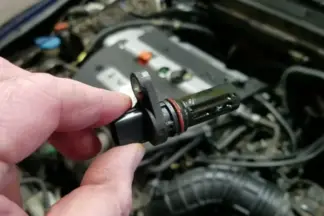
| MAF | Mass airflow sensor | Measures the mass of air entering the engine so the control module can calculate fueling and load. |
| MAP | Manifold absolute pressure sensor | Measures intake-manifold pressure and helps the computer calculate engine load. |
| MIL | Malfunction indicator lamp | The check-engine light. It illuminates when the diagnostic system detects a qualifying fault. |
| MPI | Multi-point injection | Uses a separate injector for each cylinder, usually positioned near the intake valve. |
| NTC | Negative temperature coefficient | A thermistor whose resistance decreases as temperature increases, used in many temperature sensors. |
| OBD | On-board diagnostics | The vehicle’s self-monitoring system for emissions and other monitored functions. |
| PCV | Positive crankcase ventilation | Routes blow-by gases from the crankcase back into the intake so they can be burned. |
| PFI | Port fuel injection | Sprays fuel into the intake port upstream of the intake valve. |
| PHEV | Plug-in hybrid electric vehicle | A hybrid whose battery can be charged from an external electrical source. |
| RON | Research octane number | A fuel’s resistance to knock measured under a standardized test. Fuel labels use different octane systems by market. |
| SCR | Selective catalytic reduction | Uses a urea-based reductant to convert diesel NOx into nitrogen and water. |
| SHRTFT | Short-term fuel trim | The immediate correction the engine computer makes from oxygen-sensor feedback. |
| LONGFT | Long-term fuel trim | The learned fuel correction retained by the computer as it adapts to longer-term changes. |
| TSI | Turbocharged stratified injection | A Volkswagen Group name for certain turbocharged gasoline direct-injection engines. |
Transmission, braking, and stability abbreviations
| Abbreviation | Full term | What it means in practical terms |
|---|---|---|
| AT | Automatic transmission | A transmission that changes ratios without a manually operated clutch pedal. |
| CVT | Continuously variable transmission | An automatic transmission that changes ratio continuously rather than selecting fixed gears. |
| DCT | Dual-clutch transmission | Uses two clutches to prepare and change alternate gear sets. |
| DMF | Dual-mass flywheel | Damps torsional vibration between an engine and manual or automated-manual transmission. |
| LSD | Limited-slip differential | Limits the speed difference between wheels on an axle when one wheel loses traction. |
| PTU | Power transfer unit | Transfers power from a transaxle to another axle in some AWD systems. |
| TCC | Torque-converter clutch | Locks the torque converter under suitable conditions to reduce slip and improve efficiency. |
| TCCS | Torque-converter clutch solenoid | Controls hydraulic pressure for torque-converter lockup in a transmission. |
| TCU | Transmission control unit | Controls shift timing, shift pressure, gear selection, and torque-converter operation. |
| ABS | Anti-lock braking system | Prevents wheel lock during braking so steering control is retained. |
| BAS | Brake assist system | Helps apply strong braking force when the system detects an emergency stop. |
| DSC | Dynamic stability control | Uses braking and engine intervention to reduce skids, understeer, and oversteer. |
| ESP | Electronic stability program | A manufacturer or supplier name for electronic stability control. |
| TCS | Traction control system | Reduces wheelspin during acceleration by managing engine torque and braking. |
| TPMS | Tire-pressure monitoring system | Uses direct pressure sensors or wheel-speed calculations to warn about pressure loss. |
| TWI | Tread-wear indicator | A raised bar in the tread groove showing when a tire has reached its wear limit. |
| VSA | Vehicle stability assist | Honda and Acura terminology for a system combining stability and traction functions. |
Electrical, communication, and identification terms
| Abbreviation | Full term | What it means in practical terms |
|---|---|---|
| AC | Alternating current | Current that changes direction periodically, relevant to charging and electrical systems. |
| BCM | Body control module | Manages many body and convenience functions. |
| CAN | Controller area network | A high-use vehicle network carrying messages between modules. |
| DC | Direct current | Current flowing in one direction, used by conventional vehicle batteries and most low-voltage circuits. |
| EEPROM | Electrically erasable programmable read-only memory | Nonvolatile memory that can store configuration and learned data in an electronic module. |
| GPS | Global positioning system | Satellite positioning used for navigation and vehicle services. |
| ISO | International Organization for Standardization | An organization that publishes technical standards used in automotive manufacturing and diagnostics. |
| LIN | Local interconnect network | A lower-cost network used for simple components such as switches, mirrors, and small motors. |
| MOST | Media-oriented systems transport | A network used in some infotainment and multimedia systems. |
| PCM | Powertrain control module | A combined engine and transmission control computer in some vehicles. |
| PDU | Power distribution unit | Distributes and sometimes switches electrical power to vehicle systems. |
| PWM | Pulse-width modulation | Controls average electrical output by varying how long a signal is switched on during each cycle. |
| VIN | Vehicle identification number | The unique vehicle code used for registration, parts lookup, recalls, insurance, and service records. |
| VDS | Vehicle descriptor section | The part of the VIN that describes vehicle attributes such as body and engine information. |
| VIS | Vehicle identifier section | The VIN section used to identify the individual production sequence of the vehicle. |
| WMI | World manufacturer identifier | The first three VIN characters identifying manufacturer and country or region. |
Emissions, fuel standards, and vehicle classifications
| Abbreviation | Full term | What it means in practical terms |
|---|---|---|
| AT-PZEV | Advanced technology partial zero-emission vehicle | A California emissions classification used for vehicles meeting stringent emissions requirements. |
| CARB | California Air Resources Board | California’s emissions regulator, whose rules and approvals affect parts sold in several markets. |
| DOC | Diesel oxidation catalyst | Diesel exhaust catalyst that reduces carbon monoxide and hydrocarbons. |
| EGR | Exhaust gas recirculation | Reduces NOx formation by returning a controlled amount of exhaust to the intake. |
| EPA | Environmental Protection Agency | US federal agency responsible for environmental and vehicle-emissions regulation. |
| LEV | Low-emission vehicle | A regulated emissions classification below conventional vehicle limits. |
| LNT | Lean NOx trap | Stores NOx during lean operation and releases or reduces it during a regeneration event. |
| NEDC | New European driving cycle | An older European laboratory test cycle, largely replaced by WLTP for newer approvals. |
| NOx | Nitrogen oxides | A group of combustion pollutants controlled by EGR, SCR, NOx traps, and other systems. |
| OBD | On-board diagnostics | Monitors emissions-related systems and stores fault information. |
| SCR | Selective catalytic reduction | Uses urea solution to reduce diesel NOx in the exhaust. |
| SULEV | Super ultra-low-emission vehicle | A stringent low-emissions classification under applicable regulations. |
| TWC | Three-way catalyst | A gasoline catalytic converter designed to reduce hydrocarbons, carbon monoxide, and NOx under controlled mixture conditions. |
| ULEV | Ultra-low-emission vehicle | A vehicle classification with emissions below ordinary regulatory limits. |
| ZEV | Zero-emission vehicle | A vehicle with no direct tailpipe emissions during operation, such as a battery EV or hydrogen fuel-cell vehicle. |
Abbreviations that deserve extra caution
Several terms are routinely misunderstood. CVT does not mean the transmission is maintenance-free. It still uses fluid and may have a belt, chain, pulleys, or other components that need the correct service procedure. TCU does not always mean transmission control unit, so read the surrounding document.
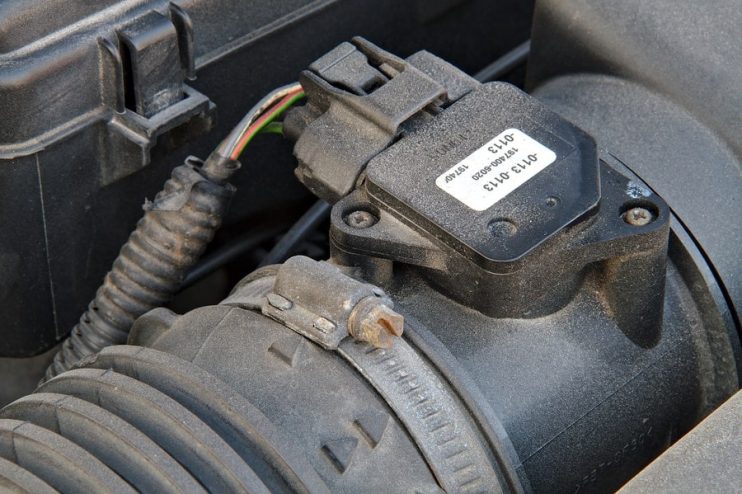
MAF and MAP are not the same sensor. MAF measures the mass of air entering the intake, while MAP measures pressure in the intake manifold. A problem with an intake hose, throttle, turbocharger, or exhaust can make one sensor appear to disagree with the other.
ECU, ECM, and PCM can overlap in everyday conversation. Some manufacturers use ECU as a general term for a computer, ECM for the engine computer, and PCM for a module controlling the engine and transmission together. The letters do not tell you the module’s exact design without the vehicle information.
ATF is not one universal fluid. Automatic transmissions can require different friction modifiers, viscosity, and additive chemistry. Never fill a transmission based only on the abbreviation. Check the exact specification in the owner’s manual or service information.
How a mechanic uses abbreviations during diagnosis
A scan report might show “MIL on, DTC P0101, MAF range or performance.” That does not mean the technician should immediately install a MAF sensor. The next steps may include inspecting the air filter, testing the intake for leaks, checking the connector, comparing MAF and MAP data, and reviewing fuel trims.
An ABS, TCS, or ESP warning may come from a wheel-speed sensor, tone ring, wiring, low battery voltage, or a communication problem. The abbreviation identifies the system that noticed the issue. It does not identify the failed part.
A service estimate may list ATF, TCU, or DMF. Ask which component is being tested, what evidence supports the recommendation, and whether the part is new, rebuilt, or used. Clear questions are not an inconvenience. They help you understand what the repair is meant to fix.
The same approach applies to emissions terms. EGR, EVAP, SCR, DOC, TWC, and DPF describe systems with different jobs. A code involving one system can be caused by a leak, sensor, wiring problem, engine fault, or another system affecting the readings.
Reliable places to confirm a term
Start with the owner’s manual and the service manual for the exact vehicle. Manufacturer parts catalogs, wiring diagrams, and scan-tool data definitions are more useful than a generic abbreviation list when you are diagnosing a fault.
For emissions and diagnostic terms, the EPA’s OBD information is a reliable general reference. For safety terms and recalls, use the NHTSA recall and safety information. SAE standards and manufacturer service information explain technical terms such as viscosity grades, communication protocols, and component tests.
Be careful with a search result that gives one meaning without identifying the manufacturer. Brand names such as VTEC, VVT-i, DSC, ESP, VSA, and THS can refer to related functions, but their hardware and diagnostic procedures are not identical.
The abbreviations drivers should remember first
If you do not want to memorize the whole list, start with ABS, ATF, AWD, BCM, DTC, ECU, EGR, EVAP, MAF, MAP, MIL, OBD, PCM, TCS, TPMS, TCU, and VIN. These show up regularly on dashboards, scan reports, vehicle listings, or service invoices.
Know that a warning light may identify a system rather than a failed part. Know that a DTC is a clue. Know that the VIN is needed to order the correct part. Know that ATF, engine oil, coolant, and brake fluid are not interchangeable. Those few habits prevent a surprising number of bad repairs.
The mechanic’s final word on automotive abbreviations
Automotive abbreviations are shortcuts, not secrets. ACC, ABS, MAF, MAP, EGR, DTC, ECU, PCM, OBD, TPMS, and the other terms in this guide describe the systems, sensors, computers, standards, and parts that make a modern vehicle work.
Use the definition to understand the conversation, then use the vehicle’s manual and proper diagnostic data to decide what has failed. A code or abbreviation rarely gives permission to replace a part without testing. If a mechanic cannot explain the abbreviation and the test behind the recommendation, ask for a clearer explanation before approving the work.
The practical takeaway is simple: learn the common terms, but do not confuse knowing the letters with diagnosing the car. The right repair comes from matching the abbreviation to the exact vehicle, symptom, code, and test result.