
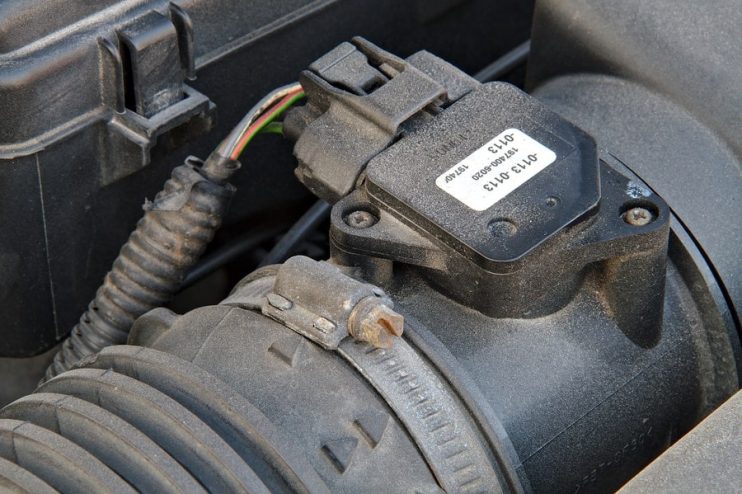
The engine starts, then stumbles as soon as you press the accelerator. The check-engine light comes on, fuel mileage drops, and the car may jerk while merging into traffic. A dirty or failing MAF sensor can cause that pattern, but an air leak, bad wiring, clogged filter, or fuel problem can look almost identical.
MAF stands for mass airflow sensor. It measures the amount of air entering the engine and sends that information to the powertrain control module, or PCM. The PCM uses the airflow data with oxygen-sensor readings, engine speed, throttle position, temperature, and load calculations to control fueling and other engine functions.
The MAF is important, but replacing it on the first sign of a rough idle is a poor diagnostic habit. I have seen more than one new sensor installed on a car that actually had a split intake boot after the sensor. The new part read the same false air condition as the old one, and the check-engine light returned because the leak was never repaired.
What a MAF sensor does for the engine
The MAF sensor measures the mass of air flowing into the intake tract. Mass is different from simple volume because the same volume of air can contain different amounts of oxygen depending on temperature, pressure, altitude, and density.
The PCM uses this information to estimate how much fuel is needed for the current operating condition. On a gasoline engine, the control system adjusts the air-fuel mixture toward the target required for combustion and emissions control. On a diesel engine, the MAF reading can help control fueling, boost, exhaust-gas recirculation, and emissions strategies.
The MAF does not inject fuel itself, and it does not normally send airflow information directly to the automatic transmission. The engine computer may share calculated engine load with the transmission control system, but the MAF’s main job is measuring incoming air for the engine control strategy.
Some engines use a MAP sensor, or manifold absolute pressure sensor, as part of their load calculation. Others use both MAF and MAP data. A problem with one sensor can make another sensor appear wrong, so the complete intake and engine-control system needs to be considered.
Where the MAF is located
On many vehicles, the MAF is mounted in the intake tube between the air filter housing and the throttle body. The original article describes it as being between the air filter and intake manifold, but the exact position varies. It may be part of the air-filter outlet, attached to a short housing, or built into an intake assembly.
Look for a plastic or metal housing with an electrical connector and an airflow arrow. The sensor must be installed in the correct direction. If the housing is installed backward, the sensor may produce inaccurate readings even though the connector fits.
The air filter sits upstream of the sensor, and the throttle body is usually downstream. A leak after the MAF allows unmeasured air into the engine. A restriction before the MAF can reduce airflow and create a different problem. Both sides of the sensor deserve inspection.
How a hot-wire or hot-film MAF works
Many modern MAF sensors use a hot-wire or hot-film principle. Inside the sensor is a heated element and a reference element or temperature-sensing circuit. Intake air flowing past the heated element removes heat from it.
The sensor electronics monitor how much current is required to keep the element at the required temperature relative to the incoming air. More air usually removes more heat, so the circuit changes its output. The PCM interprets that voltage or frequency signal as airflow.
Some MAF sensors produce a variable voltage, while others produce a frequency signal. The output style depends on the design and vehicle. A scan tool can show grams per second, voltage, frequency, or a calculated airflow value, but the expected reading depends on engine size, speed, load, and sensor type.
A MAF sensor is delicate because the sensing element is exposed to the air stream. Dust, oil from an over-oiled aftermarket air filter, water, and cleaning residue can affect the reading. A backfire or intake problem can also damage the sensing element.
Why the signal changes when the engine accelerates
At idle, the engine draws a small amount of air through the intake. When the throttle opens, airflow increases and the MAF signal should respond. Under steady cruising, the signal should be reasonably stable for the load and speed. Under acceleration, it should rise as the engine takes in more air.
A signal that is frozen, erratic, implausibly low, or too high can point to a sensor, wiring, intake, or engine problem. Do not judge it from one number without the manufacturer’s data. A sensor that looks low at idle may be correct if the engine is small, while the same number may be wrong on a larger engine.
MAF sensor versus an air-volume sensor
People often use “airflow sensor,” “air mass sensor,” “MAF,” “HFM,” and “hot-film meter” to describe the same general component. The MAF measures mass airflow, not only volume. Some older systems used an air-volume or vane-style meter that measured air movement with a flap and potentiometer.
Those systems are related but not identical. A vane airflow meter has moving mechanical parts, while a hot-wire or hot-film MAF uses an electronic sensing element. The diagnostic approach and expected signal are different.
Do not order a part based only on a generic phrase such as air sensor. Use the vehicle identification number, engine size, connector, part number, and catalog application. Some vehicles use a combined MAF and intake-air-temperature sensor, while others use separate sensors.
Symptoms of a faulty or contaminated MAF sensor
A MAF problem can affect fueling and engine load calculations, so the symptoms may appear in several ways. The same symptoms can come from a vacuum leak, fuel-pressure issue, ignition problem, throttle fault, exhaust restriction, or incorrect sensor installation.
| Symptom | Possible MAF connection | Other causes to check |
|---|---|---|
| Rough or unstable idle | Airflow is being measured incorrectly or the engine is receiving unmetered air. | Intake leak, PCV hose, throttle body, vacuum leak, misfire, or fuel pressure. |
| Hesitation or jerking | The PCM receives an incorrect load signal during acceleration. | Ignition coil, spark plug, injector, boost leak, throttle, or transmission issue. |
| Black smoke or fuel smell | The engine may be receiving too much fuel for the measured air. | Leaking injector, oxygen sensor, fuel pressure, coolant sensor, or ignition misfire. |
| Low power | The PCM may use a backup airflow value or reduce engine output. | Restricted air filter, turbocharger, catalytic converter, fuel delivery, or timing fault. |
| Hard starting or stalling | An implausible airflow signal can upset startup fueling. | Battery, crank sensor, fuel pressure, throttle, injector, or vacuum leak. |
| Higher fuel consumption | Incorrect load data may cause poor fuel control. | Low tire pressure, thermostat, injector, oxygen sensor, dragging brake, or driving conditions. |
Black smoke and a strong fuel smell
Black smoke from a gasoline engine usually means the mixture is too rich or combustion is incomplete. A contaminated or inaccurate MAF can contribute by reporting less air than is actually entering the engine, which may lead the PCM to command too much fuel.
Diesel engines can produce black smoke from insufficient air, excessive fuel, boost leaks, EGR faults, injector problems, or a turbocharger issue. Do not replace the MAF only because a diesel is smoking. Check boost pressure, intake hoses, air filter, EGR operation, and injector performance.
A fuel smell can also come from a leaking fuel system or a misfire. If raw fuel is reaching a hot exhaust, stop driving until the cause is found. A MAF replacement is not a safe substitute for inspecting fuel leaks.
Hesitation and jerking under load
A bad MAF signal may cause hesitation when you accelerate onto a highway or climb a ramp. The PCM may calculate the wrong engine load, alter ignition timing, or command the wrong amount of fuel. The driver feels this as a stumble, surge, or jolt.
Do not assume every jerk is a MAF problem. A weak ignition coil may misfire only under load. A split turbo hose may open when boost rises. A failing fuel pump may lose pressure at high demand. A scan tool that shows misfire counters, fuel trims, airflow, boost, and fuel pressure can separate these faults.
Low or unstable RPM
An inaccurate airflow signal can make idle control difficult. The engine may surge, stall when coming to a stop, or idle too high. A dirty throttle body, vacuum leak, PCV fault, or incorrect idle relearn can produce the same behavior.
If the symptom appears only after the MAF is unplugged or cleaned, check the connector and sensor installation. Some vehicles use a default value when the MAF is disconnected, so the engine may appear to run better with the sensor unplugged. That does not prove the sensor is bad. It means the PCM has switched to a backup strategy.
Hard starting or stalling
A serious MAF signal fault can upset startup fueling, but hard starting has many common causes. Check battery voltage, cranking speed, fuel pressure, injector operation, crankshaft-position data, and throttle position. If the engine starts and dies immediately, scan for security or immobilizer codes too.
On some vehicles, a MAF that is only slightly inaccurate will not prevent starting but will cause poor running once the PCM enters closed-loop control. Record when the stall happens, whether the engine is cold or hot, and whether the accelerator changes the symptom.
Check-engine codes linked to MAF circuits
OBD-II code P0100 refers to a MAF circuit malfunction on systems that use that definition. Related codes commonly include P0101 for range or performance, P0102 for low input, P0103 for high input, and P0104 for intermittent operation. The exact code description and test procedure can vary by vehicle manufacturer.
A code tells you what the computer noticed, not necessarily which part must be replaced. P0101, for example, can result from a dirty sensor, air leak, blocked filter, wiring issue, incorrect sensor, or an engine condition that makes the airflow reading disagree with the calculated load.
The EPA’s OBD information explains the role of onboard diagnostics in monitoring emissions-related systems. Use a scanner to record current, pending, and history codes before clearing them. Freeze-frame data can show engine speed, temperature, load, and airflow when the code was stored.
What to check before clearing a P0100 series code
- Inspect the air-filter housing and make sure it is sealed.
- Check the intake tube for splits, loose clamps, and collapsed sections.
- Inspect the MAF connector for corrosion, oil, bent pins, and loose terminals.
- Confirm the sensor is installed in the correct direction.
- Look for a recent aftermarket intake or filter modification.
- Review fuel trims, airflow data, throttle angle, and engine-load calculations.
- Test power, ground, signal, and communication circuits using the wiring diagram.
Clear the code only after recording the information. If the light returns immediately, the fault is still present. If it returns after a drive cycle, check what operating condition caused it to set again.
Inspect the intake before replacing the MAF
The intake tract must be sealed between the MAF and engine. A cracked rubber boot, loose clamp, split vacuum hose, leaking PCV connection, or damaged intake gasket can allow air to enter after the sensor. That air is not included in the MAF reading, so the PCM sees a mismatch.
Flex the rubber intake tube by hand with the engine off. Cracks often open on the underside where they are hard to see. Check the breather hoses and small vacuum lines around the intake. Listen for a hiss after starting the engine, but keep clothing and fingers away from the belt and fan.
A smoke test is one of the better ways to find an intake leak. A technician introduces low-pressure smoke into the intake and watches for smoke escaping from hoses, gaskets, or fittings. Do not pressurize an intake system with shop air without knowing its safe limits.
Check the air filter and airbox
A clogged filter can restrict incoming air and create a low-airflow complaint. A poorly seated filter can let dust bypass the filter and contaminate the MAF element. An airbox lid that is not clipped down can allow unmetered air or water into the intake.
Aftermarket oiled filters can deposit oil on some MAF sensing elements when over-oiled or installed incorrectly. This does not mean every reusable filter causes trouble, but the filter and service method should be checked. Use the filter type and maintenance procedure approved for the vehicle.
How to clean a MAF sensor safely
A MAF cleaner can remove dust or film from the sensing element when contamination is the problem. Use a product specifically labeled for MAF sensors. Throttle-body cleaner, brake cleaner, carburetor cleaner, compressed air, and household solvents can damage the element or leave residue.
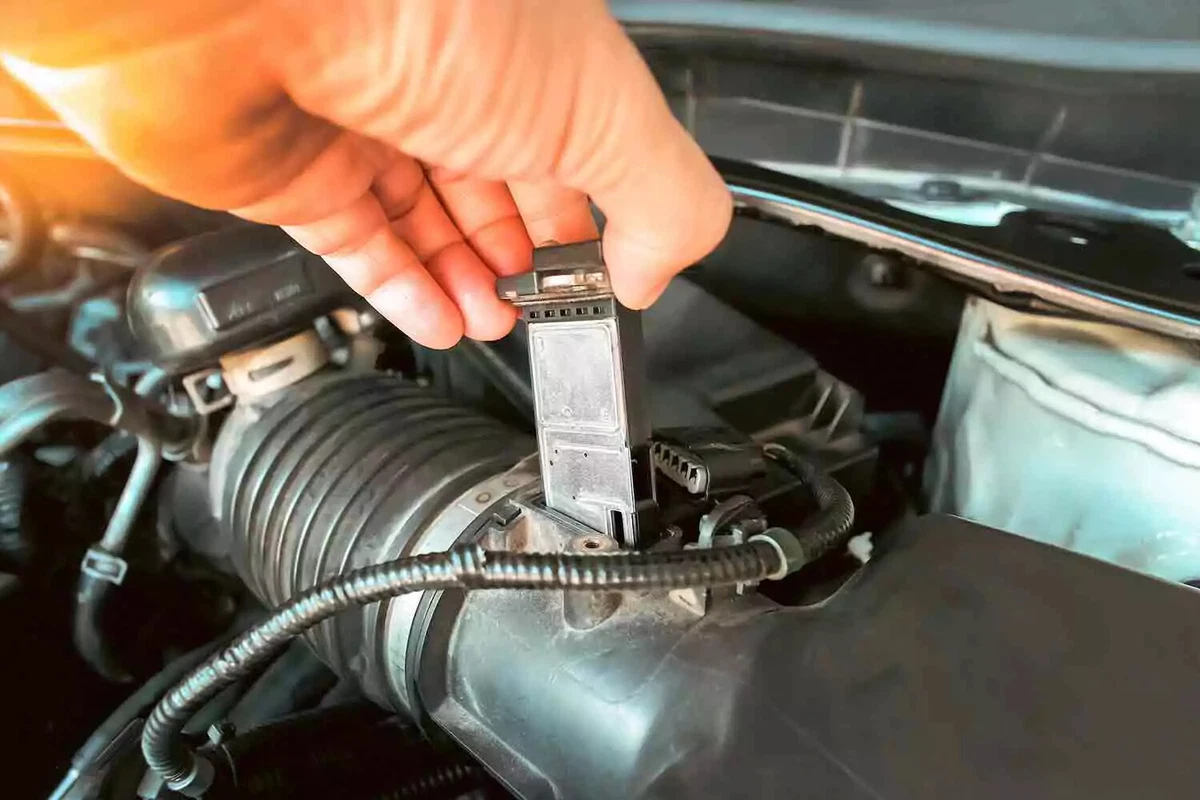
- Switch the ignition off and disconnect the electrical connector carefully.
- Remove the sensor only if the vehicle procedure allows it and the fasteners are accessible.
- Spray the sensing area with approved MAF cleaner without touching the wire or film.
- Allow the sensor to air-dry fully.
- Reinstall it in the correct direction and reconnect the plug until it locks.
- Inspect the intake seal and airbox before starting the engine.
Do not wipe the hot wire or film with a cotton swab. It can break easily, and a sensor that looks dirty may be damaged internally. Do not use compressed air to speed drying. The pressure can stretch or break the sensing element.
Cleaning does not repair a failed circuit, cracked housing, damaged element, or inaccurate sensor. If the same code returns after a careful cleaning and intake inspection, continue the diagnosis rather than spraying it again every week. Repeated cleaner use can hide the real fault.
Testing the MAF with a scan tool and meter
A scan tool can display the MAF reading at idle and under load. The value should respond smoothly as engine speed and load change. Exact readings vary by engine and are not safe to invent without the vehicle’s service information.
Compare the MAF reading with calculated load, throttle position, manifold pressure, fuel trims, and oxygen-sensor feedback. A very low MAF reading with high positive fuel trims may suggest under-reporting or an intake issue. A high reading with rich operation may point in the opposite direction. These are clues, not final diagnoses.
A digital multimeter can check the sensor’s power, ground, reference, signal, and frequency where appropriate. Use the wiring diagram for the exact vehicle. Do not pierce insulation unnecessarily or short adjacent terminals with a probe.
Why an unplug test is not enough
Some mechanics unplug the MAF and see whether the engine runs better. The PCM may then use a substitute airflow value, which can make a bad signal disappear temporarily. The test is a clue, but it cannot distinguish a bad sensor from an intake leak, wiring issue, or incorrect calculated load.
If the engine runs better unplugged, scan it with the sensor connected and compare data. Check fuel trims and look for unmetered air. Do not drive for long with the MAF disconnected because the backup strategy may increase emissions, reduce performance, or set additional codes.
When replacing the MAF sensor is justified
Replacement makes sense when testing proves the sensor output is inaccurate or the element, housing, or electronics have failed. It also makes sense when the connector or wiring has been repaired and the sensor still fails the manufacturer’s test.
Use a sensor that matches the vehicle’s application. A cheap copy may have the correct connector but an incorrect calibration. The engine may run, yet fuel trims, idle quality, acceleration, and emissions can remain wrong.
After replacement, inspect the intake seal, clear codes only after recording them, and complete the required drive cycle. Some vehicles need an adaptation or relearn procedure. A replacement sensor does not automatically clear the underlying code if the wiring or airbox still has a problem.
Should you replace the whole housing?
Some vehicles use a replaceable insert, while others sell the MAF as part of the intake housing. The correct choice depends on the design. If the housing is cracked, warped, or has a damaged sealing surface, replacing only the insert may leave the air leak in place.
Match the part by vehicle identification number and engine. Compare the old connector, mounting holes, airflow direction, and seal. Do not force a sensor into a housing that does not fit cleanly.
Why a MAF problem can be misdiagnosed
MAF symptoms overlap with many other faults. A vacuum leak creates lean operation, a leaking injector creates rich operation, a weak fuel pump causes hesitation, and a failing ignition coil creates jerking. A dirty throttle body can cause low idle and stalling. A restricted catalytic converter can cause low power.
On turbocharged engines, a split intercooler hose or boost leak can cause low power and black smoke. On diesel engines, EGR faults, DPF restriction, turbo control, and injector problems may look like an airflow sensor issue. The MAF may be reporting a real airflow problem rather than causing it.
Check the basics first. Confirm the engine oil level, battery voltage, air filter, intake seals, fuel pressure, ignition condition, and stored codes. A scan tool and smoke machine often save more money than replacing sensors by guesswork.
Reading fuel trims with MAF data
Fuel trims show how much the PCM is correcting the base fuel calculation. Positive correction means the computer is adding fuel because it believes the mixture is lean. Negative correction means it is removing fuel because the mixture is rich. A MAF reading that disagrees with fuel trims can point toward a sensor or air-metering problem, but the pattern has to be viewed at idle and under load.
A large positive trim at idle that improves at higher RPM often suggests a vacuum or intake leak. A trim that becomes more positive under load may point toward fuel delivery, a restricted filter, or a MAF that under-reports airflow. A rich condition can come from a MAF that over-reports air, but it can also come from fuel pressure, injector, oxygen-sensor, or temperature-sensor faults.
Do not copy a fuel-trim number from one vehicle and call another vehicle faulty. Engine size, fuel system, software, air temperature, and operating condition affect the readings. Use manufacturer specifications or compare the data with a known-good condition.
MAF and MAP readings should make sense together
Many engines use both MAF and MAP sensors. The MAF reports air entering the intake, while the MAP sensor reports pressure in the manifold. The PCM can compare those signals to see whether the calculated engine load is plausible.
If the MAF says airflow is high but manifold pressure and throttle position suggest low load, the computer may set a performance or correlation fault. A blocked air filter, restricted exhaust, throttle problem, boost leak, or sensor wiring issue can cause the disagreement. This is why a single MAF voltage measurement is not enough on a modern engine.
MAF diagnosis on turbocharged and diesel engines
Turbocharged engines make MAF diagnosis more involved because airflow changes rapidly as the turbo builds boost. A split hose after the sensor may allow air to escape, while a leak before the sensor can allow unmetered air to enter. Either fault can create hesitation, smoke, low power, or a boost-related code.
Inspect the turbo inlet, compressor outlet, intercooler, charge-air pipes, clamps, and intake manifold connections. Look for oily dust around a joint. The oil film may come from normal crankcase ventilation, and dust sticking to it can show where pressurized air is escaping.
On diesel engines, the MAF signal may influence EGR flow. If the sensor reports incorrect airflow, the EGR system may appear to have insufficient or excessive flow. A diesel with black smoke may also have a sticking EGR valve, a failed turbo actuator, a restricted DPF, a leaking injector, or a blocked air filter.
Do not replace the MAF on a diesel only because the EGR code is present. Check commanded and actual EGR position, airflow changes, boost pressure, exhaust pressure, and the condition of the intake. The sensor may be accurately reporting air that is being affected by another fault.
MAF wiring and connector faults
The MAF needs a stable power supply, a good ground, and a clean signal path. A loose terminal can work at idle and fail when the harness moves. Water or oil in the connector can change the signal voltage or create an intermittent short.
Inspect the connector with the ignition off. Look for green corrosion, pushed-back terminals, broken locking tabs, damaged insulation, and wiring rubbing against the intake or engine. Do not spread a terminal with a large probe. A loose terminal may need proper pin-tension testing or connector repair.
A voltage-drop test under operating load can find a ground problem that a continuity test misses. The test procedure depends on the vehicle wiring. If the sensor has a frequency output, a multimeter may not display the signal correctly, so an oscilloscope or scan-tool data stream may be needed.
Water and oil contamination
Water entering the airbox can reach the MAF, especially after driving through deep standing water or using a pressure washer near the intake. A wet filter can restrict airflow and may allow moisture to damage the sensor. Check the airbox and intake snorkel after water ingestion.
Oil contamination can come from an over-oiled reusable filter, crankcase ventilation, or a turbocharger problem. Cleaning the MAF may restore the reading for a short time, but the contamination will return if the source remains. Fix the filter or ventilation issue before condemning the sensor.
After installing or cleaning a MAF sensor
Make sure the airbox is closed, the filter is seated, the intake tube is tight, and every breather hose is connected. A disconnected PCV or vacuum hose can create a lean condition immediately after service. Confirm that the electrical connector clicks into place and the sensor arrow points in the airflow direction.
Some vehicles relearn airflow or throttle behavior after battery power is disconnected. Others need no special procedure. Follow the service information and let the engine reach operating temperature before judging the idle.
Clear codes only after recording them, then complete a normal road test. Watch for fuel-trim changes, hesitation, misfire counts, and returning codes. A successful repair should improve the original symptom and keep the MAF data plausible under idle, cruise, and acceleration.
When the MAF is not the real problem
An engine can run badly with a perfectly good MAF when the basic engine condition is poor. Low compression, incorrect valve timing, a vacuum leak, weak ignition, fuel-pressure loss, or an exhaust restriction changes the air and fuel relationship. The MAF reports what it measures, but it cannot correct a mechanical problem.
If a sensor replacement does not improve the car, do not keep buying sensors. Ask for a compression check, smoke test, fuel-pressure test, ignition test, or exhaust restriction test based on the symptoms. A mechanic should explain why that test fits the complaint. This approach costs less than guessing through several parts.
Costs and repair decisions
MAF repair cost depends on whether the problem is dirt, an intake hose, a connector, a fuse, a sensor, a complete housing, or another engine fault. Cleaning may be inexpensive, while an original sensor or housing can cost more. Diagnostic labor may be a better investment than buying several parts that do not address the cause.
Ask for an estimate that separates testing, cleaning, parts, labor, and any relearn or calibration procedure. Ask what test supports the replacement recommendation. If the quote is based only on P0101 or a rough idle, request an intake and wiring inspection too.
A replacement sensor that fails soon after installation may be the wrong part, may have been contaminated by an intake problem, or may be receiving incorrect power. Keep the receipt and record the code that returned. Do not assume every new sensor is defective before checking the circuit. Verify the connector and airbox once more.
How to keep a MAF sensor healthy
- Replace the air filter at the interval recommended for the vehicle and driving conditions.
- Keep the airbox lid sealed and the intake clamps tight.
- Repair cracked intake boots and loose breather hoses quickly.
- Use only MAF-safe cleaner and never touch the sensing element.
- Keep water out of the intake after deep rain or car washing.
- Be careful with over-oiled aftermarket filters.
- Do not ignore a check-engine light, black smoke, or a sudden fuel-economy drop.
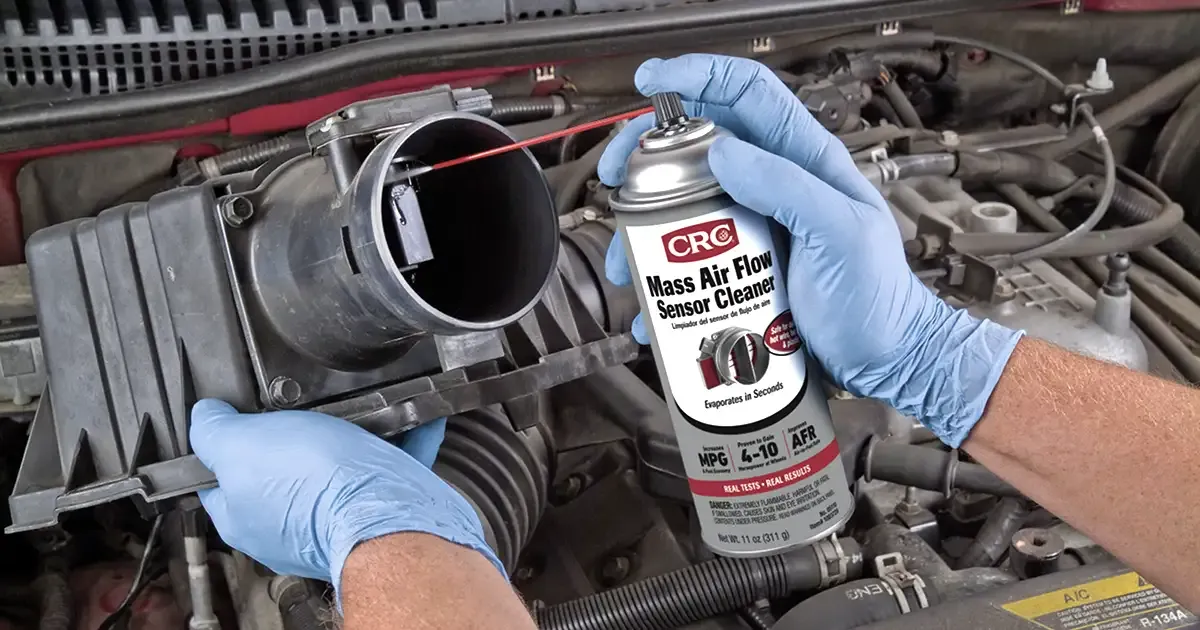
The MAF lives in a dirty environment, but it should not be treated like a routine part that needs constant spraying. Frequent contamination usually points to a filter, airbox, oil-vapor, water-ingestion, or intake-sealing problem. Fix the source instead of repeatedly cleaning the sensor. That is better than guessing at parts as well.
What I would do if this were my car
I would scan the vehicle and save the codes before touching the sensor. Then I would inspect the airbox, filter, intake boot, PCV connections, connector, wiring, and sensor direction. If the data suggested contamination and the element looked dirty, I would use MAF cleaner and let it dry naturally.
If the engine still ran poorly, I would check fuel trims, misfire counters, throttle position, manifold pressure, fuel pressure, and intake leaks. On a turbo diesel, I would also check boost hoses, EGR behavior, DPF status, and injector operation. Only after those tests would I order a sensor.
I would use an original or reputable application-matched sensor and verify the repair with a road test and scan. A sensor that works in the driveway but fails under load has not been proven good. The road test should be done safely, with attention to hesitation, power, fuel trims, and returning codes.
The mechanic’s verdict on MAF sensor problems
The MAF sensor measures the mass of air entering the engine and sends a signal to the PCM. The PCM uses that information with other sensor data to control fuel, load, boost, EGR, ignition, and emissions functions. A hot-wire or hot-film element can be contaminated or damaged, but the wiring, airbox, filter, and intake tract can create the same symptoms.
Black smoke, fuel smell, high fuel use, jerking, unstable RPM, hard starting, low power, and a check-engine light can point toward a MAF fault. Codes such as P0100 through P0104 are useful clues, not automatic instructions to replace the sensor. Clean only with MAF-safe cleaner, inspect for unmetered air, and test the circuit before buying parts.
DIY is reasonable for an air-filter inspection, intake-hose check, careful cleaning, and code reading. Wiring diagnosis, fuel problems, turbo or diesel emissions faults, repeated code returns, and sensor replacement after testing are better handled with a capable scan tool and service information. The clear takeaway is simple: prove the airflow problem first, because a new MAF cannot fix air entering the engine where it was never measured.